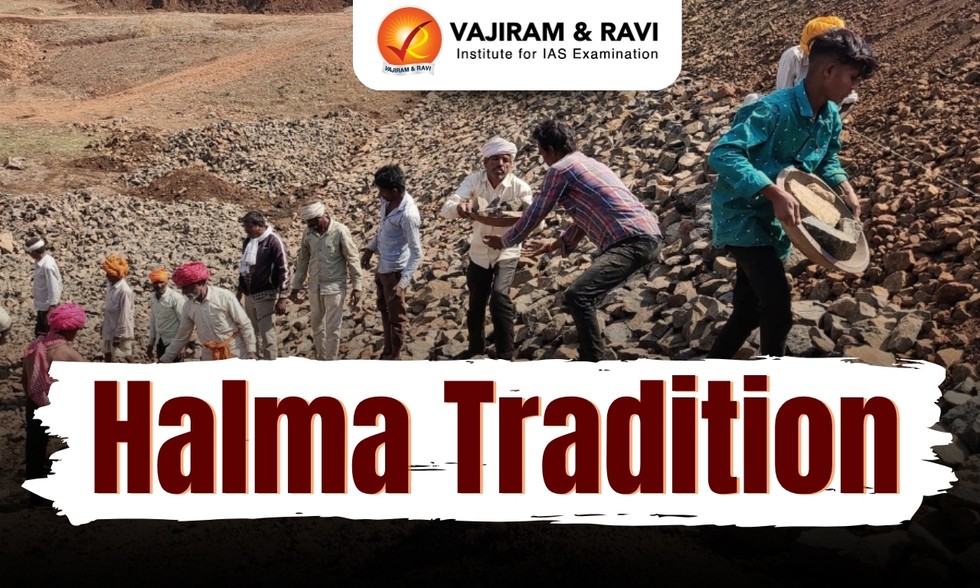
In Borpada village in Madhya Pradesh’s Jhabua district, residents revived the Bhil tradition of Halma to clean and restore a public well.
About Halma Tradition:
Halma is an old collective tradition practiced by the Bhil tribal community of Madhya Pradesh.
Its direct meaning is: to work together without wages or contract, sustained by mutual obligation and belonging.
At its heart, Halma represents a profound tradition of voluntary collective labour.
The roots of this tradition reach back to an era when these communities had neither large resources, nor government support, nor a marketplace. What they had was one another.
When an individual or family faces a significant task, be it constructing a home, repairing agricultural embankments, restoring a water body, or organizing a major communal event, they invoke Halma.
In response, scores, sometimes hundreds, of community members assemble, bringing their own tools, food, and labour, and work collectively until the task is accomplished.
There is no formal leader and no grand announcement. There is only work, done side by side.
No monetary compensation is expected. Participation arises not from obligation enforced by external authority but from ethical commitment, ancestral values, and the assurance that when needed, the favor will be returned.
In recent years, Halma has been revitalized to address common challenges such as:
Restoration of traditional water bodies
Afforestation of barren hills
Construction of contour trenches for rainwater conservation
Dear Student,
You have still not entered your mailing address. Please enter the address where all the study materials will be sent to you. (If applicable).