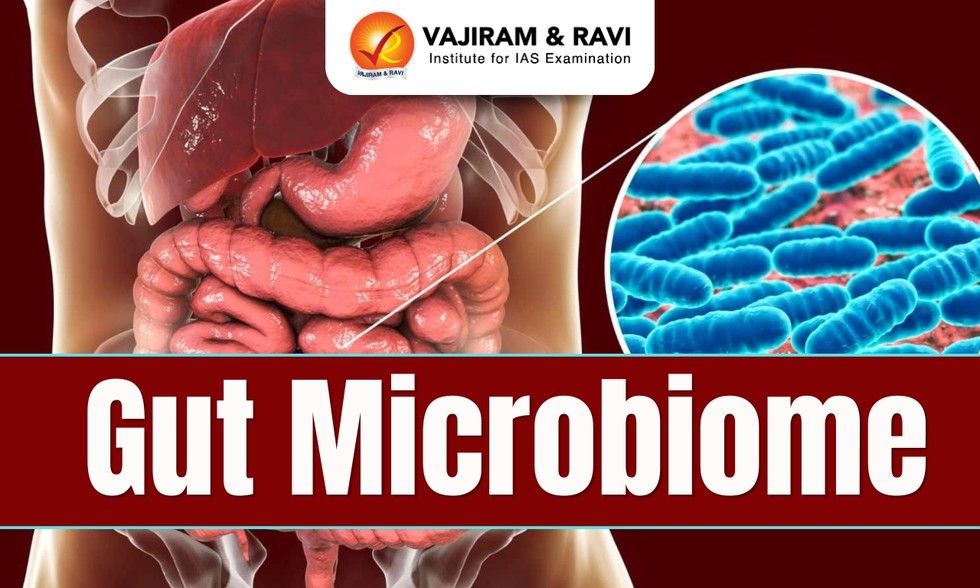
The human gut microbiome is shaped by diverse selective forces that originate from host and environmental factors and it substantially influences health and disease.
About Gut Microbiome:
Gut microbiome, gut microbiota, or gut flora refers to the trillions of microbes, such as bacteria, viruses, fungi, and parasites that live in the human gut.
The gut microbiota assists in a range of bodily functions, including:
harvesting energy from digested food
protecting against pathogens
regulating immune function
strengthening the biochemical barriers of the gut and intestine
Changes in microbiota composition can affect these functions.
Disease:
While there are beneficial bacteria in the gut, there are also harmful bacteria that can enter the Gastrointestinal (GI) tract and cause infection.
These infections include food poisoning and other GI diseases that result in diarrhea and vomiting.
Research suggests that bacterial populations in the GI system play a role in developing gut conditions, including inflammatory bowel diseases (IBD), such as Crohn’s disease and ulcerative colitis.
Low microbial diversity in the gut also has links to obesity and type 2 diabetes.
The status of the gut microbiota also has links to metabolic syndrome.
Disturbing the microbiota with antibiotics can also lead to disease, including infections that become resistant to antibiotics.
Dear Student,
You have still not entered your mailing address. Please enter the address where all the study materials will be sent to you. (If applicable).