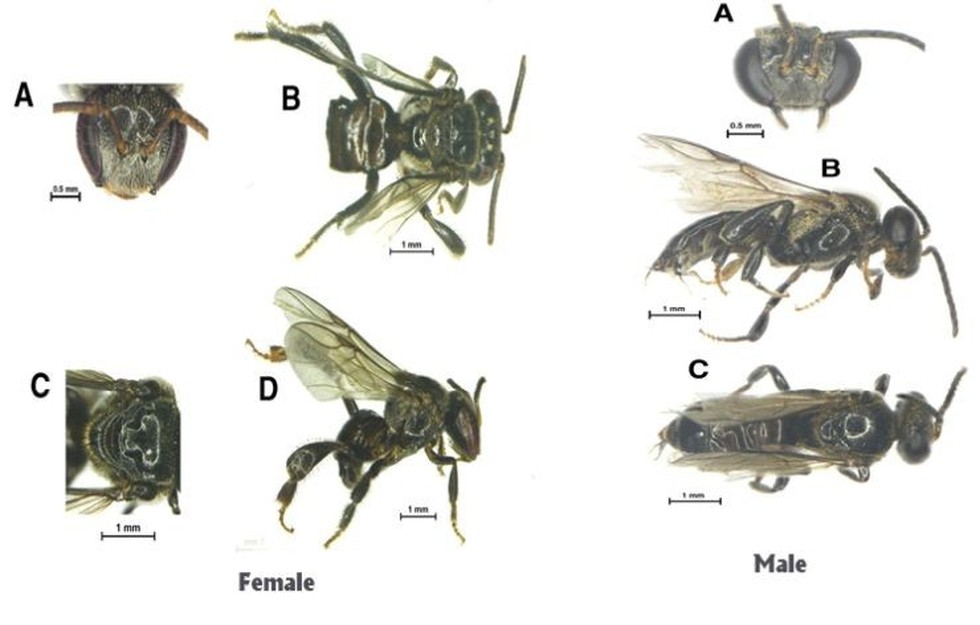
About Tetragonula yikhumensis:
- It is a new species of stingless bee.
- It was discovered in Wokha district, Nagaland.
- It is named after Yikhum village, where it was first collected.
- It is a subterranean species that nests underground and is distinguished by its size, unique morphology, and nest architecture.
- It is the largest stingless bee recorded in India.
- The discovery increases the number of stingless bee species known from India from 25 to 26, while the genus Tetragonula now comprises 18 species in the country.
- It is only the second underground-nesting species of the genus documented in India.
- The nests comprised distinct chambers for honey, pollen, and brood, protected by hard layers of batumen and connected to the surface through narrow entrance tunnels.
- The Lotha community in Wokha refers to these subterranean stingless bees as "litsuk", or "ground bees", and highly values their honey and bee pollen for their medicinal properties.