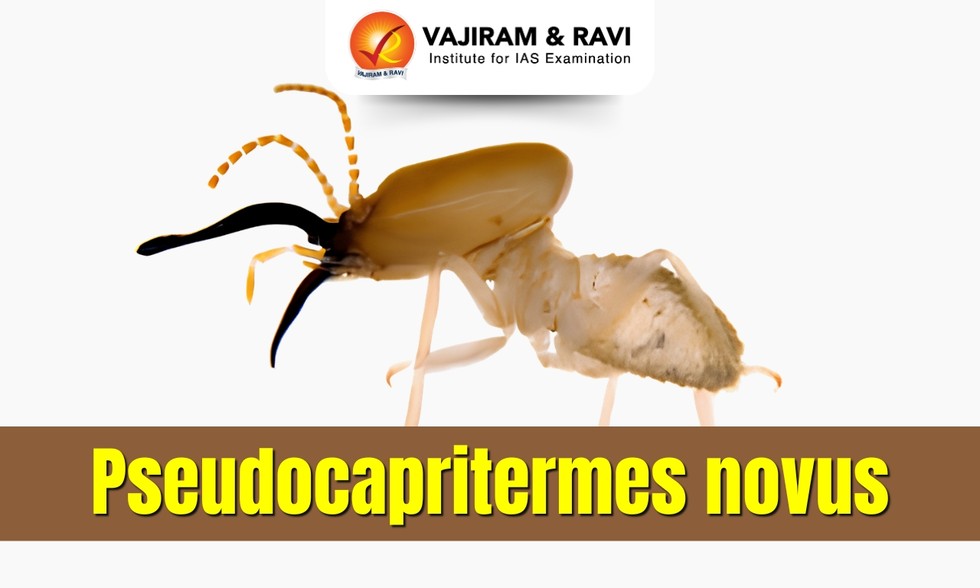
About Pseudocapritermes novus:
- It is a new species of soil-dwelling termite.
- It was discovered during an exploration of the Chapramari Wildlife Sanctuary, West Bengal.
- It is different from the usual termites that are destructive in nature.
- These soil-feeding termites play a crucial role in enriching the earth by feeding on soil and humus, making them vital indicators of an ecosystem's soil health and fertility.
- This discovery brings the total number of Pseudocapritermes species found in India to five.
- Features:
- The new termite stands out from its closest relatives in the unique shapes of its mouthparts and body armour.
- Like others in its group, this insect belongs to a special club of termites known for their asymmetrical, snapping jaws, which they use to defend themselves or raise an alarm by producing a loud clicking sound.
- However, compared to its closest known cousin, P. bhutanensis, the newly discovered species boasts a strongly bent left jaw with a slightly incurved tip, a more rounded swollen section below its beak, and a longer, wider postmentum (the lower part of its mouth).