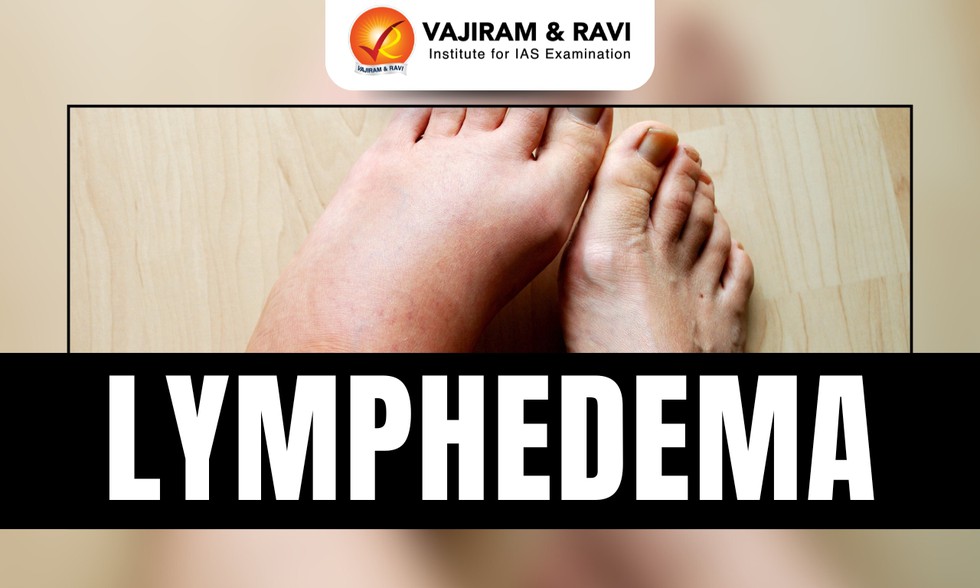
A newly discovered cellular mechanism shows promise for treating painful lymphedema.
About Lymphedema:
It is swelling in various areas of body that happens when something affects the lymphatic system.
The lymphatic system collects excess fluid, proteins, and toxins from the cells and tissues and returns them to the bloodstream.
When the lymphatic system doesn’t work well, the body accumulates fluid and may begin to swell.
The swelling typically affects the arms and legs, but it can affect other areas of the body, too.
Causes:
Lymphedema can happen after certain surgeries or because of certain medical conditions or genetic conditions.
It can be caused by cancer treatments that remove or damage the lymph nodes.
One may develop lymphedema spontaneously, meaning it happens for no known reason.
Symptoms:
Lymphedema symptoms may be mild, causing minor swelling and discomfort.
Severe cases of lymphedema can affect the ability to move the affected limb, increase the risks of skin infections and sepsis, and can lead to skin changes and breakdown.
Treatment:
Once lymphedema develops, it is a chronic condition that cannot be cured but can be treated to relieve swelling and improve the ability to function day to day.
Dear Student,
You have still not entered your mailing address. Please enter the address where all the study materials will be sent to you. (If applicable).