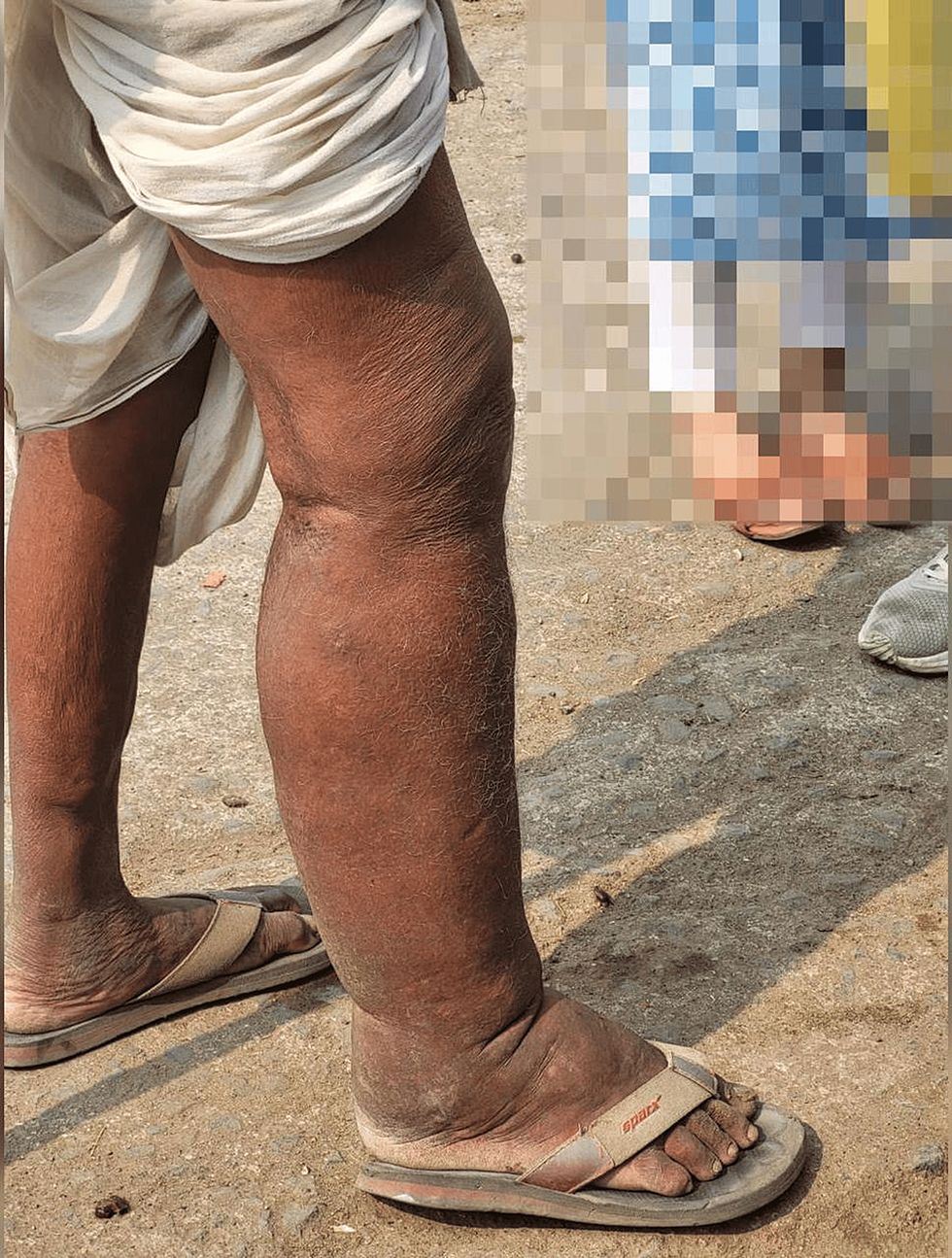
About Lymphatic Filariasis:
- Lymphatic filariasis (LF), commonly known as elephantiasis, is a parasitic infection and a neglected tropical disease.
- It can cause severe swelling in the legs and other parts of the body.
- Cause:
- It is caused by infection with parasites classified as nematodes (roundworms) of the family Filariodidea. T
- There are 3 types of these thread-like filarial worms:
- Wuchereria bancrofti, which is responsible for 90% of the cases.
- Brugia malayi, which causes most of the remainder of the cases.
- Brugia timori, which also causes the disease.
- Transmission:
- It is a vector-borne disease transmitted by the female Culex mosquito.
- Adult worms nest in the lymphatic vessels and disrupt the normal function of the lymphatic system, where they produce millions of microfilariae (immature larvae) that circulate in the blood.
- In general, a person won’t get filariasis from a single mosquito bite.
- It usually takes repeated mosquito bites over several months (or even years) for a person to get the condition.
- Treatment:
- Elimination of lymphatic filariasis is possible by stopping the spread of the infection through preventive chemotherapy.
- The WHO-recommended preventive chemotherapy strategy for lymphatic filariasis elimination is mass drug administration (MDA).
- MDA involves administering an annual dose of medicines to the entire at-risk population.