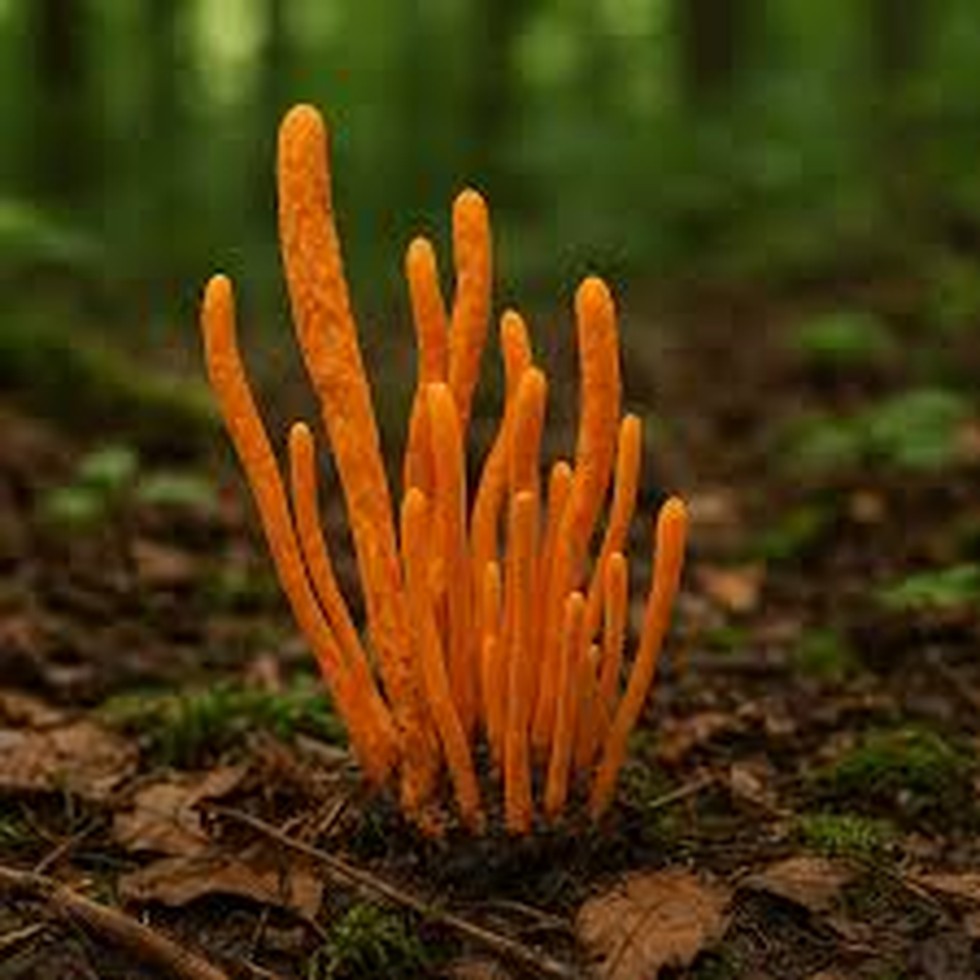
A rare and highly valued species of mushroom, Cordyceps, has been recently discovered in Arunachal Pradesh’s East Siang district, drawing significant scientific attention.
About Cordyceps:
It is a genus of parasitic fungi that grows on insect larvae.
When these fungi attack their host, they replace its tissue and sprout long, slender stems that grow outside the host’s body.
The fungi have a cosmopolitan distribution and are found on every continent except Antarctica.
Some of the rarest kinds are at higher altitudes in the Himalayan regions of China, Nepal, and India.
It is one of the most prized medicinal fungi.
It is often referred to as “Himalayan gold” because of their exceptionally high commercial value and extensive use in traditional medicine, nutraceuticals, and pharmaceutical research.
It produces a wide range of bioactive compounds, including cordycepin, adenosine, and polysaccharides.
These compounds are associated with immunomodulatory, antioxidant, anti-inflammatory, antimicrobial, antiviral, and antitumor properties.
Dear Student,
You have still not entered your mailing address. Please enter the address where all the study materials will be sent to you. (If applicable).