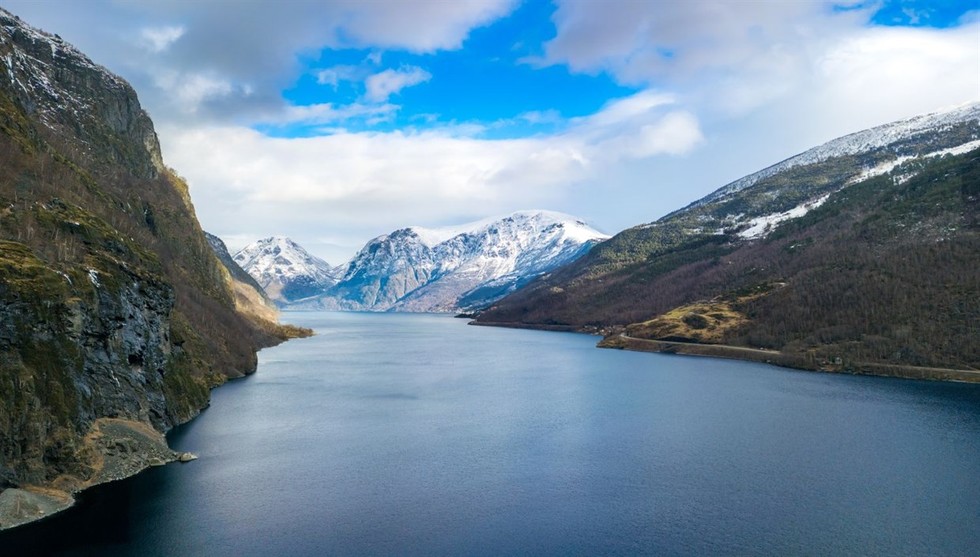
A massive 500-meter megatsunami, the second-tallest ever recorded, recently struck Alaska’s Tracy Arm Fjord after a landslide dumped 64 million cubic meters of rock into the water.
About Fjord:
A fjord is a long, narrow, deep body of water that stretches far inland from the coast.
A fjord was formed when a glacier made a U-shaped valley by segregation through several ice ages .
The valley was then filled with water from the sea once the glaciers melted.
The opening toward the sea is called the mouth of the fjord, and is often shallow.
The fjords can be long and quite deep and often surrounded by high mountains.
Typically, fjords reach their greatest depths farther inland, where the force of the glacier that formed them was the most potent.
Many fjords are actually deeper than the sea that feeds into it.
Some features of fjords include coral reefs and rocky islands called skerries.
Epishelf Lakes:
Another feature of some fjords is the presence of epishelf lakes. These lakes occur when melted fresh water becomes trapped under a floating ice shelf.
This freshwater does not mix with the saltwater below, but rather floats on top of it.
Fjords are found mainly in Norway, Chile, New Zealand, Canada, Greenland, and the U.S. state of Alaska.
Sognefjorden, a fjord in Norway, is more than 160 kilometers (nearly 100 miles) long.
Dear Student,
You have still not entered your mailing address. Please enter the address where all the study materials will be sent to you. (If applicable).