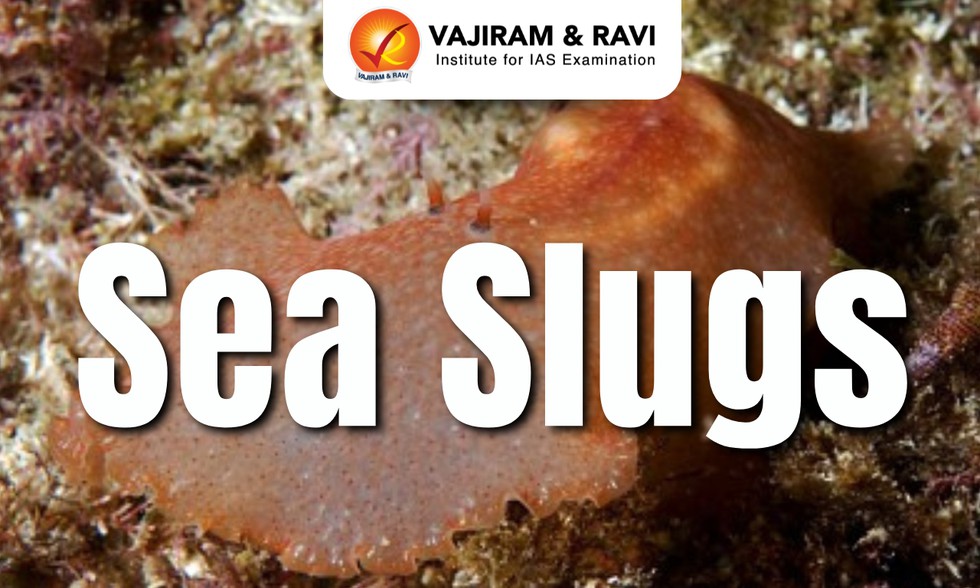
A rare sea slug, Discodorid cebuensis, has been recorded in India for the first time after being spotted recently at Haji Ali, Mumbai.
About Sea Slugs:
Sea slugs, sometimes called ocean slugs, water slugs, or nudibranchs, are soft-bodied marine molluscs found in all the world’s oceans, from shallows to the deep sea.
They are a type of gastropod, a large group of mollusks that includes both marine and land species such as snails and slugs.
They have no shells, quills, or mantle cavities.
They look like naked snails, i.e., without shells.
These slow-moving grazers consume algae, sponges, and other small invertebrates, showcasing a range of feeding habits.
They are usually found in coral reefs, and their presence is a significant indicator of a strong coral ecosystem.
Sea slugs are renowned for their vibrant colours and intricate patterns, which often serve as warning signals to predators due to their toxicity.
They get their toxicity from the creatures they eat, and some sea slugs can even keep the stinging cells of jellyfish inside their bodies.
On their heads, nudibranchs have tentacles that serve as important sensory organs, helping them detect chemicals and movement in the water.
When the sea slug eats, it absorbs and displays its prey’s pigment—the substance that gives the prey its color.
Beyond their striking appearance, sea slugs possess other intriguing traits.
Some can photosynthesise, producing their own food with sunlight.
Others regenerate lost limbs, and a few can steal genes from their prey and incorporate them into their DNA.
Most sea slugs are active throughout the day, but some species are also nocturnal.
Dear Student,
You have still not entered your mailing address. Please enter the address where all the study materials will be sent to you. (If applicable).