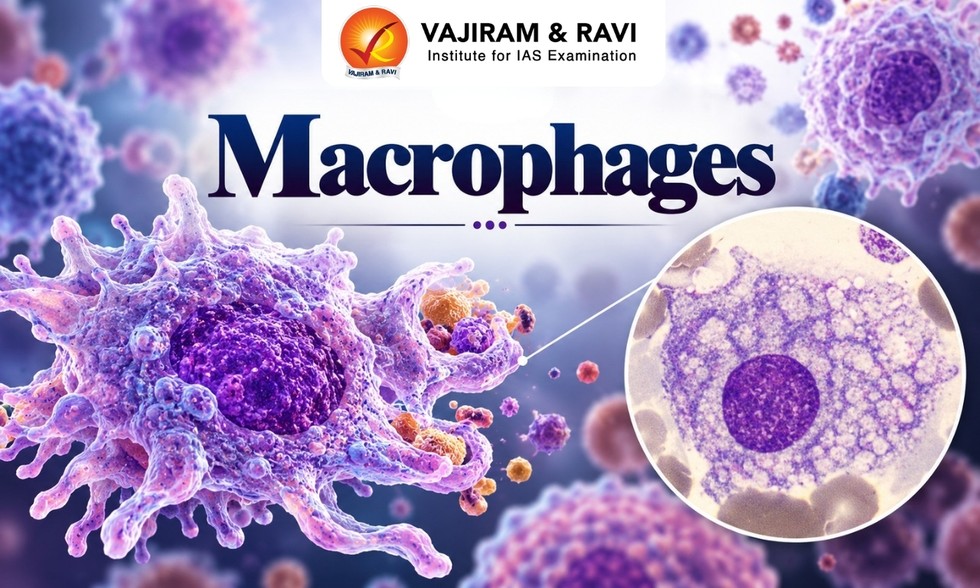
Emerging evidence indicates that macrophage behavior emerges from the coordinated integration of ontogenetic imprinting, environmental sensing, metabolic rewiring, and epigenetic remodeling.
About Macrophages:
Macrophages are specialised white blood cells (WBCs) that play an important role in the body's immune system by engulfing and destroying pathogens, dead cells, and cellular debris.
Most macrophages develop from monocytes, a type of WBC produced in the bone marrow. Some tissue-resident macrophages originate from embryonic cells.
Macrophages do not travel through the blood. Instead, they remain in one part of the body, within specific tissues.
Types:
Macrophages have two modes (phenotypes):
M1, or inflammatory mode: M1 macrophages destroy germs and cancer cells and alert immune cells to infections.
M2, or anti-inflammatory mode: M2 macrophages help with wound healing, clearing out dead cells, and tissue repair.
Macrophages are known for their ability to destroy foreign substances that get into the body. They also help in:
Activating B cells and T cells, which helps them target pathogens.
Removing dead and damaged cells.
Releasing proteins like cytokines that alert other immune cells to infections.
Repairing tissue, healing wounds, and reducing inflammation.
Breaking down old red blood cells and recycling the iron.
Regulating fetal tissue development.
Regulating organ function and maintaining homeostasis.
How do they work?
Macrophages have receptors on the outside that they use like antennae. These antennae get signals from substances in the environment around them.
If a macrophage detects something it should get rid of, it swallows or “eats” it (a process called phagocytosis, or “cell eating”).
Dear Student,
You have still not entered your mailing address. Please enter the address where all the study materials will be sent to you. (If applicable).