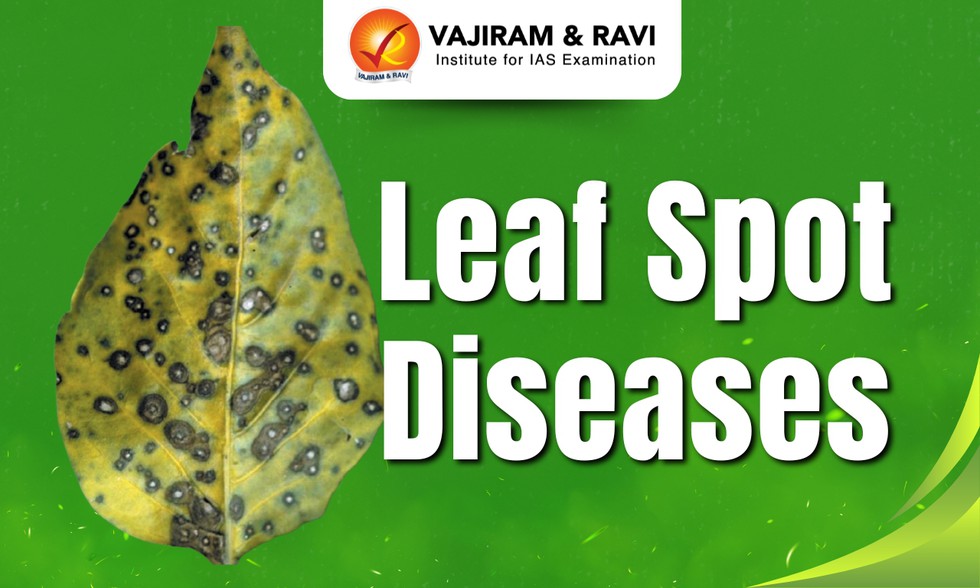
About Leaf Spot Diseases:
- Leaf spot is the name given to a group of plant diseases caused by fungi, bacteria, or other microorganisms.
- These pathogens exploit the leaf’s surface and, once established, can quickly proliferate, producing visible spots or lesions.
- The spots on the leaves can be small or large. Leaf spot also interferes with the plant's photosynthesis.
- If left untreated, leaf spot can eventually severely damage the plant’s foliage.
- Heavily infected leaves turn yellow and brown, shrivel, and drop prematurely.
- Almost every region around the world is susceptible to some form of leaf spot disease.
- The prevalence and severity depend on local climate conditions, with humid and wet environments particularly conducive to the spread and growth of these pathogens.
- They are common on vegetables, bedding plants, fruit trees, ornamental trees and shrubs.
- The two main types of leaf spot are either fungal or bacterial, with 85% of plant diseases caused by fungi.
- While not caused by a pathogen, certain environmental conditions can cause symptoms that resemble leaf spots.
- Factors such as water stress, sun scald, chemical burn from pesticides or herbicides, or nutrient imbalances can lead to spot-like lesions on leaves.
- Leaf spot diseases present a serious threat to global agriculture, impacting food production, economic stability, and environmental health.
- Controlling and preventing leaf spot diseases require a combination of cultural, biological, and chemical methods.