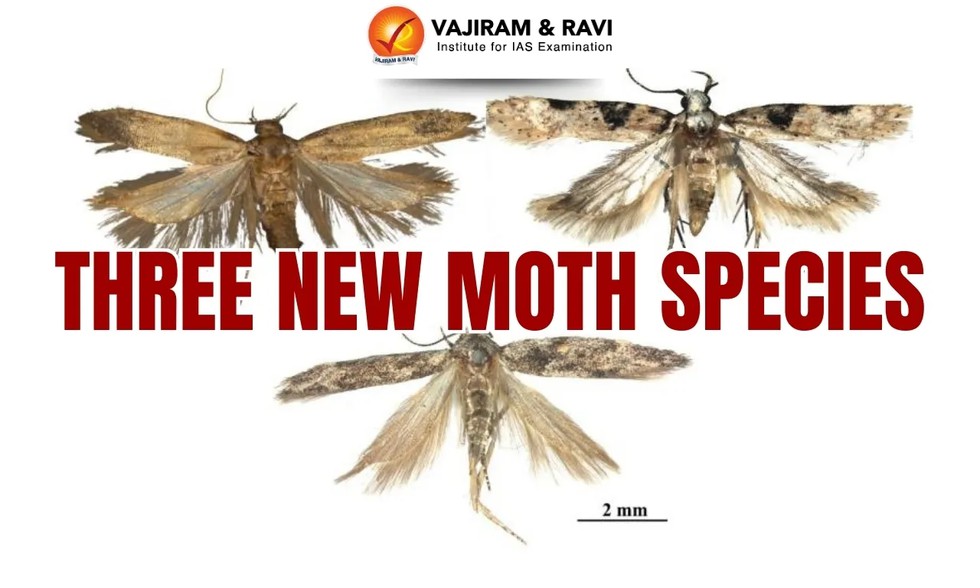
About Three New Moth Species:
- The three species are Gelechia bilobuncusa, Gelechia adi, and Istrianis ladakhensis.
- They were discovered in the high-altitude landscapes of the Himalayas.
- Gelechia bilobuncusa:
- It was found in Himachal Pradesh.
- Its name is a scientific nod to the unique bilobed shape of its uncus, a part of the male genitalia.
- It is characterised by pale brown wings with irregularly scattered black scales.
- Gelechia adi:
- It was discovered in the Ramsing area of Arunachal Pradesh.
- It is named in honour of the local Adi tribe inhabiting the Upper Siang district.
- It is visually distinct, featuring ivory-white forewings interrupted by a dramatic black streak across the base and triangular spots.
- Istrianis ladakhensis:
- It is named after its type locality in Ladakh.
- This moth is adapted to the high-altitude environment, sporting light brown wings mottled with dark grey, white, and orange scales, distinguishing it from its closest relatives in the genus.
What are Moths?
- Moths are insects that belong to the order Lepidoptera, which they share with butterflies.
- Highly adapted, they live in all but polar habitats.
- Moths vary greatly in size.
- They often have duller colors compared to butterflies, which helps with camouflage.
- Moth antennae are often feathery, unlike the thin and clubbed antennae of butterflies.
- Most moths are active at night, but some are diurnal.
- The larvae and adults of most moth species are plant eaters.