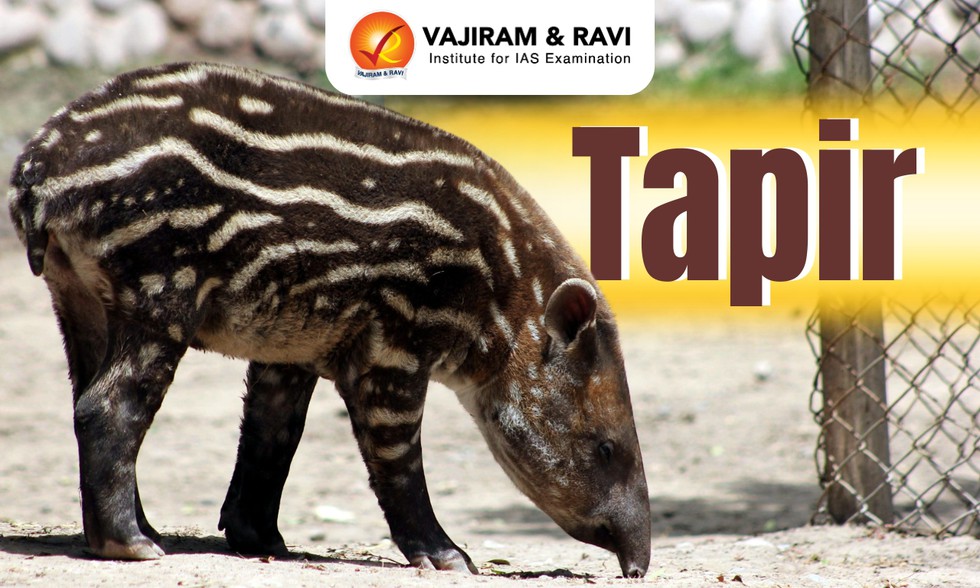
World Tapir Day is celebrated every year on April 27.
About Tapir:
Tapirs are large herbivorous mammals.
They are often called “living fossils” due to their lineage dating back millions of years.
Appearance: They have short, flexible snout, tapirs use it to grab leaves and fruits.
They are excellent swimmers and spend a lot of time in water.
Diet: They’re herbivores and fifty per cent of their diet consists of fruit.
Distribution: They inhabit jungle and forest regions of South America, Central America, and Southeast Asia.
There are only four species of tapirs. They live in distinct geographical areas.
Malayan Tapir: It is the largest of the tapirs which is native to Southeast Asia. Its black-and-white stripes help it blend into the forest. (IUCN Status: Endangered)
Baird’s Tapir: It is Central America's biggest land mammal. It is found in tropical forests and around water. (IUCN Status: Endangered)
Lowland Tapir: The South American tapir is the most widespread. It is found in the Amazon Basin and other areas. (IUCN Status: Vulnerable)
Mountain Tapir: It is the rarest and found in the high Andes.(IUCN Status: Endangered)
Ecological Role: They form an important part of the ecosystem as seed dispersers.
Dear Student,
You have still not entered your mailing address. Please enter the address where all the study materials will be sent to you. (If applicable).