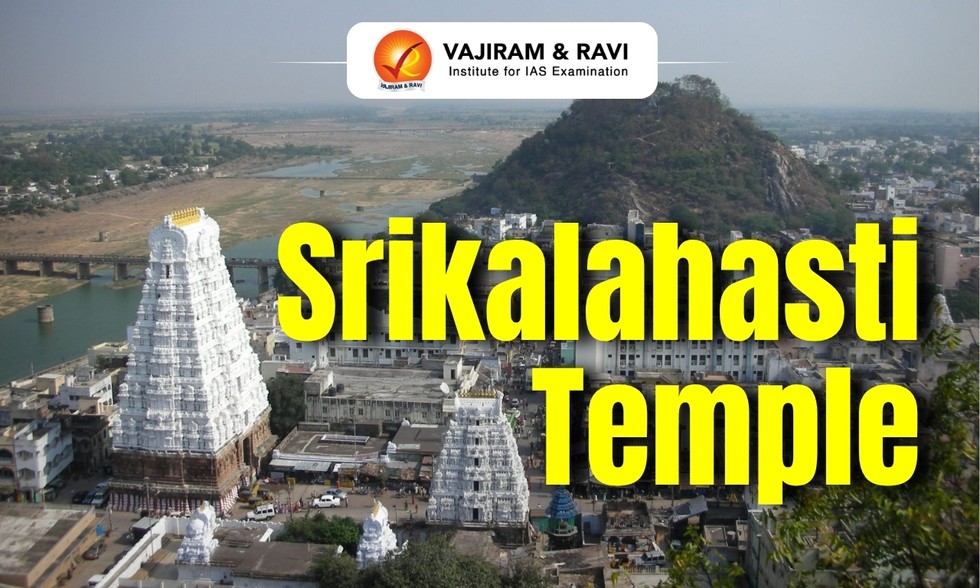
About Srikalahasti Temple:
- Srikalahasti Temple, also known as Srikalahasteeswara Temple, is a Hindu temple located in the town of Srikalahasti in the Tirupati district of Andhra Pradesh.
- It is built adjoining a hill and on the banks of the river Swarnamukhi.
- It is also called as “Dakshina Kailasam” meaning the Southern abode of Shiva.
- History:
- The origin of the Srikalahasti Temple dates back to the 5th century when the inner temple was constructed.
- The outer temple and its main structure were built in the 11th century by the Chola emperor, Rajendra Chola I.
- The magnificent Gopurams at the entrance were constructed by Kulottunga Chola I during the 11th
- Significant renovations were made throughout the rule of the Chola dynasty, with engravings of the various Chola emperors noticeable within the temple.
- The Vijayanagara Empire also made contributions to the renovations of the temple.
- The temple showcases the Dravidian architectural style with its heavy carvings and sculptures.
Key Facts about PRASAD (Pilgrimage Rejuvenation and Spiritual Heritage Augmentation Drive) scheme:
- It was launched by the Ministry of Tourism as a Central Sector Scheme with the objective of integrated development of identified pilgrimage destinations.
- The primary objective of the scheme is to develop tourism infrastructure at pilgrimage and heritage sites, ensuring a more enriching experience for pilgrims and heritage enthusiasts.
- In view of the decision taken by the government for closure of the National Heritage City Development and Augmentation Yojana (HRIDAY) scheme of the ministry of housing and urban development and for inclusion of projects for development of heritage destinations in PRASAD, the scheme guidelines have been modified and the nomenclature of the scheme has also been changed from PRASAD to ‘National Mission on Pilgrimage Rejuvenation and Spiritual Heritage Augmentation Drive’ (PRASHAD) in October 2017.
- Under the scheme, the ministry provides financial assistance to state governments and Union Territory administrations for the development of tourism infrastructure at these sites.
- The scheme aims infrastructure development such as entry points (road, rail, and water transport); last mile connectivity, basic tourism facilities like information/interpretation centers, ATM/money exchange, eco-friendly modes of transport, area lighting and illumination with renewable sources of energy, parking, drinking water, toilets, cloak room, waiting rooms, first aid centers, craft bazars/haats/souvenir shops/cafeteria, rain shelters, telecom facilities, internet connectivity, etc.