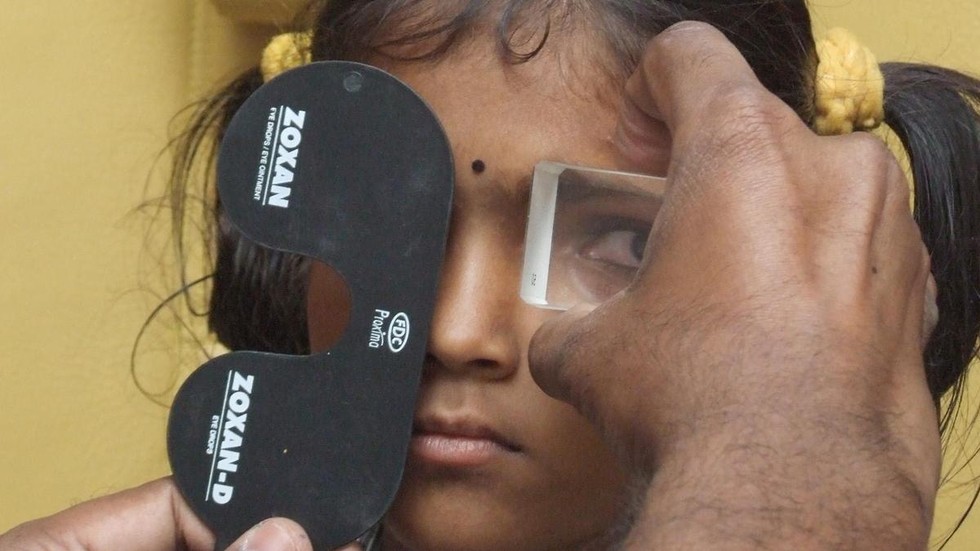
A recent study estimated that horizontal strabismus affects 1.81% of the global population, or about 138.5 million people.
About Squint Eye:
It is medically known as strabismus.
It is a condition in which the two eyes do not align properly.
It can affect children and adults and, when it develops during childhood, can interfere with the normal development of vision.
In this condition one eye may turn inwards towards the nose (esotropia),outwards (exotropia), upwards or downwards, while the other eye remains focused on an object.
Causes:
Strabismus occurs when the systems that control eye movement and alignment do not work properly together.
Genetic factors can play a role, and children with a family history of strabismus are at higher risk.
It is also more common in children with certain neurological or developmental conditions. Being born prematurely or with low birth weight are recognised risk factors.
In adults, strabismus can develop due to conditions such as diabetes, thyroid eye disease, stroke, neurological disorders or trauma.
Treatment: Glasses are often the first treatment when a refractive error contributes to the misalignment. Surgery may be needed when glasses and other treatments do not adequately correct the misalignment.
Dear Student,
You have still not entered your mailing address. Please enter the address where all the study materials will be sent to you. (If applicable).