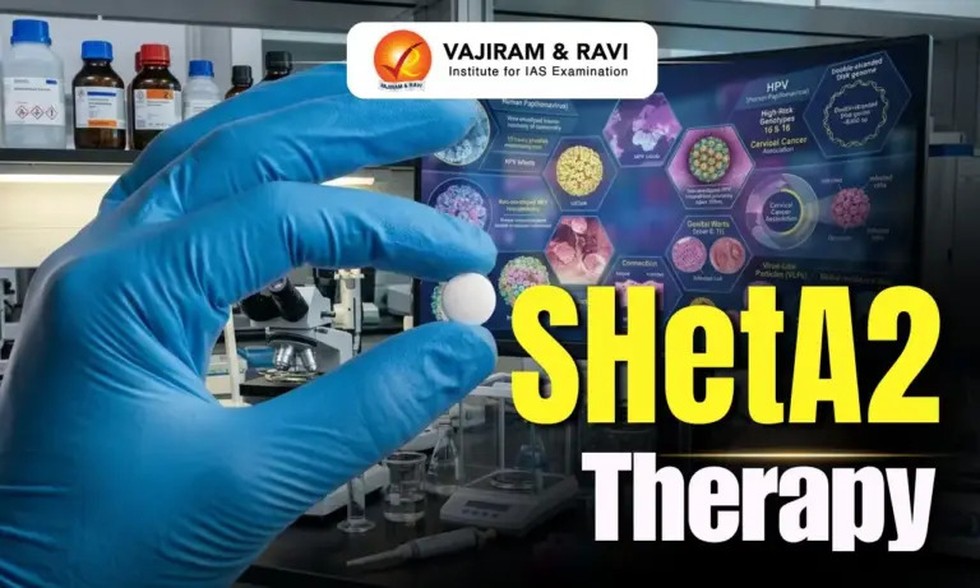
About SHetA2 Therapy:
- SHetA2 is a small molecule therapy that is designed to stop an HPV infection from causing cancer.
- Small molecule therapies are chemically manufactured, low-weight compounds that can easily be absorbed by the body.
- It is designed to treat HPV-induced cervical dysplasia and cervical cancer.
- It is developed through collaboration between scientists at ICMR's National Institute of Cancer Prevention and Research (NICPR) and the University of Oklahoma's Stephenson Cancer Center in the US.
- Working :
- This therapy targets three proteins in the human body called mortalin, heat shock cognate (hsc70), and glucose regulated protein 78 (Grp78).
- These are essential for the proliferation of the cancer-causing oncoprotein of the virus.
- It works by breaking the connection between the HPV-E7 protein and a host protein inside human cells.
- Normally, this host protein protects E7 and allows it to keep damaging healthy cells. When SHetA2 breaks this connection, the harmful E7 protein is destroyed by the body’s normal immune defences
- The therapy is meant for those who have developed precancerous lesions of cervical cancer.
- The therapy has, at present, been evaluated in an oral, capsule form.
Key Facts about Human Papillomavirus (HPV)
- HPV is the most common sexually transmitted infection (STI), and there are more than 100 types of HPV.
- However, some types of HPV infection cause skin growths called warts, and some types of HPV infection can cause cancer.
- Transmission:
- The virus that causes HPV infection is transmitted through skin-to-skin contact.
- Most people get a genital HPV infection through direct sexual contact, including vaginal, anal, and oral sex.
- About 80% of people – both men and women – will get an HPV infection at some point in their lives.
- Symptoms may include warts on the genitals or anus or cancerous growths in the mouth or throat.
- Treatment: There’s no cure for HPV. HPV vaccination is the most effective way to prevent HPV-related cancers.