¯
(current)
Login
Register
Not LOGGED In
CLICK TO LOGIN
Feed
Courses
Live Classes
Mains CA Articles
Prelims CA Pointers
MCQs
Handouts
Prelims Test
Mains Test
Mains Daily Answer
Videos
Materials
CA Notes
Analyst
Mentoring Courses
Mentoring Sessions
Counselling Sessions
Home
/
Current Affairs
/
Ru-Soam Bridges
Ru-Soam Bridges
May 1, 2026
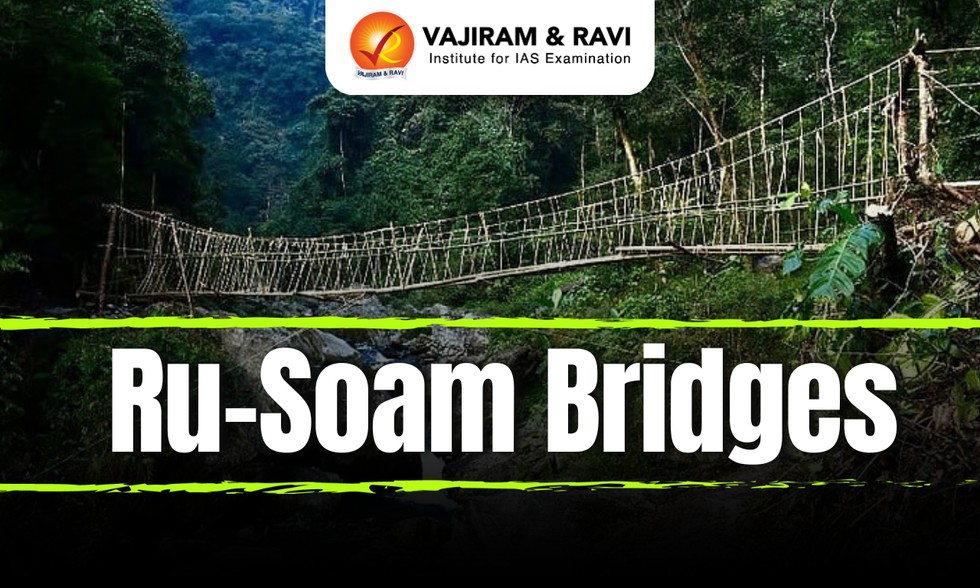
UNESCO has partnered with the Sikkim government to document the indigenous engineering known as Ru-Soam.
About Ru-Soam
Bridges:
It is a
cane bridge
built
by the Lepcha community in Sikkim, especially
in the
Khangchendzonga Biosphere Reserve
.
In the Lepcha language, ‘Ru’ means cane or rattan, while
‘Soam’
refers to a bridge.
Materials Used:
It is crafted from locally available
materials such as bamboo, cane, and wood.
Structural Features:
It consists of two
parallel canes called soamgyang.
The soamgyang are tied to trees on the two ends, ensuring that the bridge remains suspended.
A ru-soam contains
swinging cane loops called ahool.
Bamboos, or
soamgur
, are used to make the
deck of the bridge.
The bridges
can be 100 metres long
, and two or three people can cross them at a time.
This engineering practice reflects a sophisticated understanding of
ecological balance and structural resilience.
The Ru-Soam cane bridges are not relics of the past; they are living expressions of engineering ingenuity.
Source :
UNESCO, Sikkim govt partner to document Ru-Soam engineering practices
Latest Current Affairs
See All
Enquire Now
Mailing Address Not Entered
Dear Student,
You have still not entered your mailing address. Please enter the address where all the study materials will be sent to you. (If applicable).
Click here to enter to Proceed
Vajiram