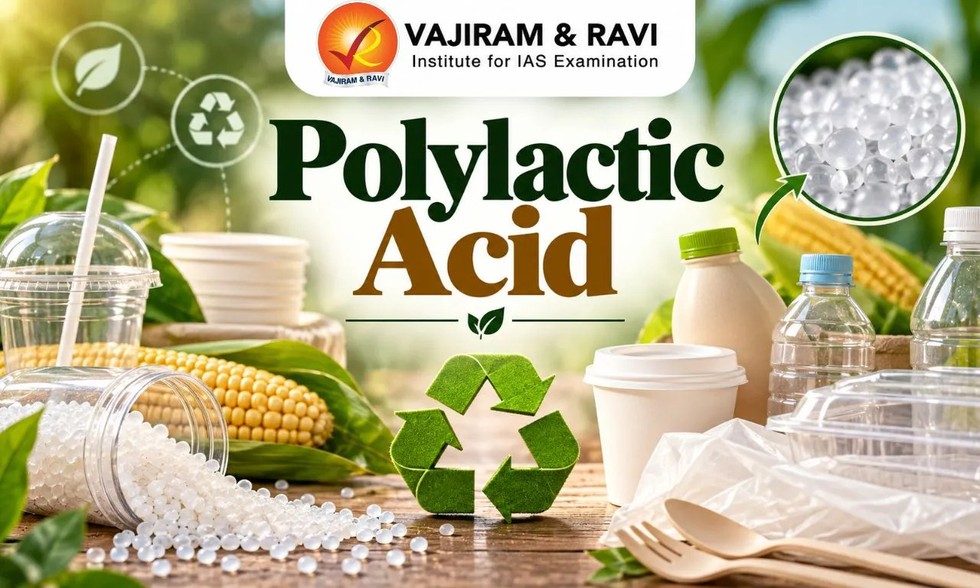
Recently, the Union minister for Science and Technology launched the commercial use of bio-based biodegradable plastic based on Polylactic Acid (PLA).
About Polylactic Acid:
It is a biodegradable, thermoplastic polymer derived from renewable resources such as corn starch or sugarcane.
It is synthesized through the fermentation of glucose to produce lactic acid, which is then polymerized.
Applications: PLA is known for its eco-compatibility and versatility, finding applications in areas like food packaging, medical sutures, and 3D printing.
Advantages of Polylactic Acid:
Reduces Carbon Footprint: Its bio-based origin ensures a reduced carbon footprint and aligns with global sustainability goals.
Dual Benefit: PLA’s ability to integrate agricultural waste into the value chain can create dual benefits first with farmers gaining additional income streams, and second is industries achieving a sustainable supply of raw materials.
Resource utilization: Integrating PLA production within existing agro-industrial frameworks—such as co-locating bioplastic plants with sugar mills—can optimize resource utilization while reducing waste.
Dear Student,
You have still not entered your mailing address. Please enter the address where all the study materials will be sent to you. (If applicable).