A suspected case of pneumonic plague in Siberia has triggered heightened public-health precautions after a 28-year-old laboratory worker at an anti-plague research institute died following severe pneumonia.
About Plague:
Plague is an infectious diseasecaused by the bacteria Yersinia pestis, usually found in small mammals and their fleas.
Transmission:
It is transmitted between animals through fleas.
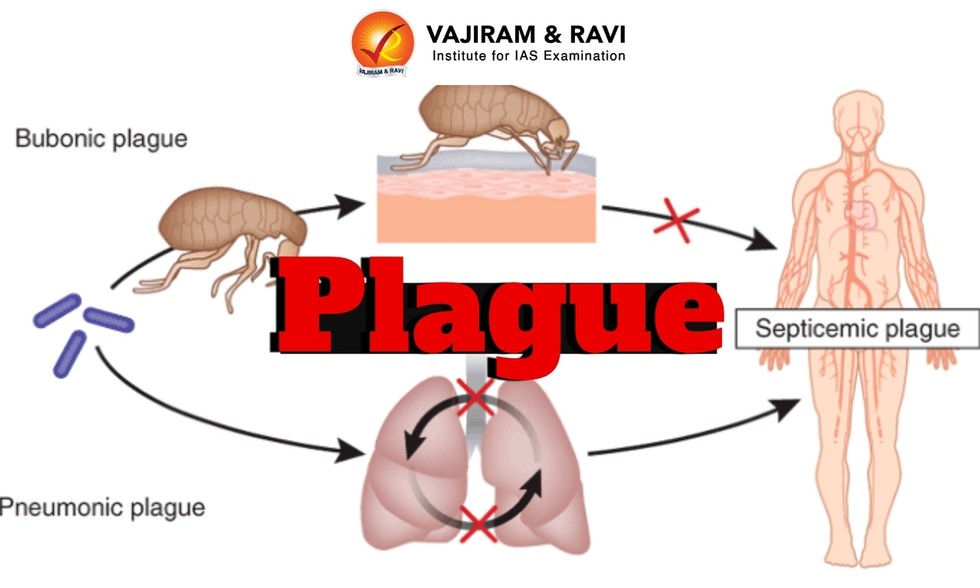
Humans can be infected through: infected flea bites, contact with infected animal tissues or fluids and in the case of pneumonic plague inhalation of respiratory particles from an infected person or animal.
Types of Plague
Bubonic Plague:
It is the most common form of plague and is caused by the bite of an infected flea.
Plague bacillus, Y. pestis, enters at the bite and travels through the lymphatic system to the nearest lymph node where it replicates itself.
The lymph node then becomes inflamed, tense and painful, and is called a ‘bubo’.
At advanced stages of the infection, the inflamed lymph nodes can turn into open sores
Pneumonic Plague:
It is the most virulent form of plague.
Transmission: It transmits through respiratory droplets or particles from an infected person can infect another person, particularly during close and sustained contact.
Septicaemic Plague:
It occurs when pestis multiplies rapidly in the bloodstream.
It can develop from any other form of plague.
Treatment for Plague:
There is no routinely recommended plague vaccination for the general public.
Antibiotics and supportive therapy are effective against plague if patients are diagnosed in time.
Dear Student,
You have still not entered your mailing address. Please enter the address where all the study materials will be sent to you. (If applicable).