
Nocte Community
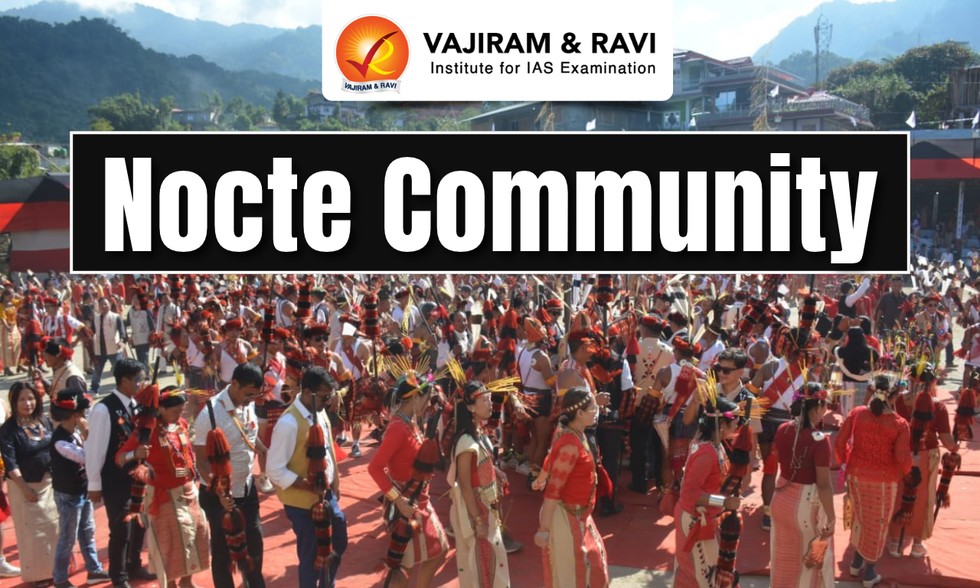
The Nocte community of Arunachal Pradesh recently celebrated its 58th Central Chalo Loku Festival at Khonsa, headquarters of Tirap district.
About Nocte Community:
- They are one of the major indigenous tribal communities of Arunachal Pradesh.
- They are primarily distributed in the Patkai hills of the Tirap district of Arunachal Pradesh.
- Ethnically related to the Konyak Naga, their origins can be traced back to the Hukong Valley in Myanmar, where they migrated between 1670 and 1700.
- Society:
- The Nocte society is based on patrilineal principles.
- The basic unit of the Nocte tribe is the clan. It is organized under a chief known as "Lowang" who controls a village.
- The chief and his descendants form a separate class called "Lowang Jat" while the commoners are called "Sana Jat".
- Marriage in the same clan is strictly prohibited.
- Livelihood:
- The Nocte tribe’s traditional economy is shifting cultivation, hunting, gathering, and fishing.
- Over the last two decades, some of them have started wet or permanent cultivation. In this cultivation, paddy, millet, arum, tapioca, and a few local pulses are grown.
- They also earn money by making and selling goods made from bamboo, cane, and other natural materials.
- Religion: The Nocte were followers of Theravada Buddhism and Animism, although they have adopted Hinduism (particularly Vaishnavism) since the 18th century, under the influence of Shri Shankardeva.
- Festivals:
- Their main festival is Chalo Loku, which is a harvest festival that is celebrated in the month of October-November annually, right after the harvest of the paddy field, and before the start of the new Jhum cultivation.
- Other agricultural festivals include Oriah and Ronghoan.
Source: Arunachal's Nocte community celebrates 58th Central Chalo Loku in Khonsa