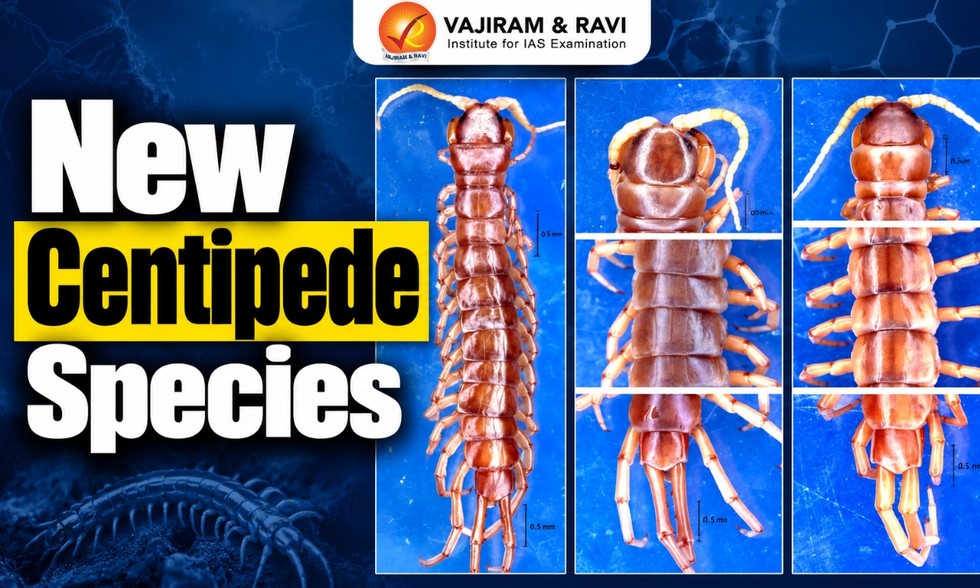
About Rhysida quadrispinosa
- It got its name from the Latin-derived term quadrispinosa.
- It has four ventrolateral spines on its ultimate leg prefemur.
- It features 18 antennal articles, unique body segment margination starting from tergites 7–11, and a distinct arrangement of spines on its ultimate legs.
About Rhysida coorgensis:
- It is named after Coorg in Karnataka, where researchers first collected the specimen.
- It has a specific paramedian suture starting points on its back plates and unique coxopleural spine configurations
About Rhysida neyyarensis:
- It is named after the Neyyar Wildlife Sanctuary in Kerala, where it was discovered.
- It is distinguished by its specific pattern of tarsal and tibial spurs, possessing two tarsal spurs on legs 1 through 19, alongside its own distinct spinal formula on the ultimate legs.
Key Facts about Centipede:
- These are long, many-legged
- Centipedes are not insects. They are arthropods in the myriapod group and belong to the class Chilopoda.
- Habitat: They live in damp, sheltered places such as leaf litter, soil, under bark, beneath rocks and inside rotting logs.
- Appearance: They have segmented bodies, antennae, breathing holes called spiracles and one pair of legs on each body segment.
- Diet: Centipedes are Their first pair of legs has changed into venom claws, called forcipules, which help them catch and hold prey.