
Nagarjunagar-Srisailam Tiger Reserve
The Central and State governments have proposed an alternative elevated corridor to ease night-time vehicle movement restrictions through the Nagarjunasagar-Srisailam Tiger Reserve (NSTR) while ensuring wildlife conservation.
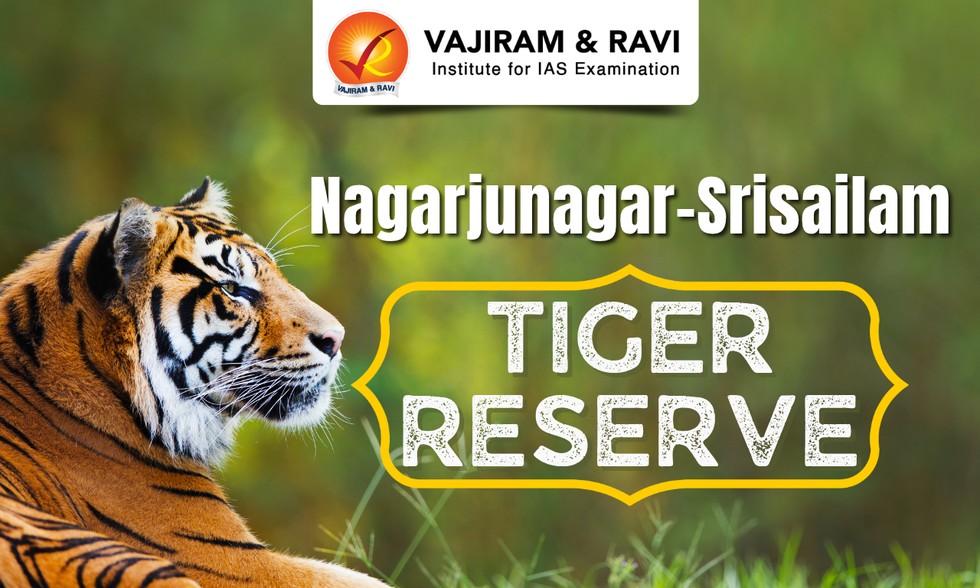
About Nagarjunagar-Srisailam Tiger Reserve:
- It is located in the Nallamala hill ranges (an offshoot of the Eastern Ghats) of Andhra Pradesh.
- It is the largest tiger reserve in India and has the largest Critical Tiger Habitat area.
- It is named after two major dams in the area, Nagarjuna Sagar Dam and Srisailam Dam.
- Two wildlife sanctuaries, namely Rajiv Gandhi Wildlife Sanctuary and Gundla Brahmeswaram Wildlife Sanctuary (GBM), constitute the NSTR.
- Rivers: Krishna River is the major water source, with tributaries like Dindi, Peddavagu, and others.
- The reserve holds significant importance with ancient temples like the Mallikarjuna Swamy Temple at Srisailam and several archaeological sites, including Buddhist relics from the Nagarjuna Konda area.
- Tribes: Chenchu and Lambada tribal communities maintain their ancestral relationship with the Nallamala forest.
- Vegetation: It mainly consists of tropical dry deciduous forests having an undergrowth of bamboo and grass.
- Flora: The habitat has several endemics like Andrographis nallamalayana, Eriolaena lushingtonii, Crotalaria madurensis Var, Dicliptera beddomei, and Premna hamiltonii.
- Fauna: Tiger, Leopard, Wolf, Wild Dog, Jackal, Sambar, Chital, Chowsingha, Chinkara, Mouse Deer, Wild boar, and Porcupine etc.
Source: Survey taken up for alternative Andhra's Srisailam route