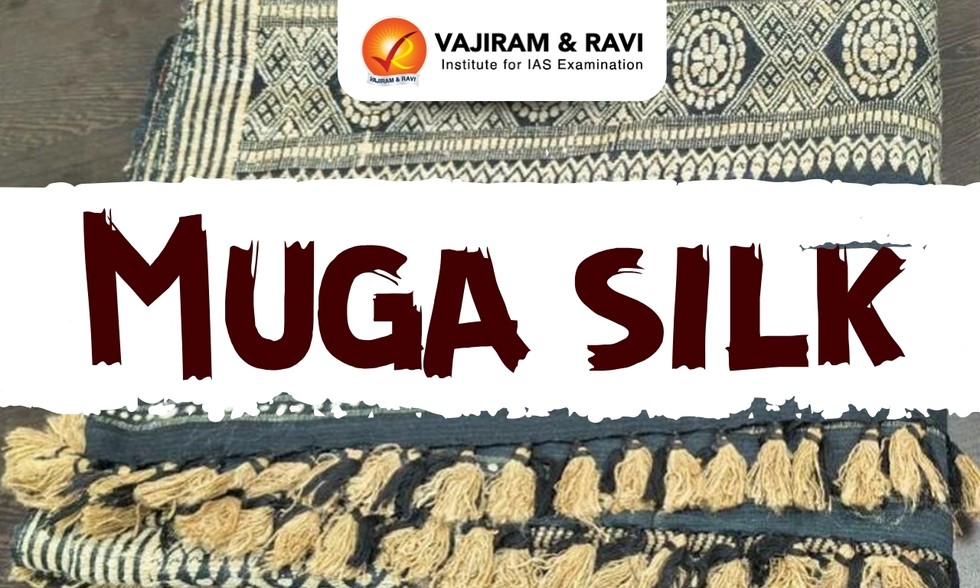
About Muga silk:
- It is known as the "golden silk" of Assam.
- It is a rare and prestigious textile from the Brahmaputra Valley.
- It is obtained from semi-domesticated multivoltine silkworm, Antheraea assamensis. These silkworms feed on the aromatic leaves of Som and Soalu plants and are reared on trees similar to that of tasar.
- It is valued for its natural golden hue, durability and eco-friendly production without artificial dyes.
- Muga culture is specific to the state of Assam and an integral part of the tradition and culture of that state.
- The muga silk, an high value product is used in products like sarees, mekhalas, chaddars, etc.
- It was received the Geographical Indication (GI) tag in 2007.
Key Facts about Shirui Lily silk
- It draws its inspiration from the misty heights of Shirui Kashong peak in Manipur.
- It is inspired by the rare Shirui Lily, (a delicate bell-shaped flower with pale pinkish-white petals that blooms nowhere else in the world).
- For the Tangkhul Naga community of Manipur, the Shirui Lily symbolises purity, identity, and cultural pride.
- The lily also holds deep cultural resonance in Italy, where it has long symbolised purity, grace and artistic refinement, frequently appearing in Renaissance art.