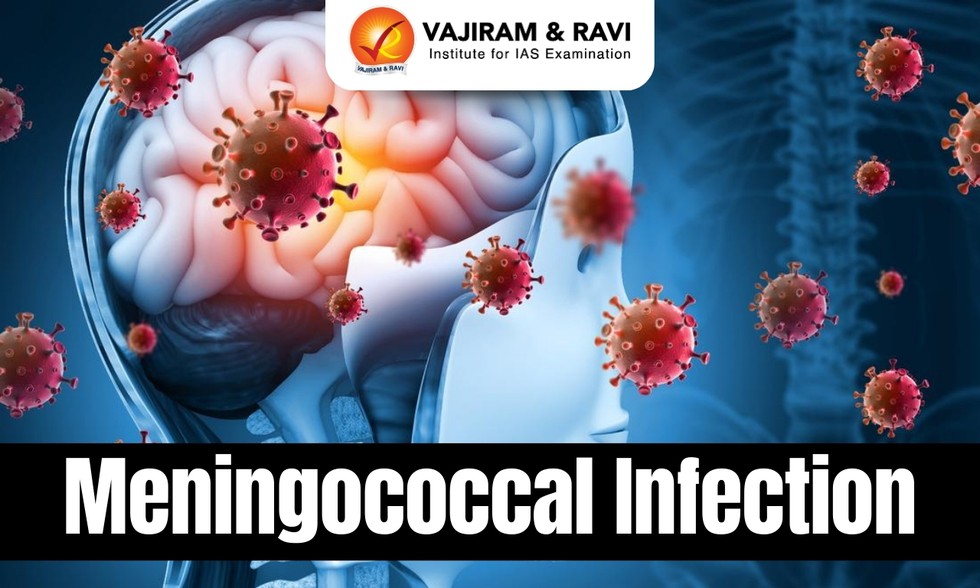
About Meningococcal Infection:
- Meningococcal infection is a severe, rapidly progressing disease caused by the bacterium Neisseria meningitides.
- It leads to life-threatening meningitis (infection of the lining of the brain) or meningococcemia (blood poisoning).
- It infects meninges, the membranes that cover the brain and spinal cord to become inflamed.
- Transmission:
- People spread meningococcal bacteria to other people by sharing respiratory and throat secretions (saliva or spit).
- Generally, it takes close or lengthy contact to spread these bacteria.
- They are not as contagious as germs that cause the common cold or the flu.
- Symptoms: It includes high fever, severe headache, stiff neck, and a non-blanching rash.
- Treatment: It is treated with antibiotics. Other treatments may be needed, including:
- Help with breathing, such as oxygen therapy.
- Drugs to treat low blood pressure.
- Ways to treat damaged or dead skin, including surgeries.