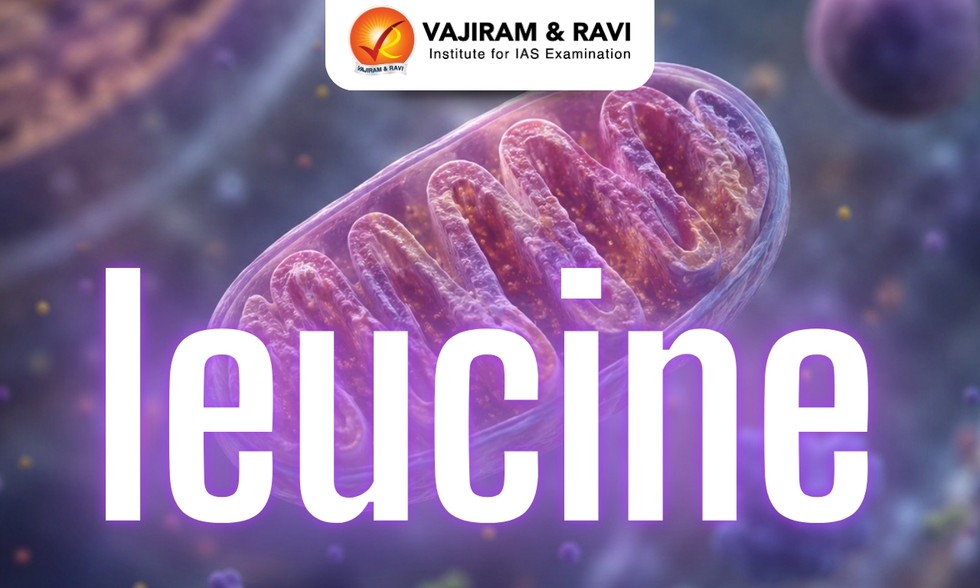
Researchers said that branched chain amino acids leucine acts like a protective shield and inhibits the premature degradation of outer mitochondrial membrane proteins.
About Leucine:
Leucine is an essential amino acid.
It belongs to the family of branched chain amino acids (BCAA) such as isoleucine and valine.
These are needed for the growth and functioning of organs such as muscles, nervous system, the heart, and the brain.
BCAAs are not made in the body and need to be supplied from our diet. Without them, the outer membrane of the mitochondrion cannot be properly constructed or maintained.
Functions:
It is involved in muscle growth, tissue repair, and energy production.
It acts like a protective shield and inhibits the premature degradation of outer mitochondrial membrane proteins.
This is done by leucine interacting with a protein called SEL1L, which has a role in recognising and pulling out damaged or misfolded proteins.
What are Amino Acids?
Amino acids are molecules that combine to form proteins.
Amino acids and proteins are the building blocks of life.
There are 20 different amino acids.
A protein consists of one or more chains of amino acids (called polypeptides) whose sequence is encoded in a gene.
Some amino acids can be synthesized in the body, but others (essential amino acids) cannot and must be obtained from a person’s diet.
The nine essential amino acids are: histidine, isoleucine, leucine, lysine, methionine, phenylalanine, threonine, tryptophan, and valine.
Dear Student,
You have still not entered your mailing address. Please enter the address where all the study materials will be sent to you. (If applicable).