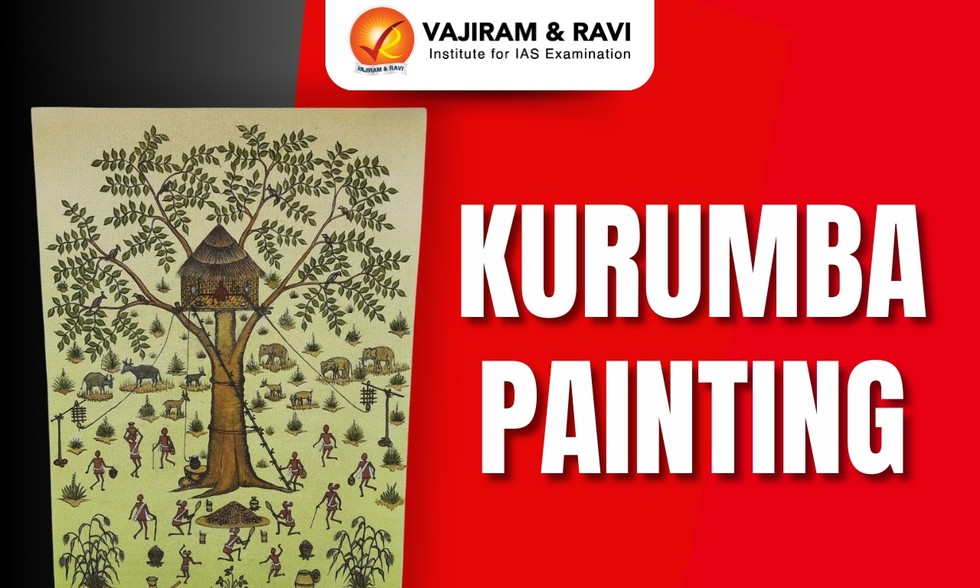
Recently, it was observed that the Kurumba art form is facing the threat of extinction.
About Kurumba Painting:
It is a prehistoric art form, estimated to be over 3000 years old.
It originates from the Kurumba tribe in Tamil Nadu, Kerala, and Karnataka.
The art was traditionally drawn on rocks and in caves across the high hills of the Nilgiris.
Raw Materials and Tools Used:
Kurumba paintings use natural pigments sourced from the forest.
Yellow-brown and black pigments come from Vengai tree resin, while green pigments are derived from crushed leaves.
Artists use fine twigs, bamboo sticks, and natural fiber brushes for application.
The paintings are traditionally done on walls, fabric, and handmade paper.
Design and Color:
Kurumba tribal paintings use natural colors—green from leaves, red and white from soil, and black from tree bark—applied with cloth on cow dung-coated walls.
The art features simple, linear motifs with dots, lines, and geometric shapes, depicting huts, animals, and community life.
Themes center around spiritual beliefs, rituals, festivals, and daily activities.
This minimalist yet expressive style preserves the tribe’s cultural heritage and reflects their deep spiritual bond with nature.
Dear Student,
You have still not entered your mailing address. Please enter the address where all the study materials will be sent to you. (If applicable).