
Key Facts about Vitamin K
A 347% increase has been witnessed in the number of newborns suffering from the Vitamin K Deficiency Bleeding (VKDB) in the US between 2017 and 2025, a new study has found.
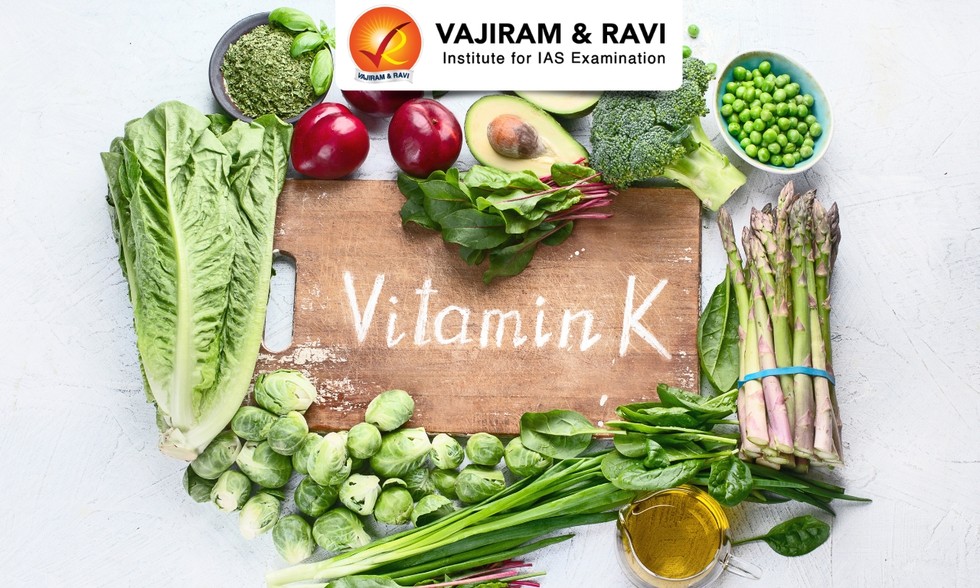
About Vitamin K:
- It is a fat-soluble vitamin that comes in two forms.
- The main type is called phylloquinone (Vitamin K1), found in green leafy vegetables like collard greens, kale, and spinach.
- The other type, menaquinones (Vitamin K2), are found in some animal foods and fermented foods.
- Menaquinones can also be produced by bacteria in the human body.
- Function:
- Vitamin K is known as the clotting vitamin.
- The body needs vitamin K to make certain proteins in the liver that cause blood to clot. These proteins are called clotting factors.
- Prothrombin is a vitamin K-dependent protein directly involved with blood clotting.
- Vitamin K helps maintain strong bones in older adults. Osteocalcin is a protein that requires vitamin K to produce healthy bone tissue.
- Researchers suggest that this vitamin has other benefits too, such as easing morning sickness and protecting cognitive functions, including thinking, memory, learning, and organizing skills.
- It may also help protect heart health.
What is Vitamin K Deficiency Bleeding (VKDB)?
- It is also known as haemorrhagic disease of the newborn.
- This is a bleeding disorder caused in babies when they don't have enough vitamin K to help their blood to clot.
- Newborns have low levels of vitamin K due to low amounts being transferred across the placenta during pregnancy, low amounts in breast milk, and not having enough gut bacteria to create vitamin K initially.
- The limited amount of blood clotting proteins at birth increases the risk of bleeding in infants if they are not given vitamin K supplements.