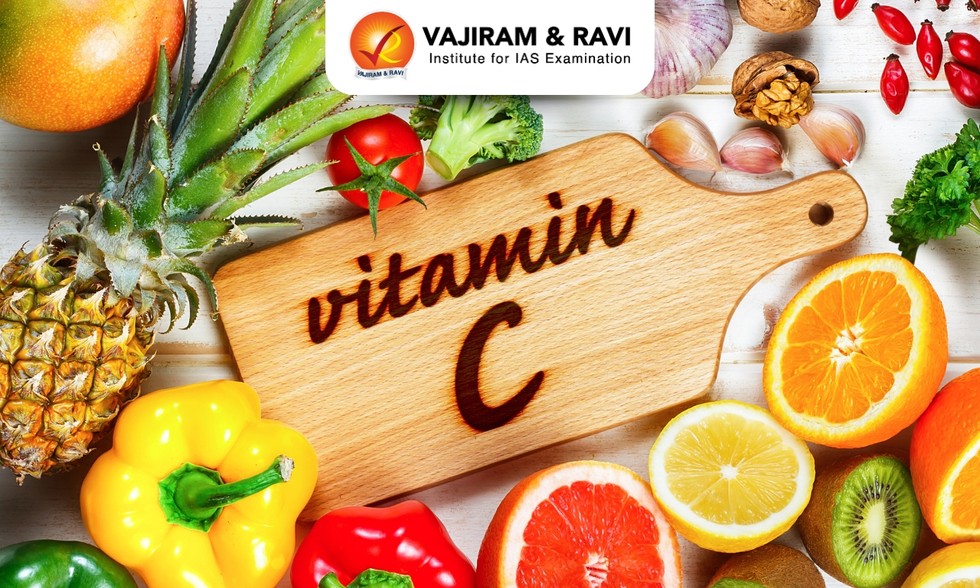
Researchers in Japan recently found that older adults with higher levels of vitamin C in their blood have a higher volume of gray matter in their brains and higher connectivity across brain regions involved in memory and attention.
About Vitamin C:
Vitamin C (also known as L-ascorbic acid or ascorbate) is a water-soluble vitamin.
Function:
It is a powerful antioxidant that can neutralize harmful free radicals.
It is needed for the growth and repair of tissues in all parts of your body.
It helps make several hormones and chemical messengers used in the brain and nerves.
It is used to:
Form an important protein called collagen, used to make skin, tendons, ligaments, and blood vessels.
Heal wounds and form scar tissue.
Repair and maintain cartilage, bones, and teeth.
Aid in the absorption of iron.
Sources:
Unlike most mammals and other animals, humans do not have the ability to synthesize vitamin C and must obtain it from the diet.
Vitamin C comes from fruits and vegetables.
Good sources include berries, cantaloupe, tomatoes, peppers, potatoes, cabbage, Brussels sprouts, broccoli, spinach, and citrus fruits, such as oranges.
Some juices and cereals have added vitamin C.
Vitamin C is sensitive to heat, so some of its nutritional benefits can be lost during cooking. Raw foods are more beneficial as dietary sources.
Vitamin C Deficiency:
Vitamin C is not stored in body, so deficiency can happen quickly.
Vitamin C deficiency is more likely in people who:
Smoke or are around secondhand smoke.
Have certain conditions of the digestive tract or certain types of cancer.
Have a diet that doesn't include enough fruits and vegetables.
Not having enough vitamin C can lead to a condition called scurvy.
Scurvy causes anemia, bleeding gums, bruising, and poor wound healing.
Dear Student,
You have still not entered your mailing address. Please enter the address where all the study materials will be sent to you. (If applicable).