
Key Facts about Vitamin B12
Researchers in Spain recently made a rechargeable battery that uses vitamin B12 as a catalyst.
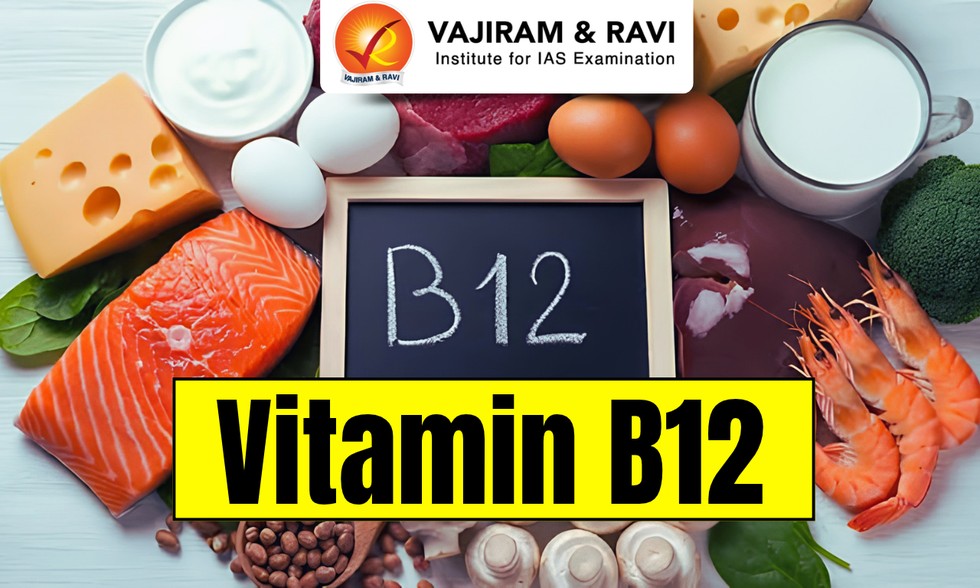
About Vitamin B12:
- Vitamin B12, also called cobalamin, is a water-soluble vitamin.
- It has the largest and most complex chemical structure of all the vitamins.
- It is unique among vitamins in that it contains a metal ion, cobalt.
- The human body cannot produce B12 on its own, so it must be obtained through foods high in vitamin B12 or supplements.
- It is naturally found in animal foods such as fish, meat, poultry, eggs, milk, and milk products.
- It is not present in plant foods unless fortified.
- The body stores vitamin B12 in the liver.
- The body can store vitamin B12 for 2 to 5 years, and it can get rid of any excess or unwanted vitamin B12 in the urine.
- Function:
- It helps create your DNA and red blood cells.
- Your body also needs B12 for the development of your central nervous system (your brain and spinal cord).
- It also helps keep your hair, nails, and skin healthy.
- Vitamin B12 Deficiency:
- Vitamin B12 deficiency occurs when the body does not get or is not able to absorb the amount of the vitamin that the body needs.
- Deficiency is most common in people who:
- Are over the age of 50
- Follow a vegetarian or vegan diet
- Have had stomach or intestinal surgery, such as weight loss surgery
- Have digestive system conditions such as celiac disease or Crohn’s disease
- Have pernicious anemia, an autoimmune condition that occurs when your body destroys cells in your stomach that make an intrinsic factor, which is needed to help your body absorb B12
- Low levels of B12 can cause:
- Anemia
- Loss of balance
- Numbness or tingling in the arms and legs
- Weakness
- Dementia due to metabolic causes.
Source: This battery runs on vitamin B12