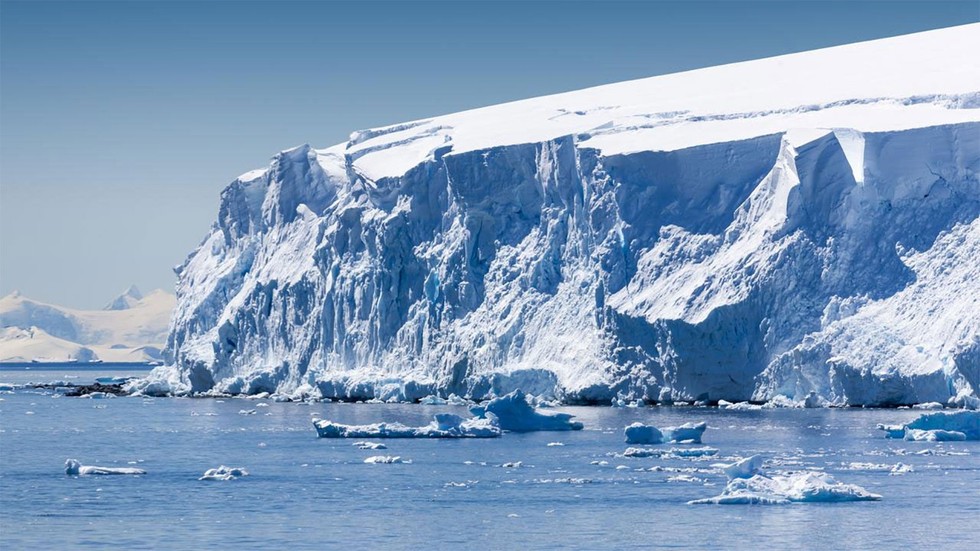
Antarctica’s “Doomsday Glacier” could add up to 3 cm to global sea levels by 2100, twice as much as earlier estimates suggested, according to a new study.
About Thwaites Glacier:
Thwaites Glacier, often referred to as the Doomsday Glacier, is a large glacier located on the north coast of West Antarctica, bordering the Amundsen Sea.
It has the world’s widest glacial interface with the ocean.
It is named for American glacial geologist and geomorphologist Frederik T. Thwaites.
A portion of the glacier is an ice shelf over the Amundsen Sea, held up in several places by underwater plateaus.
It is one of the most vulnerable and important glaciers in the world in terms of future global sea-level rise.
Impact of Melting of Thwaites Glacier:
It has been becoming thinner, retreating, and contributing to sea-level rise.
It contributes 4% to global annual sea-level rise, and its collapse could destabilise the West Antarctic Ice Sheet (WAIS), which would cause catastrophic sea-level rise.
It also acts as a buffer, holding back neighboring glaciers that contain around three meters of potential sea level rise.
If it weakens beyond a point, other glaciers may lose ice faster as well, further increasing sea-level rise.
Higher sea levels will cause coasts to flood more easily, worsen erosion, increase storm surges, and threaten cities, low-lying islands, and ports.
Scientists also report that the temperatures of the bottom waters in the Amundsen Sea have been increasing from continued global warming.
There is evidence that the warming waters are slowly melting submerged ice at the base of the glacier, thereby making the glacier more unstable and raising concerns that it will collapse.
Dear Student,
You have still not entered your mailing address. Please enter the address where all the study materials will be sent to you. (If applicable).