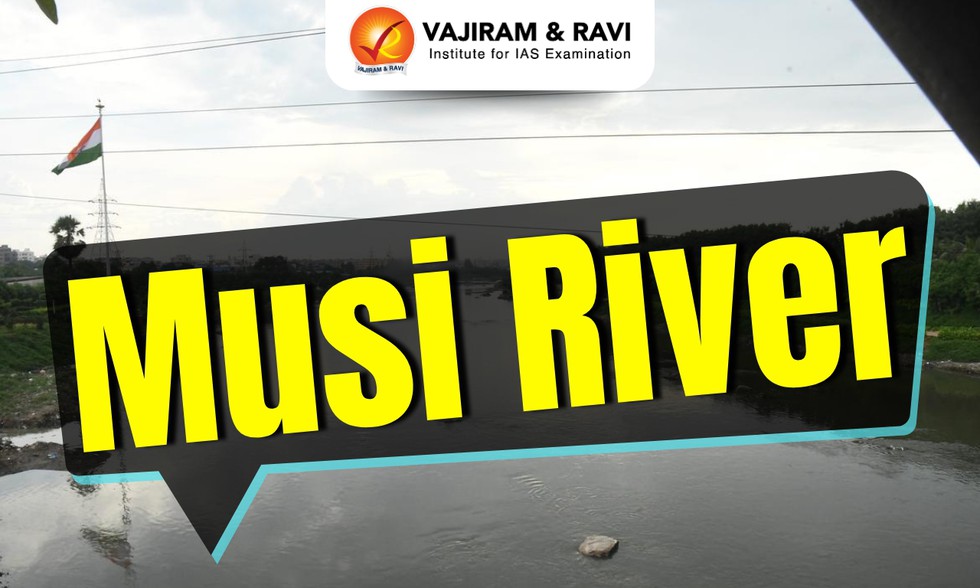
Several historic landmarks have been identified as part of the 55-km Musi river rejuvenation project, with authorities exploring ways to link them through heritage tourism and cultural initiatives along the river corridor.
About Musi River:
The Musi River, also known as the Muchukunda or Musunuru River, is a major tributary of the Krishna River in the Deccan Plateau, flowing through Telangana.
The river gained prominence in the late 16th century when Muhammad Quli Qutb Shah, the founder of Hyderabad, established the city along its banks.
Course:
It originates from Anantagiri Hills near Vikarabad District.
The river is formed by the merging of two small rivulets: Esi and Musa.
After originating, the Musi River flows in an eastward direction, cutting through the heart of Hyderabad city, where it historically divided the Old City from the New City.
The river then continues its journey through the southern Telangana plains.
It ultimately joins the Krishna River near Wazirabad in Nalgonda district.
Dams: Himayat Sagar and Osman Sagar are the two dams that are constructed over the river.
Hussain Sagar Lake was built on a tributary of the River Musi.
Several historic bridges and mosques line its banks, reflecting Qutb Shahi and Nizam-era architecture.
The Musi River has diversion weirs for irrigation, locally known as kathwas.
Now due to random urbanization and lack of planning the river has become a holder of all the unprocessed domestic and industrial waste drained out of Hyderabad.
Dear Student,
You have still not entered your mailing address. Please enter the address where all the study materials will be sent to you. (If applicable).