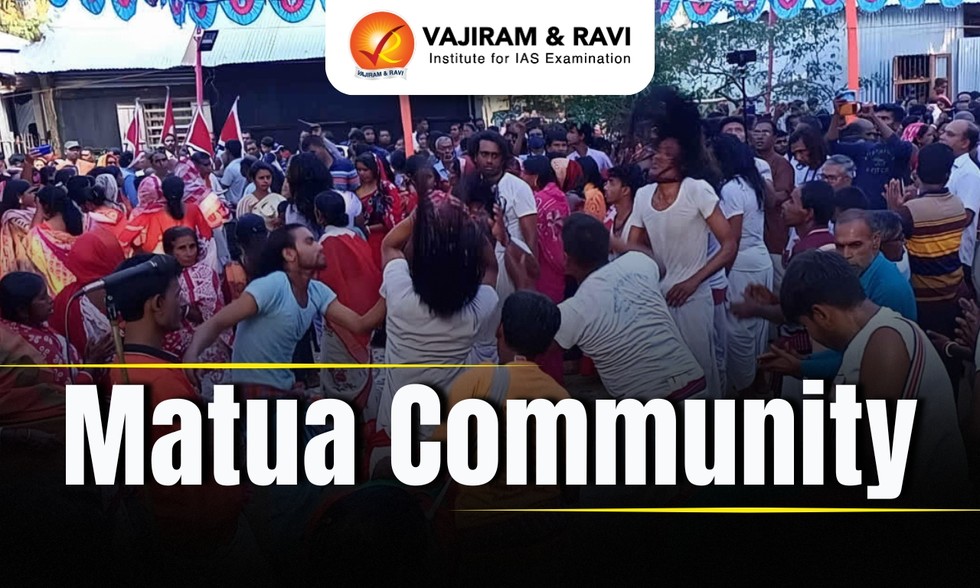
Most of the Matuas, who migrated from neighbouring Bangladesh during different time-periods do not have sufficient documents to apply for citizenship under the CAA.
About Matua Community:
The Matua community, a marginalized Hindu sect with roots in the 19th century, holds a significant socio- religious presence in the Bengal region, particularly across Bangladesh and West Bengal.
Founded by Harichand Thakur in the 1860s, the Matua movement arose as a response to the deep-seated caste discrimination present within Hindu society at the time.
Religious Beliefs:
As followers of the Matua faith, the community primarily belongs to the “Namashudra” caste, traditionally regarded as a lower-caste group within Hinduism.
Harichand Thakur’s teachings centered on principles of social equality, human dignity, and the empowerment of marginalized groups through education and religious reform, making the Matua movement a powerful counterforce to caste oppression.
The Matua sect is monotheist. It does not follow Vedic rituals, and singing hymns in praise of the deity is their way of prayer and meditation.
They believe that salvation lies in faith and devotion. Their ultimate objective is to attain truth through meditation and worship.
The Matua have no distinctions of caste, creed, or class. They believe that everyone is a child of God.
Shrishriharililamrta is a principal religious scripture of the Matua.
Following the partition of Bengal in 1947, the Matua community experienced profound socio-political shifts.
Many Matua families migrated to India to escape religious and political persecution, although a large portion of the community remained in what later became Bangladesh.
Today, Matuas constitute the second largest SC population of West Bengal.
Dear Student,
You have still not entered your mailing address. Please enter the address where all the study materials will be sent to you. (If applicable).