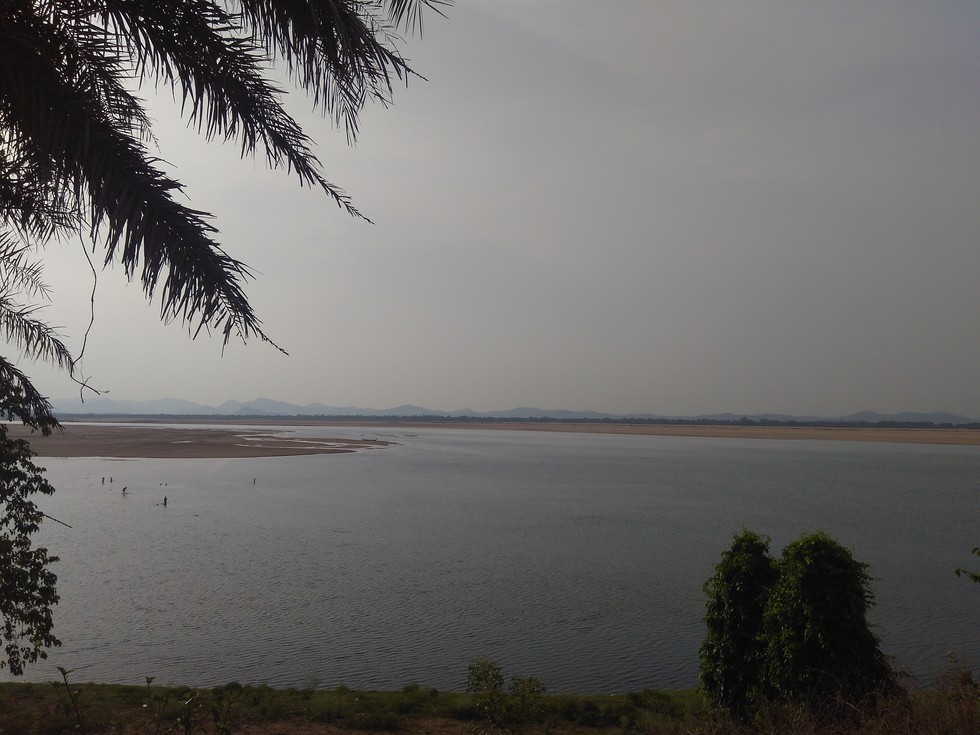
State-owned Oil and Natural Gas Corporation (ONGC) spudded the first deepwater appraisal well in the Mahanadi offshore basin recently.
About Mahanadi River:
It is one of the major east-flowing peninsular rivers located in the states of Chhattisgarh and Odisha.
It is the third-largest peninsular river after the Godavari and Krishna.
Course:
It originates from the Sihawa Hills in Dhamtari district, Chhattisgarh.
It begins as a collection of small streams in the Dandakaranya foothills and initially flows northward before turning eastward into the plains.
Before joining the Bay of Bengal at False Point through several channels near the major seaport town of Paradip, the river enters the plains of Odisha near Cuttack and forms a delta.
Close to one of its mouths is the famous pilgrimage site of Puri. Farther up the coast is Konark, the site of an ancient temple dedicated to the sun.
The river is bounded in the north by the Central India hills, in the south and east by the Eastern Ghats, and in the west by the Maikal hill range.
The Mahanadi basin extends over the states of Chhattisgarh and Odisha and comparatively smaller portions of Jharkhand, Maharashtra, and Madhya Pradesh.
It passes through several major cities and towns, including Raipur, Sambalpur, and Cuttack.
It is considered to be one of the most active silt-depositing streams in India.
Tributaries: The main tributaries of Mahanadi are Seonath River, Jonk River, Hasdeo River, Mand River, Ib River, Ong River and Telen
Major Dams:
Hirakud Dam (Odisha)
Gangrel Dam (Chhattisgarh)
Tandula Dam (Chhattisgarh)
Kalma Barrage (Odisha)
Sondur Dam (Chhattisgarh)
Hasdeo Bango Dam (Chhattisgarh)
Chilika Lake: Chilika, named a wetland of international importance under the Ramsar Convention, gets 61% of its inland flow from the Mahanadi River system, mainly from its distributaries – Daya and Bhargabi.
Dear Student,
You have still not entered your mailing address. Please enter the address where all the study materials will be sent to you. (If applicable).