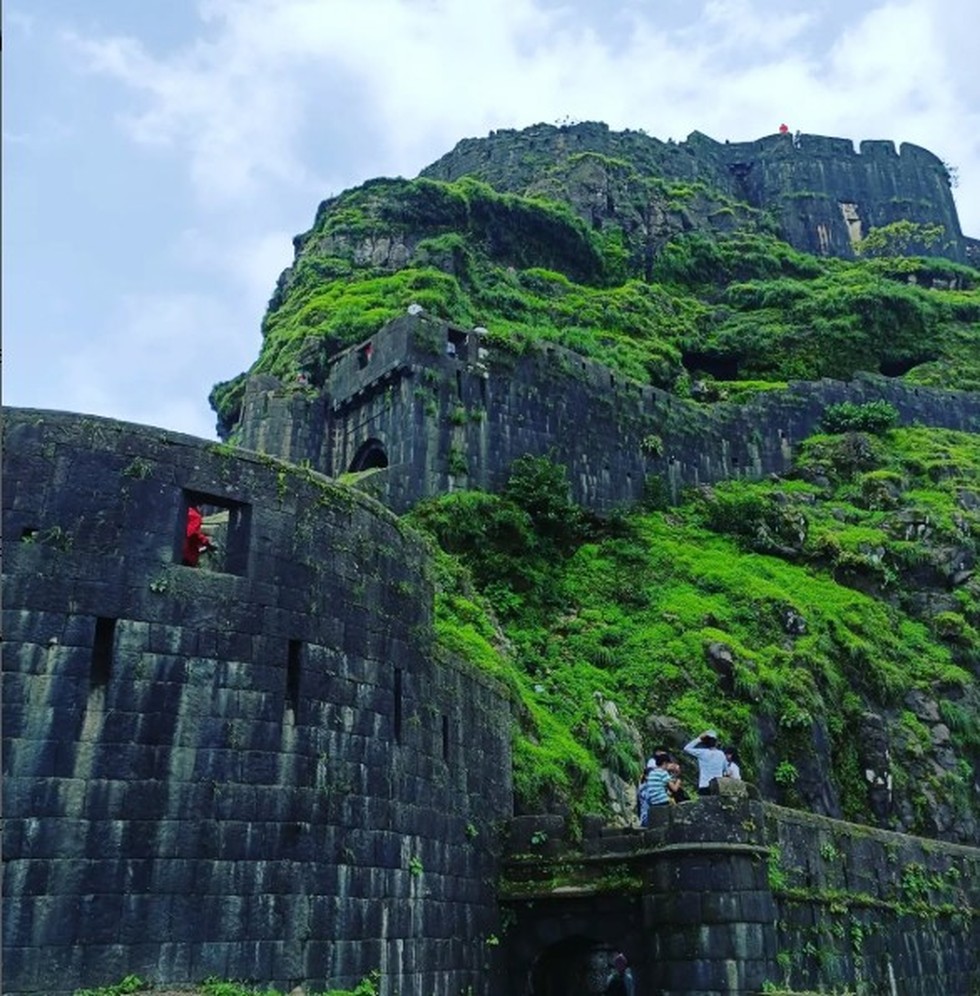
A video showing a local resident confronting a group of tourists for allegedly smoking cigarettes at Maharashtra's historic Lohagad Fort has gone viral on social media, triggering a wider discussion on responsible tourism and the need to protect heritage monuments.
About Lohagad Fort:
Lohagad, also known as Iron Fort, is a hill fort located near Lonavala in the Pune district, Maharashtra.
The mountain divides basins of the Pavana and the Indrayani rivers, and the Lohagad fort overlooks the Pavana reservoir situated south of the mountain range.
The Visapur fort is located on its eastern side.
It is a UNESCO world heritage site.
History:
Initially established during the Lohtamia dynasty in the 10th century CE, the fort soon became a coveted prize for rulers across the ages.
Over time, it bore witness to the Chalukyas, Rashtrakutas, Yadavas, Bahamanis,Nizams, Mughals, and Marathas, each leaving an indelible mark on its strategic and cultural significance.
In 1648 AD, Chhatrapati Shivaji Maharaj seized Lohagad, recognizing its defensive and strategic importance.
However, due to the Treaty of Purandar in 1665, he was forced to relinquish it to the Mughals.
Undeterred, he recaptured the fort in 1670 AD and used it as a treasury vault to store the riches from his successful Surat campaign.
Later, during the Peshwa era, statesman Nana Phadnavis sought refuge here, constructing essential structures like a large tank and step-well, which still stand as silent witnesses to history.
Architecture:
The fort boasts four grand gates—Ganesh Darwaja, Narayan Darwaja, Hanuman Darwaja, and Maha Darwaja—each narrating tales of war, resilience, and bygone eras.
These gates, still largely intact,exhibit intricate carvings and remarkable masonry that highlight the exceptional engineering skills of the past.
One of Lohagad’s most breathtaking features is the ‘Vinchukada’, or ‘Scorpion’s Tail’—a long, narrow, fortified spur extending from the fort’s main structure.
This naturally sculpted rock formation resembles a scorpion’s sting and offers panoramic views of the surrounding Sahyadri landscapes.
Dear Student,
You have still not entered your mailing address. Please enter the address where all the study materials will be sent to you. (If applicable).