The plight of the Koraga tribe has spotlighted deep housing inequality globally, with the UN-Habitat World Cities Report 2026 noting that entrenched caste barriers and policy gaps continue to deny many communities access to secure housing.
About Koraga Tribe:
The Koraga is an indigenous tribal community found mainly in the Dakshina Kannada and Udupi districts of Karnataka and the Kasaragod district of Kerala state.
They are also found in small numbers in almost all districts of Karnataka
They are classified as a Particularly Vulnerable Tribal Group (PVTG).
Language: People communicate either in their language, known as Koraga Bhasha, or in Tulu.
Culture and Economy:
The Koragas mainly depend on agriculture and forest resources for their livelihoods.
They are known for their traditional crafts, such as basket-making, and actively participate in folk dances and rituals that reflect their rich cultural heritage.
They follow a matrilineal family system and a unique clan structure called “bali,” which plays an important role in their social organization.
Koragas are led by the most senior person in the village, often known as Mooppan. He ensures the well-being of the members of the community.
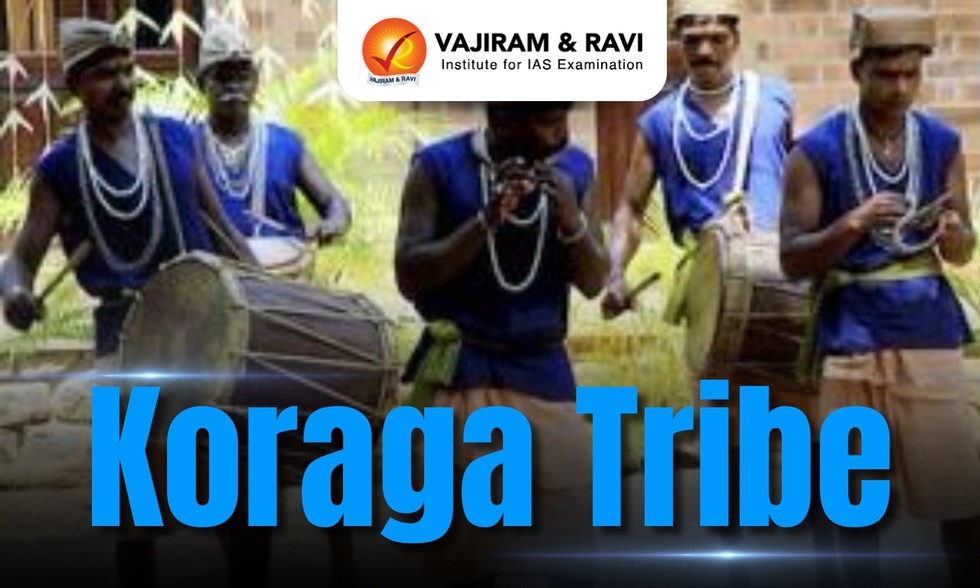
Drumming and traditional music are integral to their rituals and community celebrations.
Dholu and Voote (Drum and Flute) were two important musical instruments of the Koragas.
The rhythmic drum-beating, especially with the “dholu,” is a significant aspect of their cultural identity, used in various ceremonies and gatherings.
Religious Beliefs:
The Koragas follow Hinduism but have distinct tribal religious beliefs and practices.
They worship spirits known as “Bhutas” and believe in the power of magic and rituals to ward off evil.
Dear Student,
You have still not entered your mailing address. Please enter the address where all the study materials will be sent to you. (If applicable).