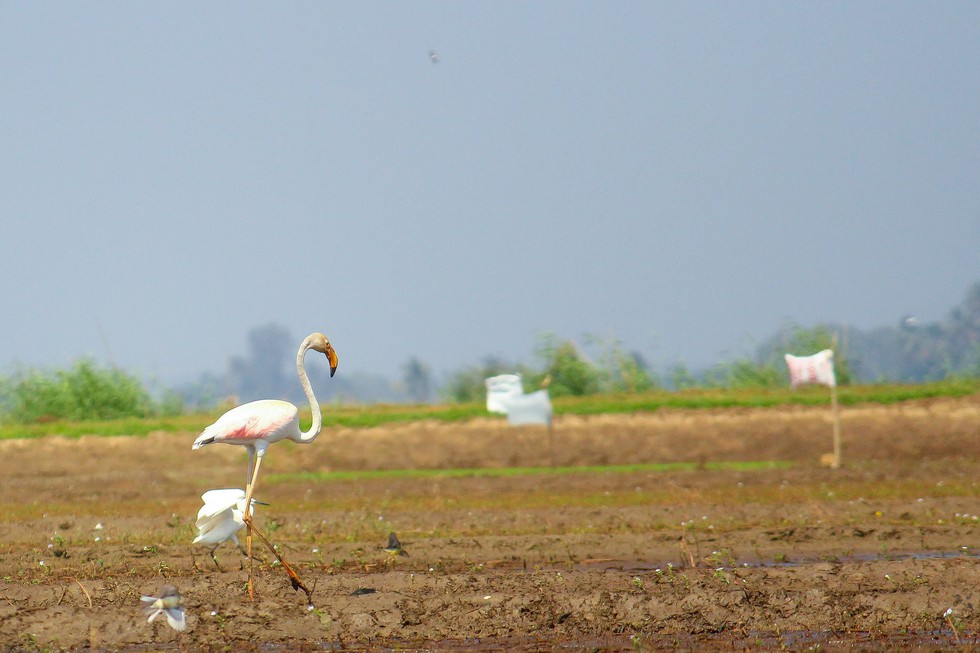
About Kole Wetlands:
- The Kole wetlands are located in Kerala.
- It is popular for its paddy cultivation that dates back to 300 years.
- The wetland gets its name from its high productivity – ‘Kole’ literally translates to ‘bumper crop’ in Malayalam.
- The Kole areas are low-lying and have a central, narrow strip covering a long expanse, with many pockets running into cultivated land on either side.
- The region is naturally subject to saltwater ingression. During the monsoon, the entire region, which gets submerged under water, is cultivated by draining the water and by erecting bunds.
- As Kole is a large sprawling wetland with human habitation all around, there are coconut and arecanut plantations, gardens and cultivated plants.
- It is one of largest, highly productive and threatened wetlands in Kerala.
- It is a part of the Central Asian Flyway of migratory birds.
- It has been recognised as one of India's Important Bird Areas by BirdLife International.
- It was declared as a Ramsar site of international importance in 2002.
What are Pygmy Grasshoppers?
- They are species of insects (order Orthoptera) and are related to true grasshoppers.
- However, the pygmy grasshopper has the forewings either reduced to small pads or absent.
- The pygmy grasshopper is distinguished from the short-horned grasshopper by its practice of depositing its eggs singly in small grooves in the soil, rather than in underground chambers.
- It is abundant in fields containing short grasses and on muddy shores.
- Many species are dimorphic, having both a short form with reduced hindwings and a long form with functional hindwings.
- Sound-producing and hearing organs are absent in pygmy grasshoppers.