Elections to the Garo Hills Autonomous District Council (GHADC) got delayed till at least early next year as the Meghalaya cabinet recently approved a second six-month extension of the council’s term.
About Garo Tribe:
The Garo are a Tibeto-Burman ethnic group primarily residing in the Garo Hills of Meghalaya with smaller populations in Assam, Tripura, Nagaland, and West Bengal.
They are the second largest tribal community of Meghalaya.
Historically, the tribe originated in Tibet and migrated to India 400 years ago.
The main language spoken by these tribes is Garo, also known as "Garrow" and "Mande", which belongs to the Bodo branch of the Bodo-Naga-Kachin family of the Sino-Tibetan phylum.
The Garo people live mostly in rural villages, with community life centered around agriculture.
They practice both shifting (jhum) and wet rice cultivation, growing rice, millet, and vegetables.
They are one of the last remaining matrilineal tribes in the world.
Women play a central role in both family and economic life, as property and clan lineage are inherited through the female line.
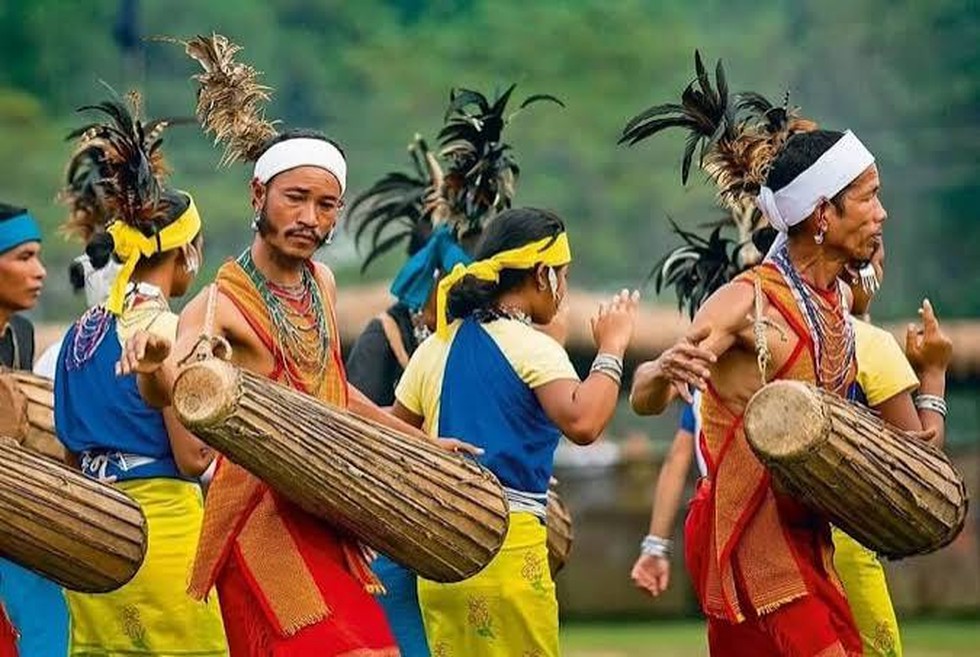
Villages are organized into exogamous clans, and social life is vibrant, featuring communal work, festivals, and traditional music and dance.
Their homes are typically built on stilts, reflecting adaptation to the hilly terrain.
Beliefs:
Historically, the Garo practiced Songsarek, an indigenous animistic religion centered on the worship of spirits, nature deities, and ancestors.
Since the late 19th century, Christianity has become the predominant faith among the Garo.
However, elements of traditional beliefs and rituals persist, especially in rural areas, and festivals such as Wangala (the harvest festival) continue to reflect their spiritual heritage.
Dear Student,
You have still not entered your mailing address. Please enter the address where all the study materials will be sent to you. (If applicable).