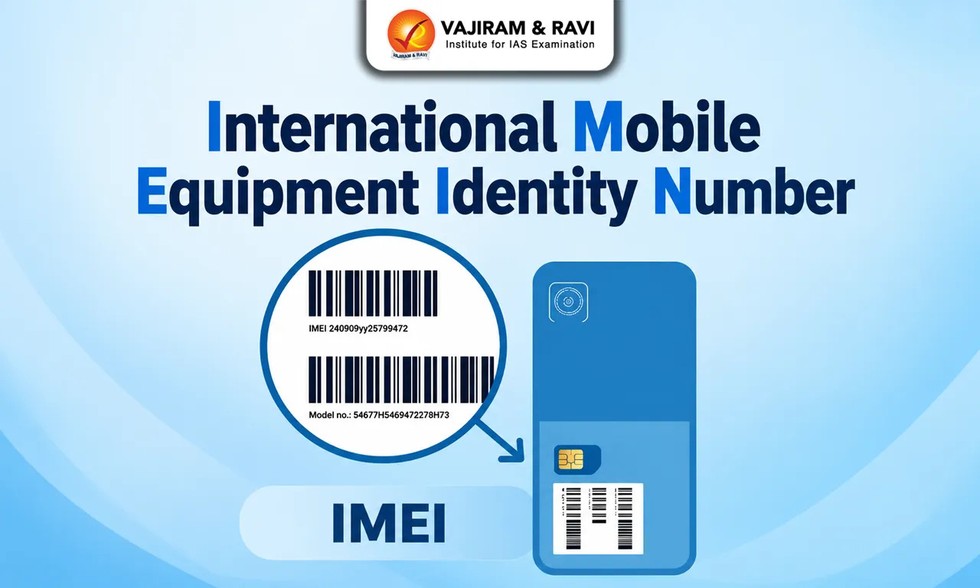
About International Mobile Equipment Identity Number:
- It is a unique 15-digit number that identifies a mobile device on a telecom network.
- The first eight digits of an IMEI form the Type Allocation Code (TAC), which identifies the device model or type.
- Allocation of IMEI numbers: The Global System for Mobile Communications Association (GSMA) oversees the global allocation of TAC.
- GSMA allocate TACs to manufacturers and brand owners. Manufacturers then assign unique IMEIs to individual devices.
- A dual-SIM phone generally has two IMEI numbers, one for each SIM slot.
- Identification: Users can dial *#06#on their mobile device to display its IMEI number.
- India's IMEI Ecosystem:
- Manufacturers: They must register the IMEI numbers of all applicable telecom devices manufactured in India with the Government before their first sale, testing, research or other use.
- Registration is carried out through the Device Setu–Indian Counterfeited Device Restriction (ICDR) portal.
- Importers: They must register IMEI numbers on Indian Counterfeited Device Restriction (ICDR) portal with the Central Government before importing applicable telecom equipment into India.
- Resellers and retailers: They also must ensure that telecom devices offered for sale have valid and untampered IMEI numbers.
- Brand owners: They must ensure that devices sold under their brands comply with applicable IMEI registration and cybersecurity requirements.
- India’s legal framework to protect the telecommunication ecosystem:
- The Telecommunications Act, 2023: It provides stringent action against tampering with telecommunication identifiers, including the IMEI number of mobile handsets and other telecommunication devices.
- Section 42(3)(c)prohibits tampering with telecommunication
- Section 42(3)(e)prohibits obtaining Subscriber Identity Modules (SIMs) or telecommunication identifiers through fraud, cheating or impersonation.
- Violations may attract imprisonment for up to three years, a fine of up to ₹50 lakh, or both. Such offences are cognizable and non-bailable under Section 42(7) of the Act.
- Under Section 42(6), persons who abet or promote the commission of such offences are also liable to the same punishment.