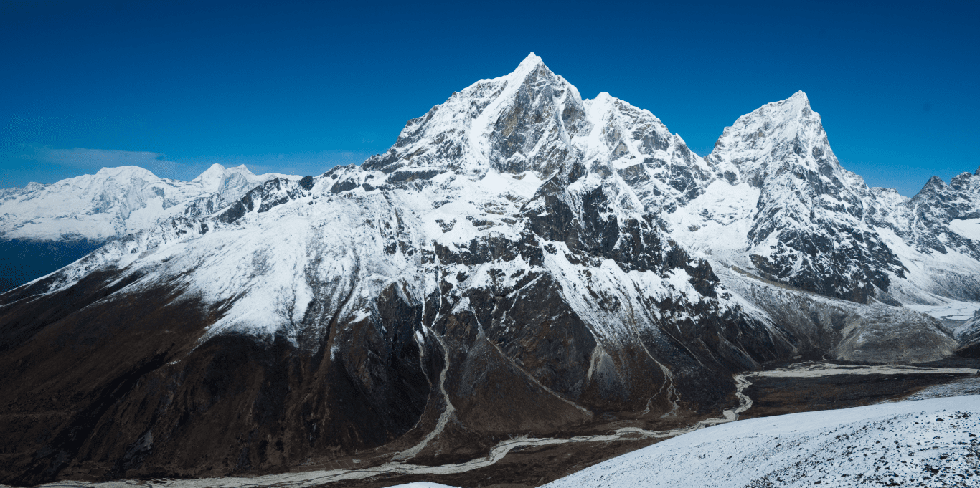
About Hindu Kush Himalaya:
- It extends around 3,500 km over eight countries — Afghanistan, Bangladesh, Bhutan, China, India, Nepal, Myanmar, and Pakistan.
- It runs northeast to southwest and divides the valley of the Amu Darya (the ancient Oxus River) to the north from the Indus River valley to the south.
- It is considered the Third Pole(after the North and South Poles) and has significant implications for climate.
- The HKH forms the largest area of permanent ice cover outside of the North and South Poles and is home to 4 global biodiversity hotspots.
- Mountains: The range has numerous high snow-capped peaks. Mount Everest (8,849 m) in Nepal is the highest peak in the entire HKH region, while Tirich Mir (7,708 m / 25,289 ft) in Chitral, Pakistan, is the highest peak of the Hindu Kush range itself.
- The HKH region is the source of ten large Asian river systems: the Amu Darya, Indus, Ganges, Brahmaputra, Irrawaddy, Salween, Mekong, Yangtze, Yellow River, and Tarim.
- Ecosystems: It contains diverse ecosystems which include glaciers, alpine meadows, forests, wetlands, and grasslands.
- HKH may be divided into three main sections: the eastern Hindu Kush, the central Hindu Kush, and the western Hindu Kush, also known as the Bābā Mountains.
- The inner valleys of the Hindu Kush see little rain and have desert vegetation.