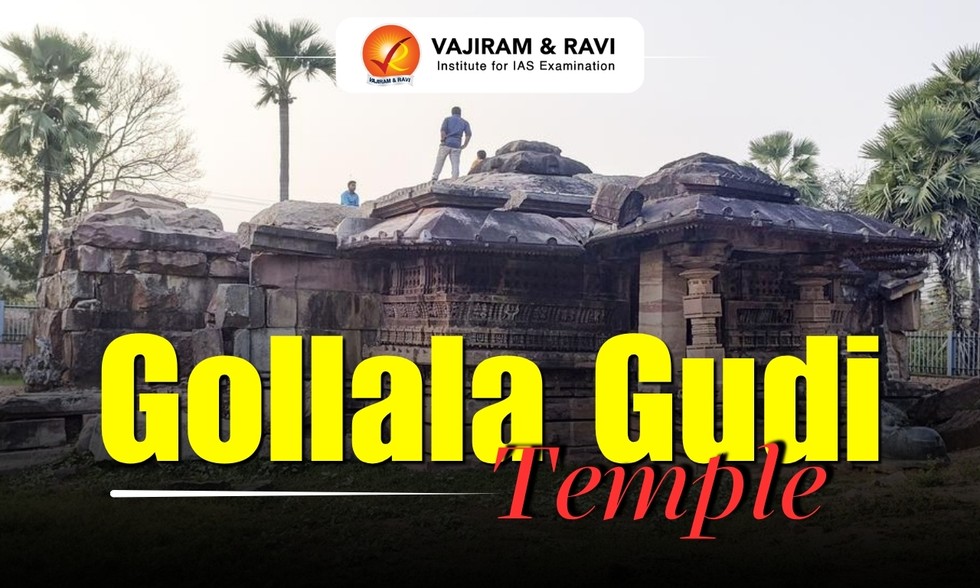
About Gollala Gudi Temple:
- It is an ancient temple located at Palampet in the Mulugu district of Telangana.
- It is dedicated to Lord Shiva.
- The Kakatiya-era temple is located near the UNESCO-listed Ramappa Temple (Kakatiya Rudreshwara) and is renowned for its exquisite carvings and architectural heritage.
- The Kakatiya dynasty was a Telugu dynasty that ruled most of the eastern Deccan region in present-day India between the 12th and 14th centuries.
- Its territory spanned present-day Telangana and Andhra Pradesh, parts of eastern Karnataka, northern Tamil Nadu, and southern Odisha.
- Architecture:
- Built during the height of the Kakatiya dynasty, Gollala Gudi exemplifies the engineering and stone craftsmanship typical of the Deccan era.
- Like Ramappa, it was raised without binding mortar, using precisely interlocked dry masonry.
- It is a "Trikutalaya" (shrine with three sanctums), comprising a mandapa (pillared hall) facing east and three garbhagrihas (sanctum sanctorums), with the central sanctum housing a Shiva lingam.
- Its parapet is adorned with sculptures, while the entablature and doorways feature rows of carved hamsas with “jali” (latticework) — among the temple’s distinctive features.
- Two detached shrines stand in front, intricately carved and adorned with figures of “dvarapalas” (door guardians), with antechambers decorated by fine cornices and screens.
- The main temple has a portico leading to a central hall with three shrines and antechambers to the north, south, and west.
- Its walls carry niches with images of Vishnu, Lakshmi, Ganesha, and Mahishasuramardini—an epithet of the goddess Durga meaning “slayer of the demon Mahishasura.”