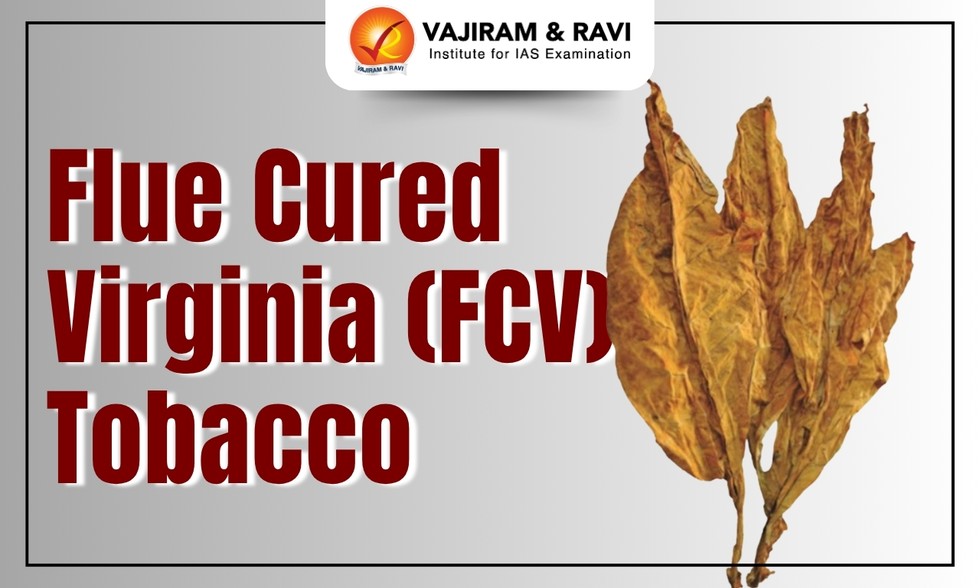
About Flue Cured Virginia (FCV) Tobacco:
- Flue-cured Virginia tobacco, which is also known as Virginia Tobacco or Bright Leaf, is a bright, golden-leaf tobacco variety cured using controlled heat from flues — a process that preserves natural sugars and produces a mild, clean-burning leaf.
- It is one of the most widely traded tobacco types in international commerce.
- What is Curing?
- Curing is a process by which the harvested tobacco leaf is made ready for the market.
- To create smoking tobacco, the tobacco leaves need to be cured, or dried out.
- The wet, green tobacco leaves of a tobacco plant initially contain too much moisture to catch fire.
- They also have higher chlorophyll content. By releasing a certain amount of chlorophyll from the leaves during the drying out process, the natural tannins come out giving the smoked tobacco its flavor and scent.
- Curing is a well standardized process to achieve the desirable qualities in the cured leaf along with the removal of moisture.
- There are three types of tobacco curing methods traditionally used: Air-Cured, Fire-Cured, and Flue-Cured.
- Each of the different curing methods results in a tobacco product that is distinguishable by both its nicotine content and its aroma.
- Key characteristics of Flue Cured Tobacco:
- Produces primarily cigarette tobacco
- Contains a high sugar content
- Contains medium to high levels of nicotine
- Rich in natural tannins which creates its distinct mild and slightly sweet flavor and aroma.
- In India Flue Cured Virginia (FCV) Tobacco is mainly produced in India in 2 states, Andhra Pradesh and Karnataka.