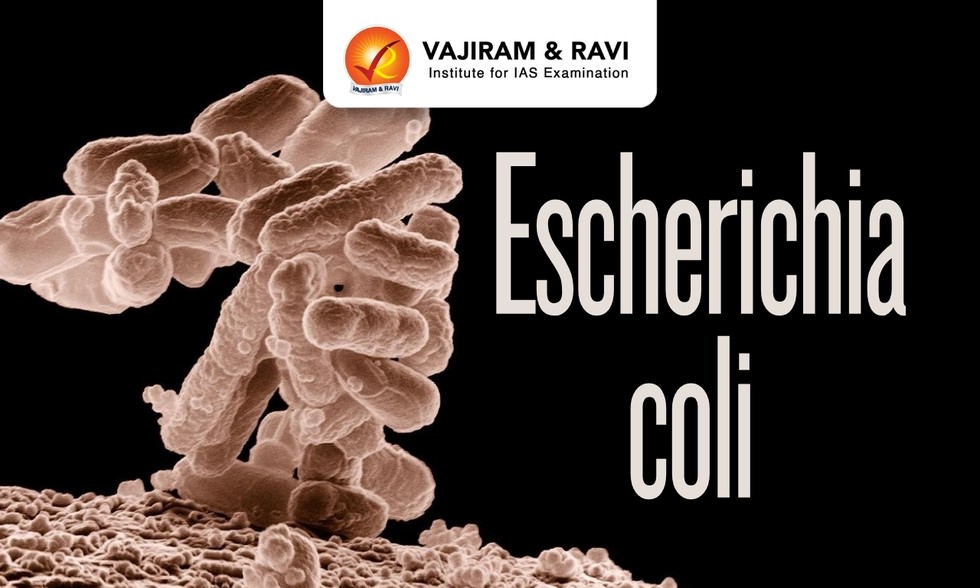
A recent report by the Comptroller & Auditor General (CAG) on facilities at railway stations has revealed that E. coli bacteria were found in samples of drinking water.
About Escherichia coli:
It is commonly known as E. coli, is a type of bacteria that can be found in the intestines of humans and animals.
It is a rod-shaped bacterium of the Enterobacteriaceae family.
While most strains of E. coli are harmless and even beneficial, some strains can cause illness and infections.
Transmission: It can be transmitted to humans through contaminated food, water, or contact with fecal matter from infected individuals or animals.
Impact on Health: Some kinds of coli can cause diarrhea, while others cause urinary tract infections, respiratory illness and pneumonia, and other illnesses.
The most familiar strains of E. coli that make sick by producing a toxin called Shiga.
This toxin damages the lining of small intestine and causes diarrhea.
These strains of E. coli are also called Shiga toxin-producing E. coli (STEC).
Symptoms: The most common symptoms of E.coli infection include fever, persistent diarrhoea, bloody diarrhoea, and vomiting.
Treatment: Most E. coli infections are self-limiting and resolve on their own without treatment. However, it’s essential to stay hydrated during the course of the illness.
Dear Student,
You have still not entered your mailing address. Please enter the address where all the study materials will be sent to you. (If applicable).