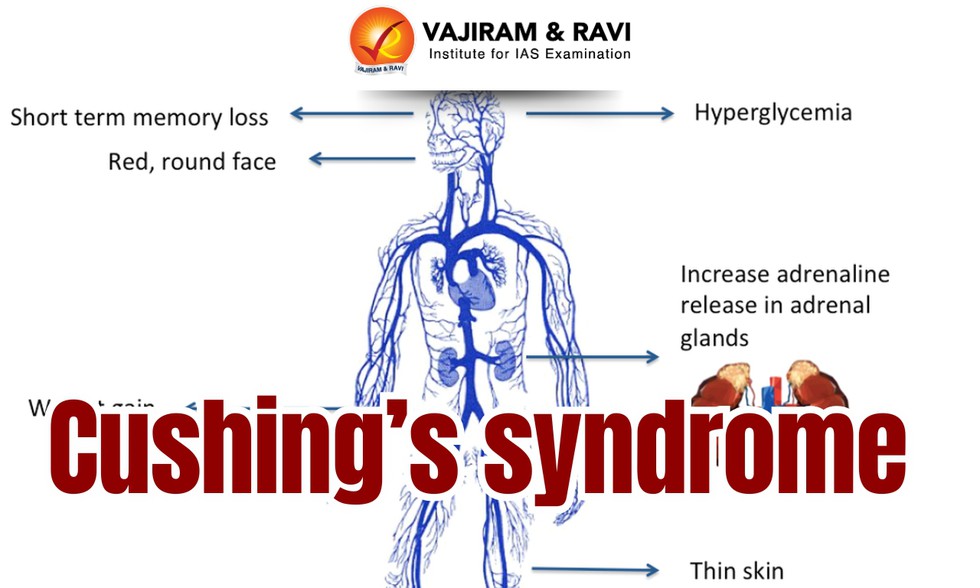
About Cushing’s Syndrome:
- It is a disorder that occurs when the body makes too much of the hormone cortisol over a long period of time.
- Cortisol is produced by the adrenal glands and helps control blood pressure, metabolism, immunity, and the body’s response to stress.
- Cause:
- The most common cause is long-term use of steroid medicines prescribed for asthma, autoimmune diseases, arthritis, or after organ transplants.
- The body produces excess cortisol on its own. This is usually due to a non-cancerous tumour in the pituitary gland (called Cushing’s disease).
- Signs and Symptoms:
- Weight gain especially around the abdomen and face and develop fat buildup between the shoulders.
- The skin becomes thin and bruises easily. Wounds may heal slowly. Wide purple stretch marks can appear on the abdomen, thighs, breasts, or arms.
- Acne and increased facial or body hair (especially in women) can also occur.
- Women may notice irregular or absent periods, while men may experience reduced libido or fertility issues.
- Many people develop high blood pressure and high blood sugar, and some develop diabetes.
- Bone loss can lead to osteoporosis and fractures.
- Anxiety, irritability, depression, mood swings, sleeps problems and memory problems.
- Risks: Women are more commonly affected than men in naturally occurring (endogenous) cases, especially between ages 30 and 50.
- Treatment:
- Treatment depends on the cause and aims to bring cortisol levels back to normal.
- If steroid medicines are the cause, doctors slowly reduce the dose under supervision.
- If a tumour is causing excess cortisol, surgery is usually the first treatment.