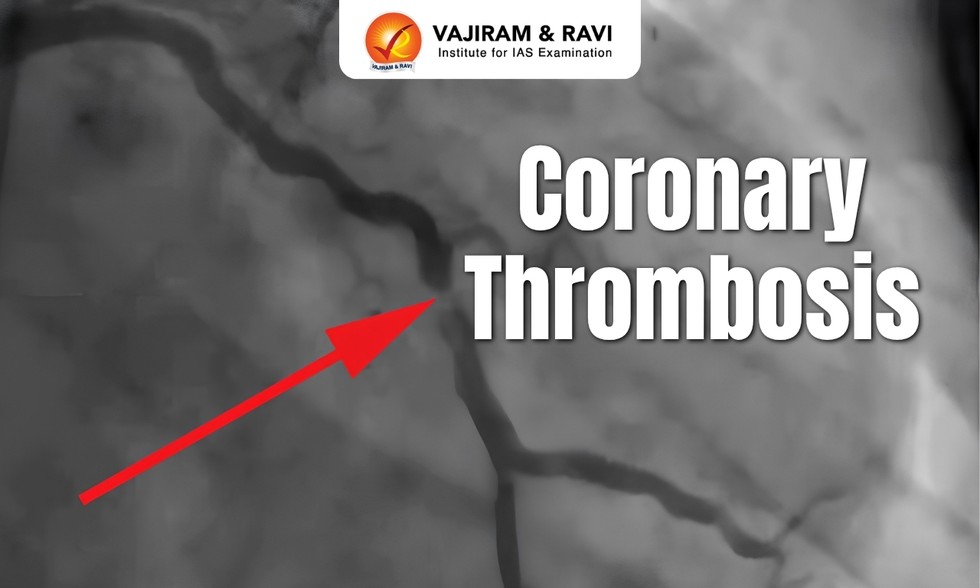
About Coronary Thrombosis:
- It occurs when a blood clot forms in one of the arteries that supply blood to the heart muscle.
- These arteries carry oxygen and nutrients that the heart needs to function.
- When a clot partly or completely blocks an artery, less blood reaches the heart muscle.
- If the blood supply is cut off for too long, the heart muscle can become damaged, leading to a heart attack.
- This form of thrombosis is often associated with atherosclerosis, in which fatty deposits, cholesterol and other substances build up in the artery walls.
- Causes:
- Smoking is a major risk factor for coronary thrombosis as it can damage the blood vessels and promote the formation of blood clots.
- High cholesterol levels can lead to the buildup of plaque in the arteries, increasing the risk of atherosclerosis and coronary thrombosis.
- Hypertension can cause the arteries to become narrowed and damaged.
- Obesity and a sedentary lifestyle are associated with an increased risk of coronary thrombosis.
- Treatment: It may include medications like blood thinners, clot-busting drugs, and antiplatelet agents. Procedures such as angioplasty with stent placement or coronary artery bypass surgery may be necessary to restore blood flow to the heart.