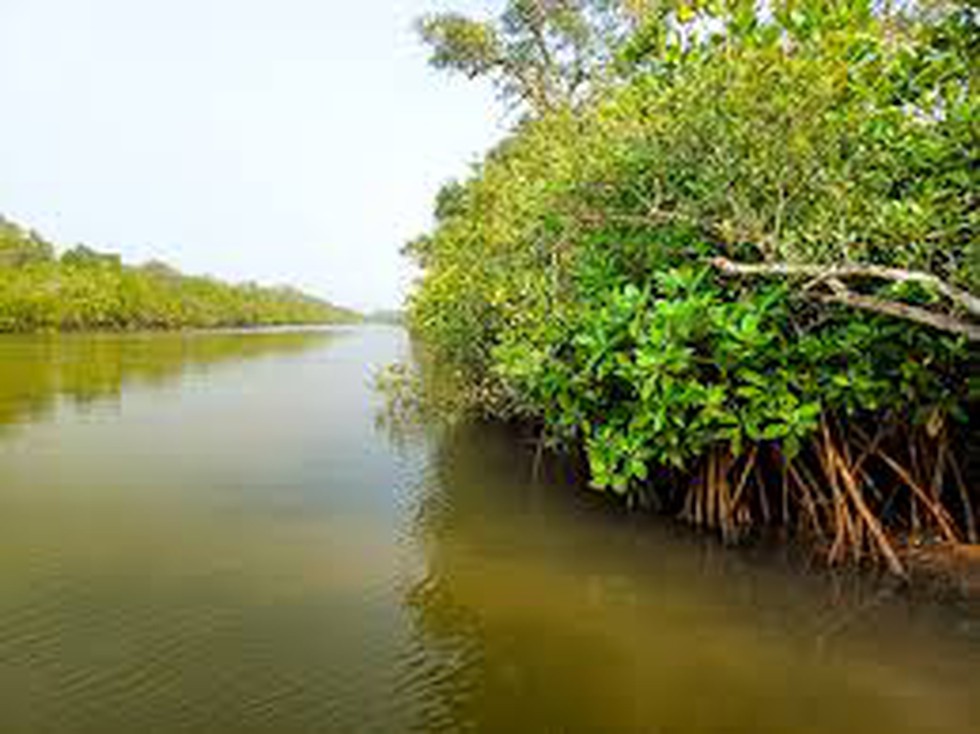
About Coringa Wildlife Sanctuary:
- Location: It is located in Andhra Pradesh.
- It is part of the Godavari estuary, where the Coringa river confluences into the Bay of Bengal.
- It was established as a wildlife sanctuary in 1978.
- Vegetation: It has extensive mangrove and dry deciduous tropical forests. It is the second-largest stretch of mangrove forests in India.
- Flora: Mangrove plants like Rhizophora spp, Avicennia spp, Sonnertia spp, etc; grow here.
- Fauna: It is home to endangered mammals like Smooth Indian otter, Fishing cat, Jackal, etc. Mangroves offer excellent habitat for birds like Black capped kingfisher, Brahminy kite, Sea gulls, Reef heron, Sand piper, etc.
- The sea coast of the Coringa Wildlife Sanctuary is a breeding ground for Olive ridley turtles.
Key Facts about Olive Ridley Turtles:
- It gets its name from the olive green colouration of its carapace (shell).
- It is best known for its unique mass nesting, called Arribada, where thousands of females come together on the same beach to lay eggs.
- Distribution of Olive Ridley Turtle
- They are mainly found in the warm waters of the Pacific, Atlantic, and Indian oceans.
- Odisha’s Gahirmatha Marine Sanctuary is known as the world’s largest rookery (a colony of breeding animals) of sea turtles.
- Conservation Status of Olive Ridley Turtle
- IUCN Red List: Vulnerable
- CITES: Appendix I
- Wildlife Protection Act, 1972: Schedule 1