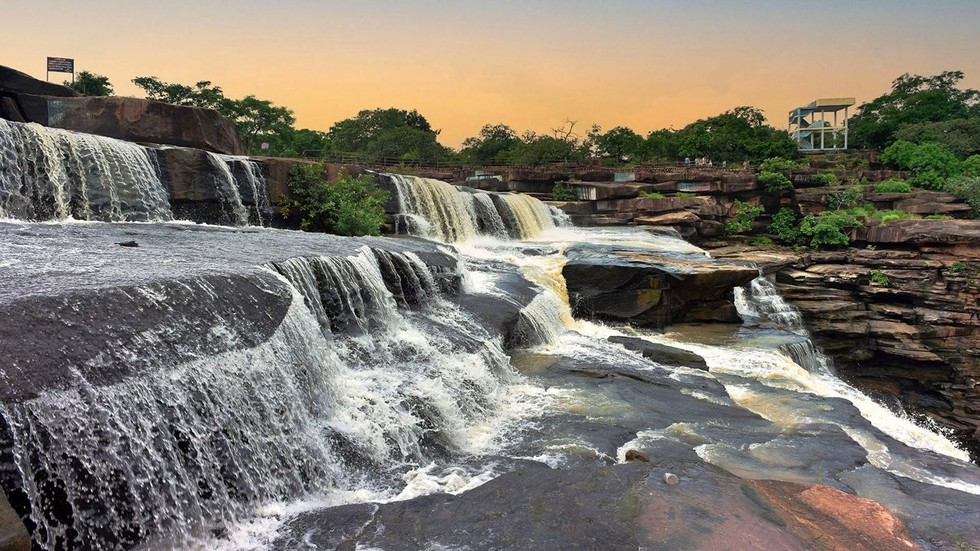
About Chandraprabha Wildlife Sanctuary:
- It is located in the Chandauli district of Uttar Pradesh.
- It lies on the Naugarh and Vijaigarh hillocks on the north slope of the Kaimur Range.
- It is named after the Chandraprabha River, meaning ‘The Luminescence of Moon’.
- The river is a tributary of the Karamnasha River, and both flow through the forest to finally meet the Ganges.
- In the early 18th century, this area became a hunting ground for the rulers of Varanasi, but eventually, in 1957, the sanctuary was established here.
- Asiatic lions were introduced at Chandra Prabha in 1958.
- The exercise was successful in the beginning, with the number of lions increasing from three to eleven by 1969. However, the following year the lions were found missing.
- The predominant geological formations consist of limestone and sandstone, exhibiting a high thermal mass that moderates temperature fluctuations within the habitat.
- Vegetation: The sanctuary's vegetation is predominantly deciduous forest, interspersed with grasslands, which supports a diverse range of species.
- Flora:
- Tendu, Blue Berries, Mahua, Goose-berry, Palash, Sal, Neem, Semal, and many other varieties of plantation are found in abundance.
- Unique and rare medicinal plants used in the formulation of Ayurvedic medicines like Musli, Chitawar, Ashwagandha, Chirata, Sarpgandha, etc. are also found.
- Fauna:
- Wild animals that dot this sanctuary include Leopard, Sloth bear, Chinkara/Cheetal, Hyena, Fox, Jackal, etc.
- Many colourful and different species of birds, like Peacock, Red Jungle Fowl, Quail, Partridge, Eagle, Vulture, Wild Mynah, Parakeet, Cuckoo, Barn Owl and the Bulbul are natural inhabitants of this sanctuary.