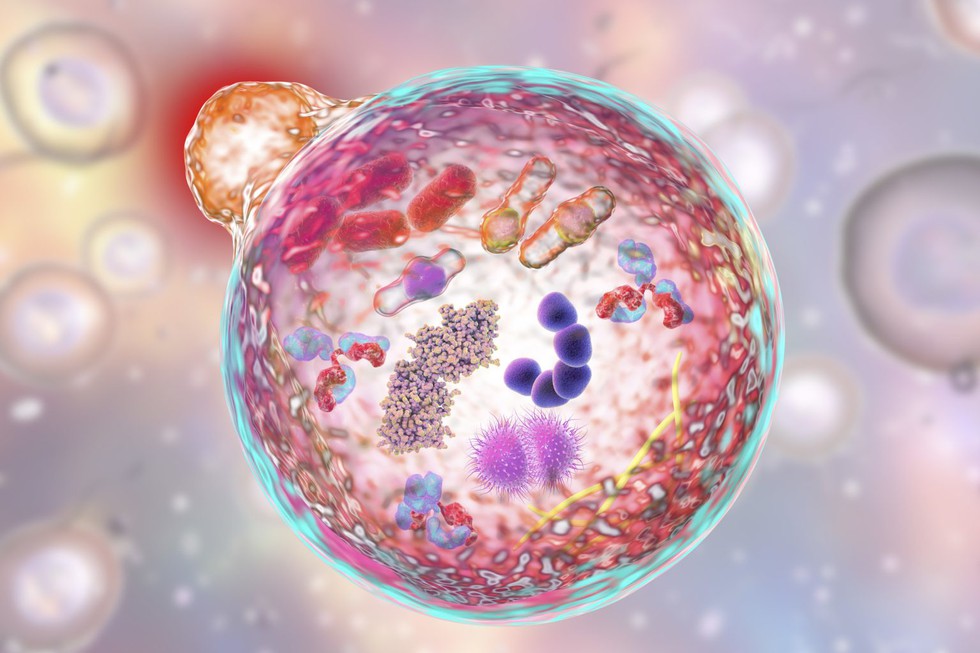
Researchers have uncovered a surprising player in autophagy process that can pave the way for developing therapies for diseases such as Alzheimer’s, Parkinson’s, and cancer.
About Autophagy:
It is a key biological process where cells clear out damaged and unwanted materials.
The autophagy pathway, which removes damaged material and defends against infections, is disrupted in diseases like Alzheimer’s and Huntington’s.
When a cell fails to clear waste, its health suffers, especially in long-lived neurons.
Autophagy is body’s cellular recycling system.
It allows a cell to disassemble its junk parts and repurpose the salvageable bits and pieces into new, usable cell parts.
Importance of autophagy:
It recycles damaged cell parts into fully functioning cell parts.
It gets rid of nonfunctional cell parts that take up space and slow performance.
It destroys pathogens in a cell that can damage it, like viruses and bacteria.
Autophagy plays an important role when it comes to aging and longevity, too.
Autophagy and Disease Linkages
Autophagy initially prevents cancer but later supports tumour growth and acts as a tumour suppressor by maintaining genome integrity and cellular homeostasis.
In certain types of cancer, cells hijack autophagy for their own survival and propagation.
Dear Student,
You have still not entered your mailing address. Please enter the address where all the study materials will be sent to you. (If applicable).