Feb. 28, 2026
Prelims Pointers
Feb. 28, 2026

About Indian Computer Emergency Response Team (CERT-In):
- It is the national nodal agency for responding to computer security incidents as and when they occur.
- It is a functional organisation of the Ministry of Information & Electronics Technology, Government of India.
- Objective: Securing Indian cyberspace.
- CERT-In has been operational since 2004.
- The constituency of CERT-In is the Indian cyber community.
- CERT-In has been designated under Section 70B of the Information Technology Act, 2000, to serve as the national agency to perform the following functions in the area of cyber security:
- Collection, analysis, and dissemination of information on cyber incidents.
- Forecasts and alerts of cybersecurity incidents.
- Emergency measures for handling cybersecurity incidents.
- Coordination of cyber incident response
- Issue guidelines, advisories, vulnerability notes, and white papers relating to information security practices, procedures, prevention, response, and reporting of cyber incidents.
- Such other functions relating to cyber security as may be prescribed.
- To perform these functions, CERT-In is empowered to call for information and issue directions to service providers, intermediaries, data centres, body corporates, and any other person.
- CERT-In provides services to organizations in the Government, Public, and Private sectors. In addition, CERT-In provides services to individuals and home users as well.
- CERT-In collaborates with international counterparts to share information regarding emerging threats, vulnerabilities, and malware.
- CERT-In creates awareness on security issues through dissemination of information on its website (https://www.cert-in.org.in) and operates a 24x7 incidence response help desk.
- Disclosure of information will be followed in accordance with Indian Constitutional laws.
- To ensure effective governance, a Review Committee oversees CERT-In’s operations. This committee includes but is not limited to representatives from various government ministries, such as:
- Ministry of Law and Justice
- Department of Telecommunications
- Ministry of Home Affairs
- Group Coordinator for Cyber Law and e-Security
- The committee meets regularly to assess CERT-In’s performance and provide strategic direction.
About Satcom Industry Association of India (SIA-India):
- The SIA-India is a non-profit body representing India’s space and satellite sector.
- Its members include satellite operators, manufacturers, startups, academia, and legal firms, working to shape policy and promote global collaboration.
Prelims Pointers
Feb. 28, 2026
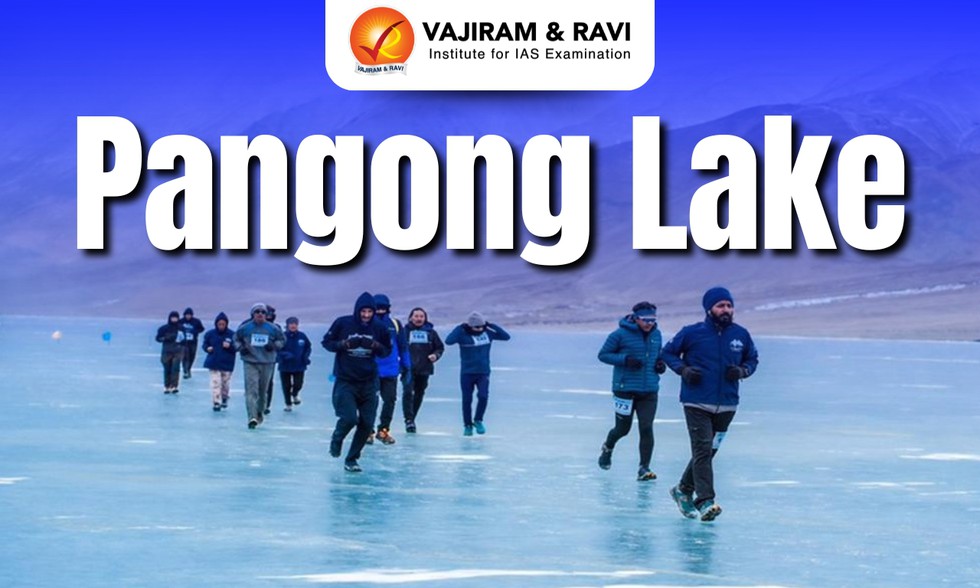
About Pangong Lake:
- Pangong Lake, also known as Pangong Tso, is an endorheic (hydrologically landlocked) lake in the
- It is situated in eastern Ladakh, extending into the China (Tibet region).
- It derives its name from the Tibetan word, “Pangong Tso”, which means “high grassland lake”.
- It is one of the world’s highest brackish water lakes, situated at a height of 4350 meters.
- It is famed for its colour changing water, from blue to red and green.
- During winter, the lake freezes completely, despite being saline water.
- The lake is also a breeding ground for different types of birds during the summer
- Bar-headed geese, Brahminy ducks, black-necked cranes and seagulls are commonly spotted here.
- It is not part of the Indus River basin area and is geographically a separate landlocked river basin.
- It is in disputed territory. The Line of Actual Control (LAC) passes through the lake.
Prelims Pointers
Feb. 28, 2026
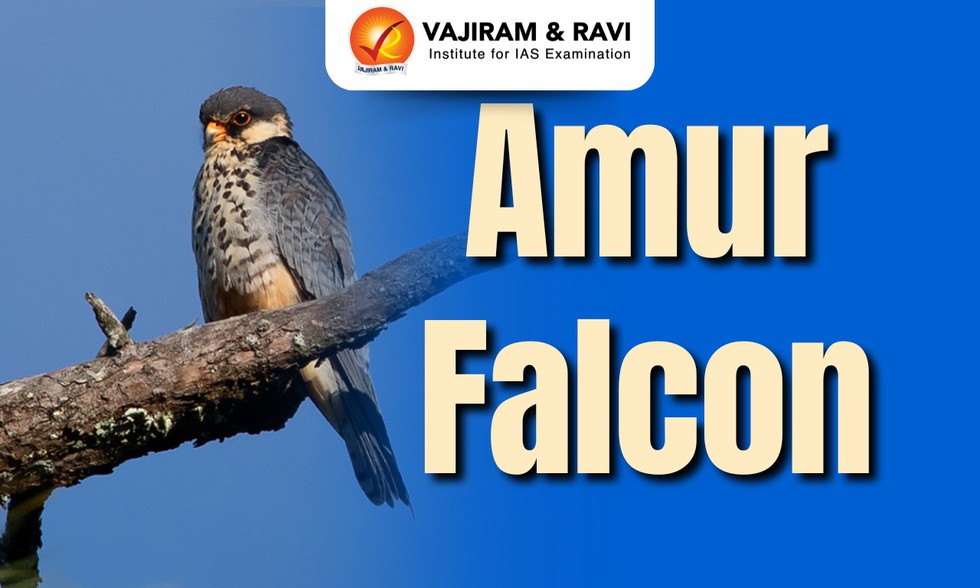
About Amur Falcon:
- It is a migratory raptor of the falcon family.
- Scientific Name: Falco amurensis
- This falcon is known by a few other names, such as Eastern Red-footed Falcon, Eastern Red-footed Kestrel, Manchurian Falcon, and Red-legged Falcon.
- Distribution:
- They breed in southeastern Siberia and Northern China and migrate long distances in large flocks to winter in Southern and East Africa.
- Along the way, large numbers pass through India, with the biggest congregations seen in the northeastern states.
- It undertakes the longest regular overwater passage of any raptor.
- Features:
- A distinctive feature of both the male and the female is the orange of the eye-ring, beak base (the cere) and feet.
- As in many birds of prey, the male is smaller than the female.
- In addition to speed and strength, these birds are known to have keen eyesight for detecting prey from a distance or during flight.
- Conservation Status:
- IUCN Red List: Least Concern
Prelims Pointers
Feb. 28, 2026
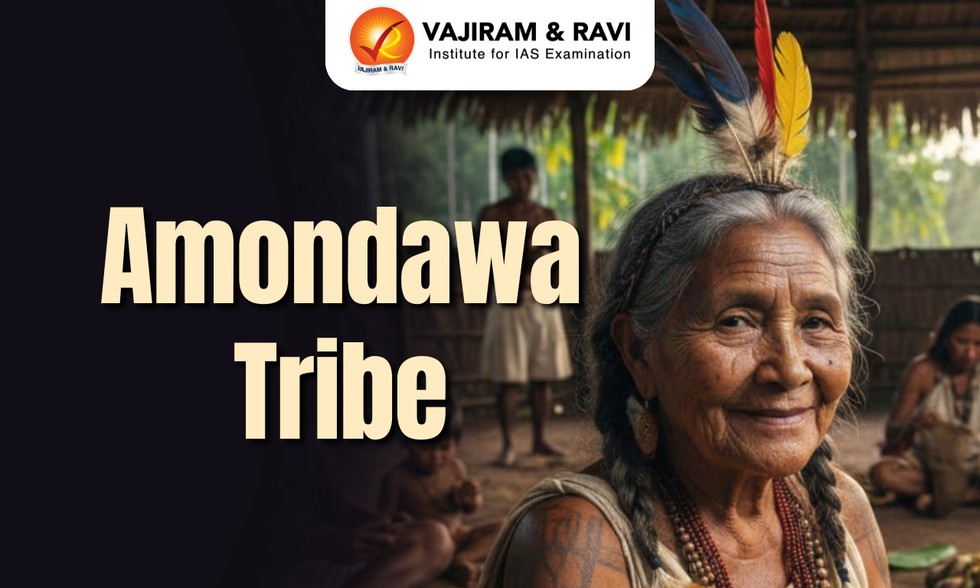
About Amondawa Tribe:
- They are an indigenous community living deep inside Brazil’s Amazon rainforest.
- They have no linguistic or cultural equivalent for words such as “time", “week", “month" or “year".
- The tribe can describe events and their sequence but lacks an abstract concept of time as an independent dimension.
- One of the most striking aspects of Amondawa society is the absence of numerical age.
- Members of the tribe do not track birthdays or calculate how old they are.
- Instead, personal growth is marked through identity changes.
- As children mature, they receive new names, and a person may change names several times over the course of a lifetime.
- In this system, social identity rather than numerical measurement defines stages of life.
Prelims Pointers
Feb. 28, 2026
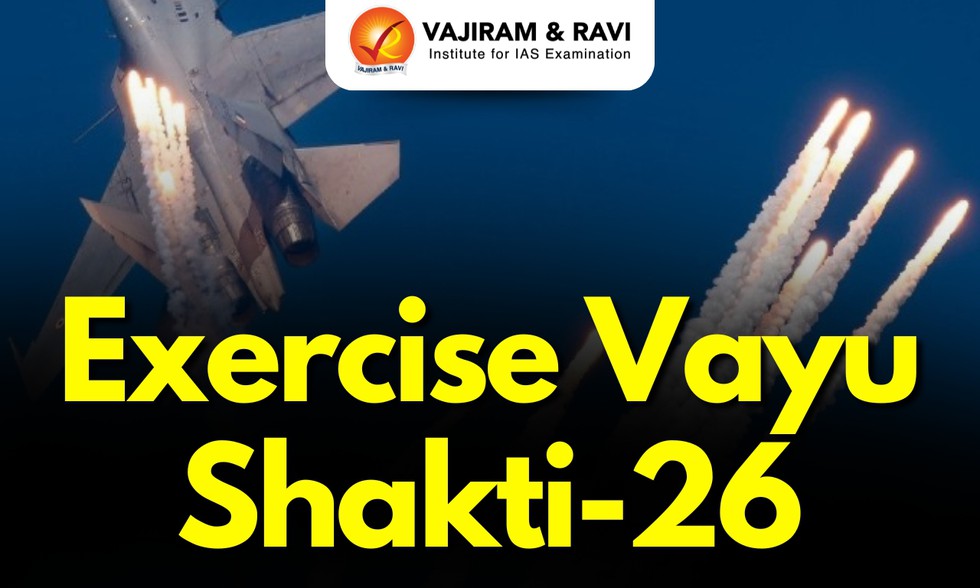
About Exercise Vayu Shakti-26:
- It was conducted by the Indian Air Force (IAF) at Pokhran air-to-ground range, near Jaisalmer, Rajasthan.
- The exercise showcased the operational preparedness, tactical capabilities, and combat efficiency of the IAF.
- Guided by the core values of “Achook, Abhedya aur Sateek,” the exercise was aimed to reassure the nation by reaffirming the IAF’s role as a key component of India’s national security architecture.
- It showcased the air force's capability to execute complex, integrated air operations within a dynamic and realistic battlefield environment.
- For the first time, Exercise Vayushakti was executed along a defined operational storyline, transforming into a simulated live combat theatre.
Prelims Pointers
Feb. 28, 2026
About Forest Rights Act Cells:
- FRA cells, sanctioned under the Dharti Aaba Janjatiya Gram Utkarsh Abhiyaan (DAJGUA) scheme launched in 2024.
- Aim: To provide technical and administrative support without intervening in statutory decision-making.
- Functions of FRA Cell:
- To assist in completing the process of recognition of rights.
- Digitization of records, preparation of plans for IFR and CFR beneficiaries to avail the benefits of Govt. schemes,
- Assist in convergence of Forest villages to revenue villages, and to create awareness amongst all stakeholders ensuring effective implementation of FRA.
- Assisting claimants and Gram Sabhas in preparing claim documents.
- Aiding in collection of necessary evidence and resolutions.
- Helping in digitisation of land records and tracking claim status.
- Facilitating conversion of forest habitations into revenue villages
- Funding: Ministry of Tribal Affairs
Prelims Pointers
Feb. 28, 2026
About Central Drugs Standard Control Organisation:
- It is the National Regulatory Authority (NRA) of India for the medical devices industry under the provisions of the Drugs and Cosmetics Act
- Nodal Ministry: It works under the Directorate General of Health Services, Ministry of Health & Family Welfare, Government of India.
- Headed by: The Drugs Controller General of India (DCGI) is the head of the CDSCO.
- Functions: It is responsible for overseeing the import, manufacture, sale, and distributionof medical device in the country. The CDSCO ensures that medical devices comply with safety, quality, and efficacy standards.
- Under the Drugs and Cosmetics Act, CDSCO is responsible for:
- Approval of new drugs; Conduct of clinical trials; Laying down the standards for drugs; Control over the quality of imported drugs in the country; Coordination of the activities of State Drug Control Organizations.
- CDSCO, along with state regulators, is jointly responsible for the grant of licenses for certain specialized categories of critical Drugs such as blood and blood products, I. V. Fluids, Vaccine, and Sera.
- Headquarters: New Delhi.
Prelims Pointers
Feb. 28, 2026
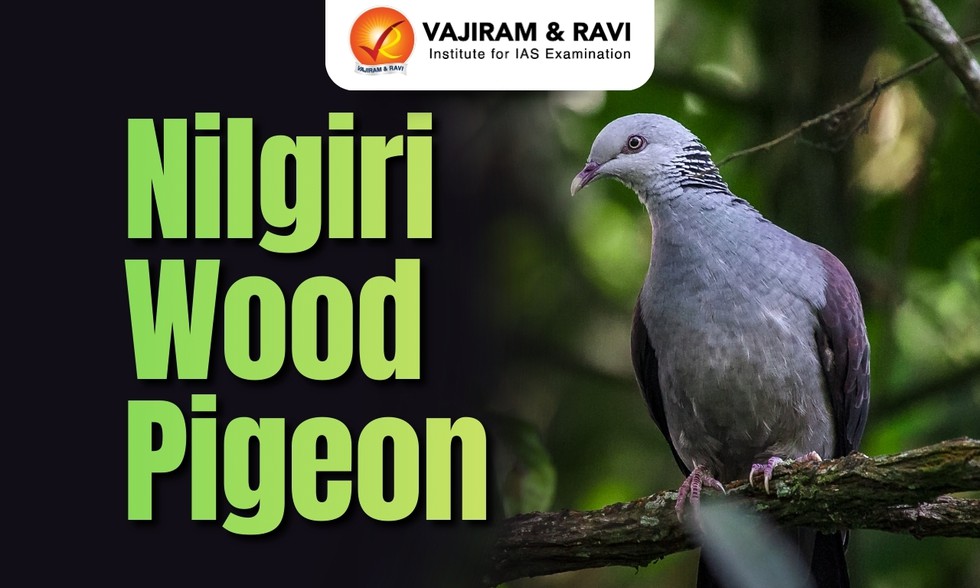
About Nilgiri Wood Pigeon:
- It is a species of pigeon endemic to the Western Ghats in India.
- Appearance: They are best identified in the field by their large size, dark colours and the distinctive checkerboard pattern on their nape.
- Habitat: It inhabits in high-elevation wet evergreen forest, moist evergreen and semi-evergreen forest, including densely wooded ravines and hollows known as ‘sholas’.
- It occurs primarily in foothills and mountains.
- Distribution: It is mainly found in regions such as the Nilgiris and Anamalai Hills in Tamil Nadu and Kerala. Isolated populations are also reported from locations such as the Biligirirangan Hills, Nandi Hills, and northern Maharashtra.
- Diet: They are mainly frugivorous and forage in the canopy of dense hill forests.
- Threats: These are threatened by hunting, deforestation, agricultural and infrastructure expansion, plantation development and climate change.
- Conservation Status
- IUCN: Least Concern
- Wild Life Protection Act: Schedule-I
Prelims Pointers
Feb. 28, 2026
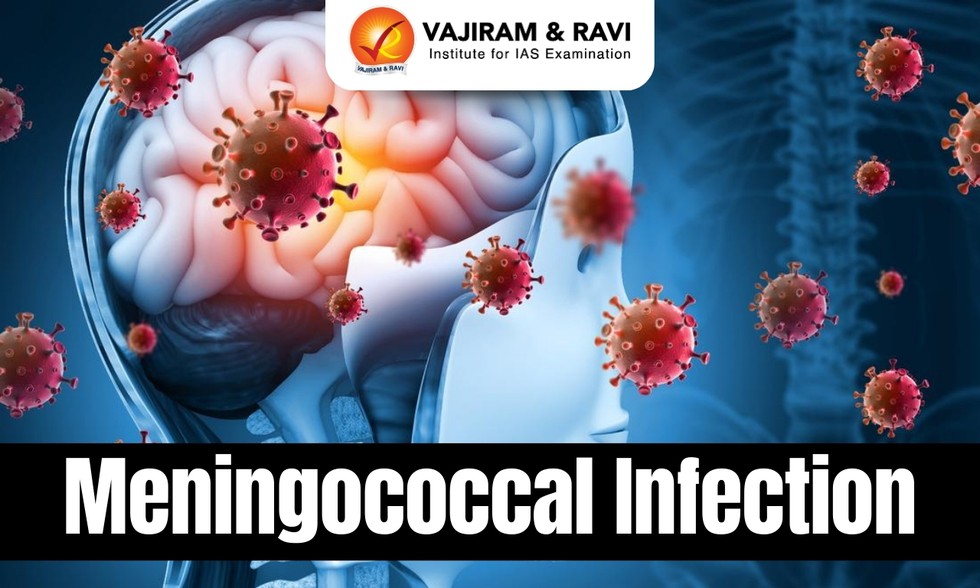
About Meningococcal Infection:
- Meningococcal infection is a severe, rapidly progressing disease caused by the bacterium Neisseria meningitides.
- It leads to life-threatening meningitis (infection of the lining of the brain) or meningococcemia (blood poisoning).
- It infects meninges, the membranes that cover the brain and spinal cord to become inflamed.
- Transmission:
- People spread meningococcal bacteria to other people by sharing respiratory and throat secretions (saliva or spit).
- Generally, it takes close or lengthy contact to spread these bacteria.
- They are not as contagious as germs that cause the common cold or the flu.
- Symptoms: It includes high fever, severe headache, stiff neck, and a non-blanching rash.
- Treatment: It is treated with antibiotics. Other treatments may be needed, including:
- Help with breathing, such as oxygen therapy.
- Drugs to treat low blood pressure.
- Ways to treat damaged or dead skin, including surgeries.
Prelims Pointers
Feb. 28, 2026

About Very Short-Range Air Defence System:
- It is a Man Portable Air Defence system.
- It is designed and developed indigenously by Research Center Imarat in collaboration with other DRDO laboratories and Development cum Production Partners.
- Features of Very Short-Range Air Defence System
- It is short-range, lightweight and portable surface-to-air missiles that can be fired by individuals or small groups to destroy aircraft or helicopters.
- Range: They have a maximum range of 8 kilometres and can engage targets at altitudes of 4.5 km.
- The missile incorporates many novel technologies including a miniaturized Reaction Control System (RCS) and integrated avionics, which have been successfully proven during the tests.
- The RCS is responsible for attitude control and steering by the use of thrusters and is also capable of providing small amounts of thrust in any desired direction or combination of directions.
- The missile system has the capability to meet the needs of all the three branches of the Armed Forces, viz. Indian Army, Navy, and Air Force.
Feb. 27, 2026
Prelims Pointers
Feb. 27, 2026
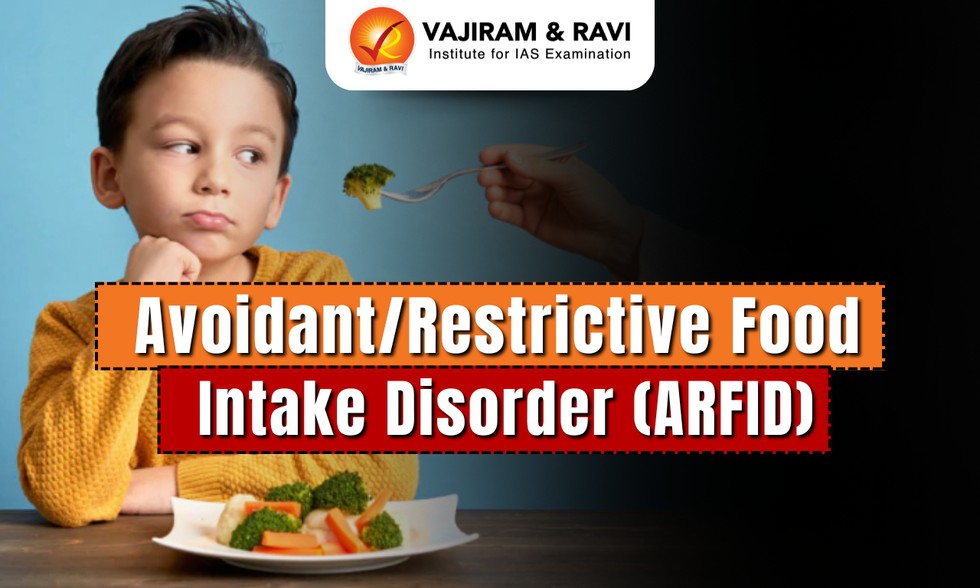
About Avoidant/Restrictive Food Intake Disorder (ARFID):
- It is a mental health condition that causes one to limit the amount and type of food one eats.
- It isn’t the result of a distorted self-image or an attempt to lose body weight, which is common among other eating disorders.
- The eating problems seen in ARFID stem from other factors, such as:
- Aversions to certain food groups or textures of foods
- Lack of appetite
- Preferences for specific colors of foods
- Fears of vomiting or choking after eating
- Although ARFID can occur at any age, it most commonly develops during infancy or early childhood and may persist into adulthood. In children, ARFID occurs more frequently in males than females.
- People with ARFID often have anxiety disorders, neurodevelopmental disorders such as autism spectrum disorder and attention-deficit/hyperactivity disorder (ADHD), and developmental and/or intellectual disabilities.
- Additionally, there is likely a genetic component, as ARFID commonly runs in families.
- As well as being selective about food, someone with ARFID might not eat (consume) enough calories to grow and develop.
- In children, this may cause stalled weight gain, weight loss, or even stalled vertical growth (growing taller).
- It may lead to life-threatening complications if left untreated.
- The main treatment is cognitive behavioral therapy.
Prelims Pointers
Feb. 27, 2026
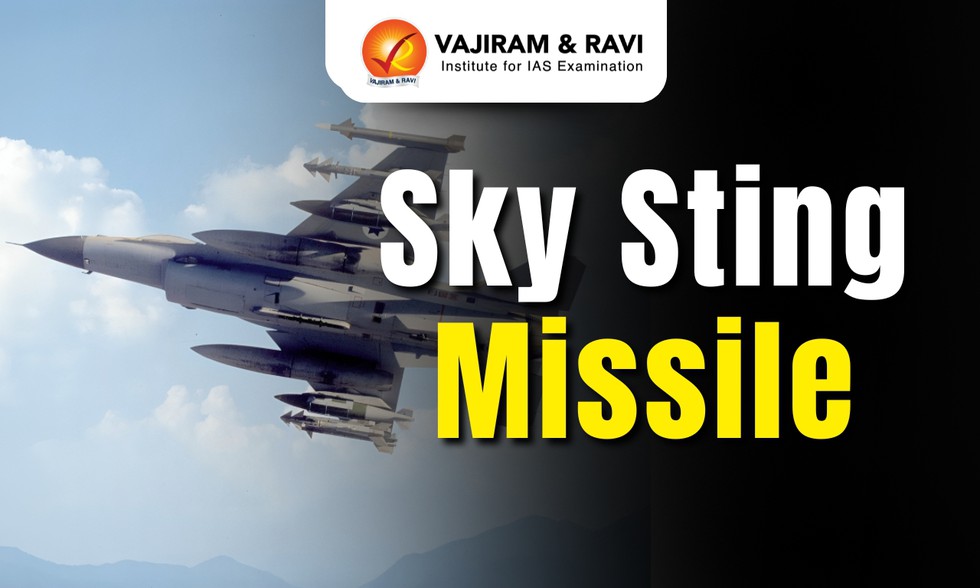
About Sky Sting Missile:
- It is a 6th-generation beyond-visual-range air-to-air missile (BVRAAM).
- It is being developed by Rafael Advanced Defense Systems Ltd., an Israeli defense technology company.
- It is light enough to be carried by aircraft such as the Tejas Mk1A, while also being compatible with Su-30MKI
- It boasts a range of 250 km, with a three-pulse solid-fuel rocket motor enabling end-game speeds exceeding Mach 5.
- Its radio-frequency seeker, supported by AI-driven target discrimination and jam-resistant technology, allows precise early lock-on and robust electronic counter-countermeasures.
- A two-way data link ensures real-time communication between the pilot and the missile during engagements.
- Designed to provide air forces with a significant tactical edge by allowing pilots to neutralise threats from a safe distance, Sky Sting addresses modern challenges like stealth targets and electronic warfare.
Prelims Pointers
Feb. 27, 2026

About Vikko Sat-1:
- It is a mini satellite.
- It was developed by a group of students from the Class XI batch of Ariyakudi Government Higher Secondary School in Tamil Nadu’s Sivagangai district.
- It was specifically designed to detect fungal spores in the stratosphere using five specialised sensors.
- These biological particles play a crucial role in agricultural health and environmental cycles, and their presence in the upper atmosphere can impact crops if they descend.
- By sending a compact device into the stratosphere via a helium balloon, the students aimed to collect real-time data that is often difficult to obtain through ground-based observations.
- The students developed the mini satellite themselves over a period of six months, equipping it with specialised adhesive surfaces to capture the samples.
- The mini satellite ascended to a height of 22 km, entering the stratosphere, which is the second layer of the atmosphere.
- At this altitude, the onboard sensors worked to identify how fungal spores behave in thinner air and lower temperatures.
- The payload was recovered intact after its descent, ensuring the air samples remained safe for analysis in the school's control room.
Prelims Pointers
Feb. 27, 2026
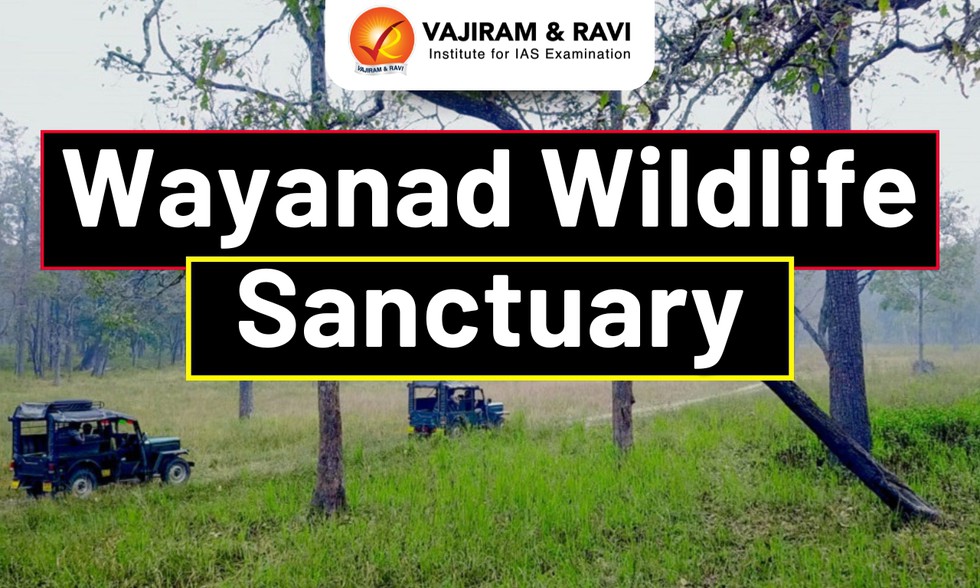
About Wayanad Wildlife Sanctuary:
- It is located in Wayanad, Kerala, in the southern trenches of the Western Ghats.
- It is also known as Muthanga Wildlife Sanctuary.
- It forms an integral part of the Nilgiri Biosphere Reserve, a UNESCO World Heritage Site.
- It is bordered by the protected areas of Nagarhole and Bandipur in Karnataka on the northeastern side and Mudumalai in Tamil Nadu on the southeastern side.
- Rivers like the Kabini, Cherupuzha, and Bavali flow through the sanctuary.
- Tribes living in these forests include some scheduled adivasis, such as Paniyas, Kattunaikkans, Kurumas, Ooralis, Adiyans, and Kurichiyas.
- Flora:
- It is a mosaic of the Western Ghats’ significant vegetation types, ranging from moist deciduous to dry deciduous and semi-evergreen patches.
- About one-third of the sanctuary is covered by plantations of teak, rosewood, eucalyptus, and silver oak.
- Fauna:
- It boasts one of the largest populations of Asian elephants and tigers, which are considered its flagship species.
- Other mammals include leopards, gaur (Indian bison), sambar deer, wild boars, sloth bears, and jungle cats.
- Many species of birds, like peacock, owl, babbler, black woodpecker, golden backed three- toed wood pecker, cuckoo and jungle fowl, are found in the area.
Prelims Pointers
Feb. 27, 2026
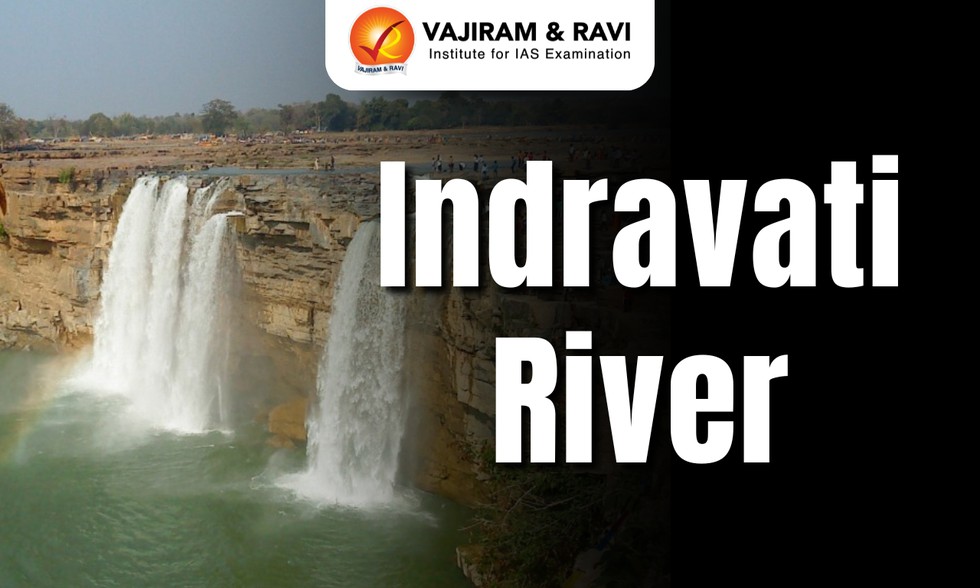
About Indravati River:
- It is a tributary of the Godavari
- Course:
- It rises in the Kalahandi district of Odisha on the western slopes of the Eastern Ghats.
- It flows westwards to join the Godavari, thus forming the boundary between Maharashtra and Chhattisgarh states at some places.
- Most of the River Course of Indravati is through dense forests of Bastar District,
- It is sometimes known as the "lifeline" of the Bastar District, which is known as one of the greenest districts in India.
- There is a famous wildlife sanctuary named Indravati National Park on its bank.
- Tributaries: Bhaskel River, Narangi River, Nimbra River, Kotri River, Bandia River, and Nandiraj River.
Prelims Pointers
Feb. 27, 2026
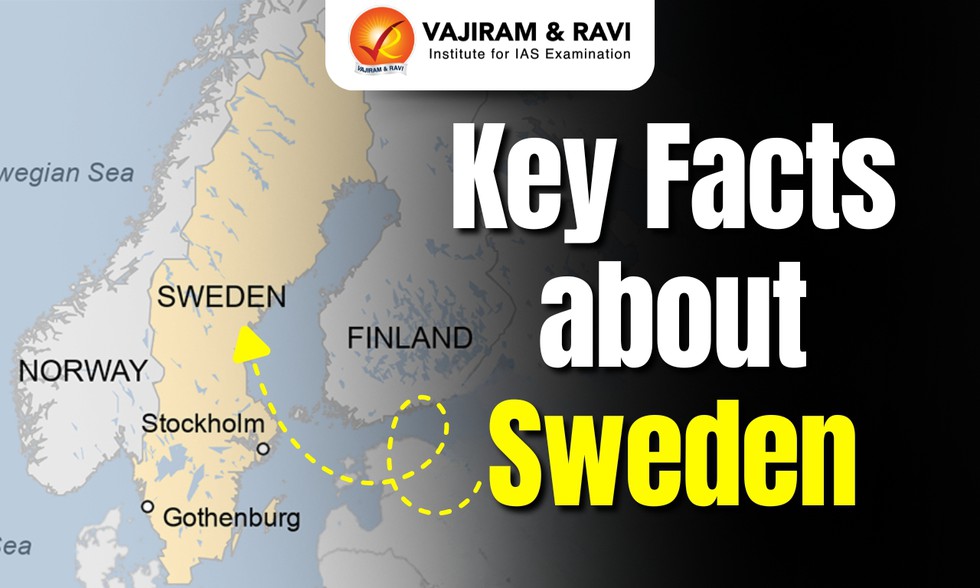
About Sweden:
- Location: It is a Northern European country located on the Scandinavian Peninsula.
- Bordering Countries: It is bordered with Finland (east), Norway (north and west).
- Water boundaries: It is bounded by the Gulf of Bothnia and the Baltic Sea in the east and south; and by the Skagerrak and Kattegat straits in the southwest.
- Capital city: Stockholm
- It is a member country of EU and NATO.
- Geographical Features of Sweden:
- Terrain: Sweden is rugged with snow-covered mountains and thick forests.
- Climate: It can experience quite temperate weather.
- Rivers: Angerman, Eman, Indal, Lagan etc
- Natural Resources: It includes uranium, copper, lead, and zinc.
Prelims Pointers
Feb. 27, 2026
About Moist Heatwave:
- Moist heatwaves are triggered by a combined impact of high temperatures and elevated humidity levels in the atmosphere.
- The best way to measure the combined effect of humidity and temperature is ‘wet bulb temperature’.
- Wet bulb temperature is the lowest temperature to which air can be cooled by the evaporation of water into the air at constant pressure.
- This is a process happening on human skin when people sweat.
- The globally accepted level for wet bulb temperature that forms the limit of human survivability is 35°C.
Impact of Moist Heatwaves on Human:
- When air is already humid, sweat cannot evaporate from skin, leaving the body unable to cool itself. This can lead to heat exhaustion and fatal heatstroke within hours.
- It is because high humidity impairs evaporation, limiting the human body’s ability to dissipate metabolic heat and regulate core temperature.
- In such circumstances, the physiological strain on the human body intensifies, exacerbating the risks of cardiovascular and respiratory illnesses.
- A thermoregulatory failure can lead to hyperthermia, heat exhaustion, and fatal heatstroke in extreme cases.
Prelims Pointers
Feb. 27, 2026
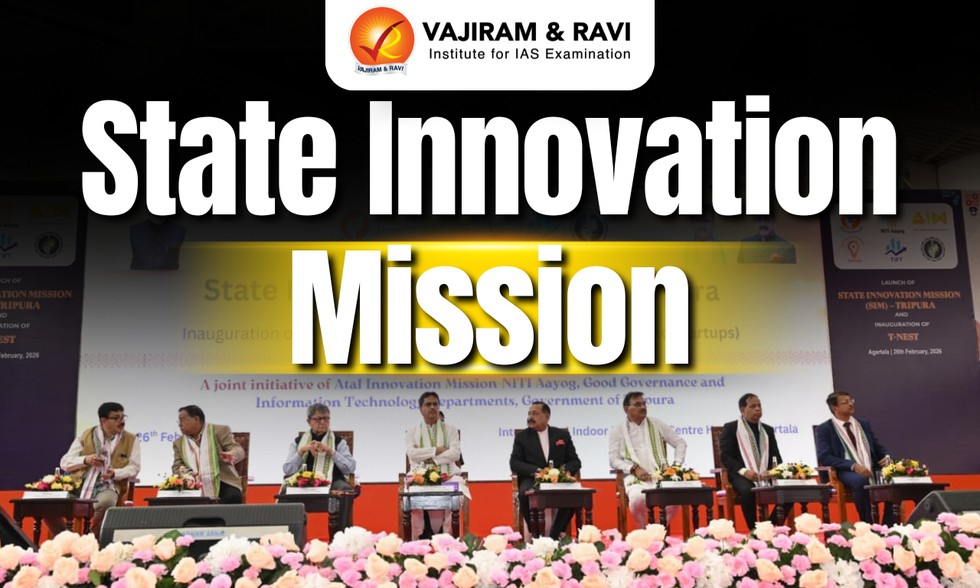
About State Innovation Mission:
- It is part of the approved Atal Innovation Mission (AIM 2.0) programme, under the aegis of NITI Aayog’s State Support Mission (SSM).
- It is designed as a long-term institutional mechanism to support States and Union Territories in building robust, inclusive, and context-specific innovation ecosystems aligned with national priorities and local strengths.
- Under SIM, AIM will work closely with the Government of Tripura to:
- Design and implement a long-term innovation strategy
- Strengthen policy frameworks and regulatory support
- Enable partnerships between government, academia, industry, and civil society
- Facilitate peer learning and national-level collaboration
- Support startups with infrastructure, mentorship, and access to funding
- The Mission emphasises inclusion, regional balance, and capacity building across the entire innovation lifecycle — from school education to advanced entrepreneurship.
What is Atal Innovation Mission?
- It is a flagship initiative set up by the NITI Aayog in 2016.
- Objective: To create and encourage an environment of innovation and entrepreneurship across schools, educational organisations, research institutes, and industries, including MSMEs.
- AIM has two functions:
- Promote entrepreneurship by encouraging innovators to become entrepreneurs through financial support as well as mentorship.
- Promote innovation by creating a platform where ideas are generated through like-minded individuals.
- AIM has created four programs to support these functions:
- Atal Tinkering Labs
- Atal Incubation Centres
- Atal New India Challenges and Atal Grand Challenges.
Prelims Pointers
Feb. 27, 2026
About International Climate Initiative:
- It is an important part of the German government's international climate finance commitment.
- It was established in 2008.
- It operates within the framework of the United Nations Framework Convention on Climate Change (UNFCCC) and the Convention on Biological Diversity (CBD).
- It finances climate change mitigation and biodiversity conservation in developing, emerging and transition countries to implement and ambitiously develop the Nationally Determined Contributions (NDCs) anchored in the Paris Agreement.
- Priority Countries: The IKI priority countries include Brazil, China, Colombia, Costa Rica, India, Indonesia, Mexico, Peru, the Philippines, South Africa, Thailand, Türkiye, Ukraine and Viet Nam.
- The funding programme combines the following four funding areas:
- Mitigating greenhouse gas emissions: Setting the course for global climate neutrality by 2050;
- Adaptation to the impacts of climate change: Strengthening resilience, making use of interconnections with mitigation and biodiversity approaches;
- Preserving and restoring carbon sinks: Combating the causes of global warming and the destruction of natural ecosystems;
- Conserving biological diversity: Implementing the Global Biodiversity Framework
Prelims Pointers
Feb. 27, 2026

About e- Railway Claims Tribunal system
- It will enable end-to-end computerisation and digitisation of the Railway Claims Tribunal.
- Objective: It will transform the filing, processing and adjudication of claims by making the process faster, more transparent and accessible from anywhere in the country.
- Under the new system, aggrieved passengers will be able to file claims electronically, irrespective of their location, even while travelling or upon reaching their destination.
- The entire process, from e-filing to case information systems will be digitised and AI-enabled.
- The platform comprises three core components
- E-Filing: It helps in 24x7 online filing of claims and legal documents from any location and uploading of petitions, affidavits, annexures and supporting records.
- Case Information System (CIS): It is a centralised database of all cases for auto-allocation, case registration and real-time tracking from filing to final to final disposal.
- Document Management System (DMS): It is the digital storage of pleadings, notices, summons, orders and judgements along with digitally signed records.
Key Facts about Railway Claims Tribunal
- It was constituted under the Railway Claims Tribunal Act, 1987.
- Functions: It adjudicates claims against railway Administration relating to compensation for death or injury in railway accidents and untoward incidents, loss or non-delivery of goods, and refund of fares and freight.
- At present, RCT functions through 23 Benches located in 21 cities across India with principal bench at Delhi
- Composition: Each bench comprising a Judicial Member and a Technical Member.
Feb. 26, 2026
Prelims Pointers
Feb. 26, 2026
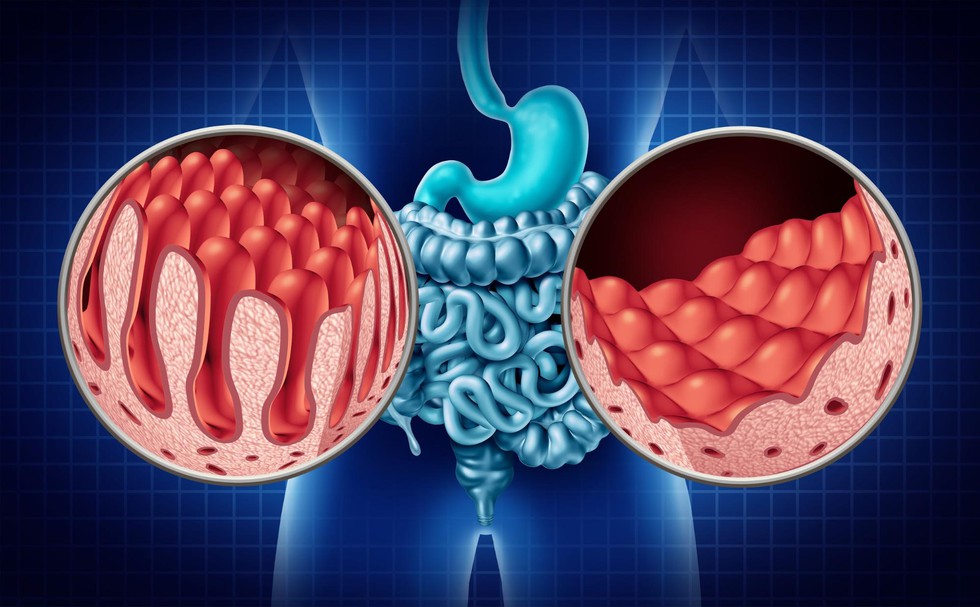
About Celiac Disease:
- It is an inherited autoimmune condition where the immune system reacts to gluten, sometimes causing damage to the small intestine.
- Gluten is a protein found in foods containing wheat, barley, or rye.
- In celiac disease, eating gluten triggers an immune response to the gluten protein in small intestine.
- Over time, this reaction can damage small intestine's lining and prevent it from absorbing nutrients. This condition is called malabsorption.
- The intestinal damage often causes symptoms such as diarrhea, fatigue, weight loss, bloating, or anemia.
- It also can lead to serious complications if it is not managed or treated.
- In children, malabsorption can affect growth and development in addition to gastrointestinal symptoms.
- It can develop at any age after people start consuming gluten.
- It is estimated to affect 1 in 100 people worldwide.
- There's no definite cure for celiac disease. But for most people, following a strict gluten-free diet can help manage symptoms and help the intestines heal.
Prelims Pointers
Feb. 26, 2026

About Vitamin B3:
- Vitamin B3, or Niacin, is a water-soluble vitamin.
- Niacin is naturally present in many foods, added to some food products, and available as a dietary supplement.
- There are two main chemical forms of niacin:
- nicotinic acid
- niacinamide (sometimes called nicotinamide)
- Your body gets niacin through food, but it also makes small amounts from the amino acid tryptophan, which can be found in protein sources like turkey and other animal foods.
- Function:
- Niacin works in the body as a coenzyme, with enzymes dependent on it for various reactions.
- Niacin helps to convert nutrients into energy, create cholesterol and fats, create and repair DNA, and exert antioxidant effects.
- Food Sources: A niacin deficiency is rare because it is found in many foods, both from animals and plants.
- Red meat: beef, beef liver, pork
- Poultry
- Fish
- Brown rice
- Fortified cereals and breads
- Nuts, seeds
- Legumes
- Bananas
- Deficiency:
- A severe niacin deficiency leads to pellagra, a condition that causes a dark, sometimes scaly rash to develop on skin areas exposed to sunlight; bright redness of the tongue; and constipation/diarrhea.
- Other signs of severe niacin deficiency include:
- Depression
- Headache
- Fatigue
- Memory loss
- Hallucinations
What is NAD(P)HX dehydratase (NAXD)?
- It is an essential cellular enzyme that helps repair damaged forms of key metabolic molecules, ensuring normal energy production and cell survival.
- NAXD deficiency is a rare neurometabolic disease with infantile onset marked by repeated episodes of developmental regression and progressive neurodegeneration, often triggered by febrile illnesses.
- Clinical features include lethargy, hypotonia, irritability, gait ataxia, loss of speech, movement disorders, seizures, ophthalmoplegia, and hearing loss.
Prelims Pointers
Feb. 26, 2026
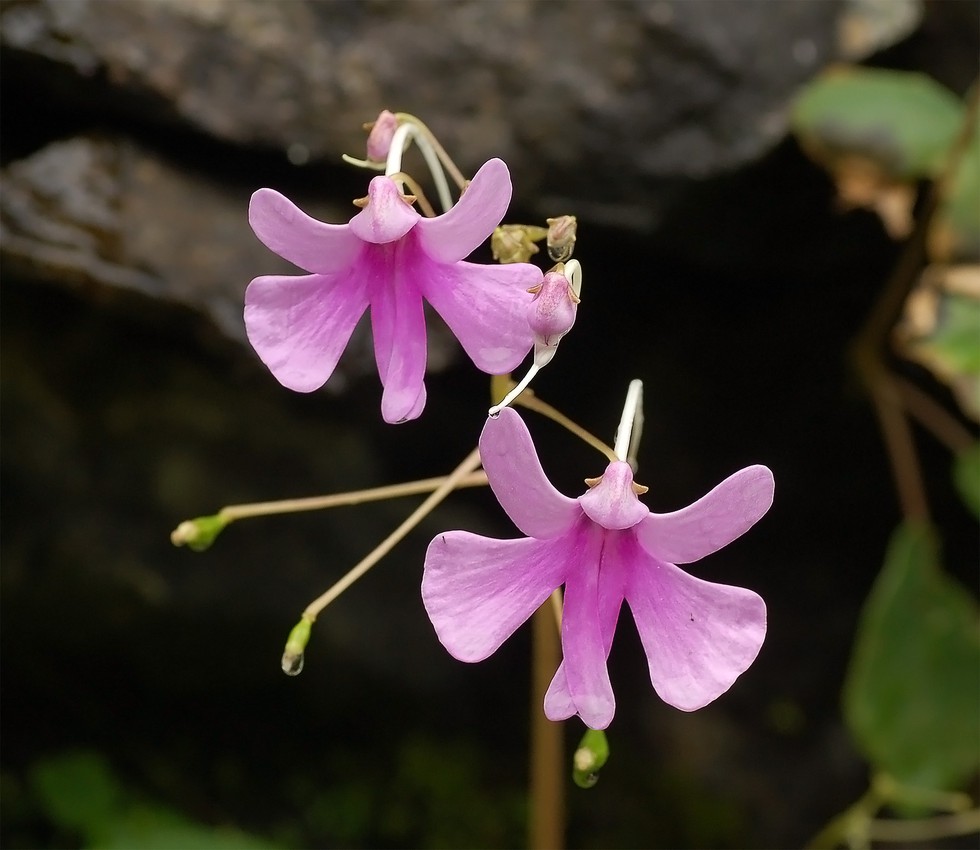
About Impatiens nagorum:
- It is a new species of flowering plant.
- It was discovered in Fakim Wildlife Sanctuary in Nagaland.
- The species name “nagorum” honours the Naga tribes of Nagaland.
- Impatiens — commonly known as balsams or “touch-me-nots” — are flowering plants famous for their brightly coloured blooms and seed pods that burst open when touched.
- The Eastern Himalayas and Northeast India are among the world’s richest regions for this group of plants.
- Found in moist temperate broadleaf forests, the newly described species is currently known only from its type locality.
- The plant bears distinctive purple flowers.
- It differs from closely related species in having serrated leaves, slightly hairy lateral sepals, and a deeper lower sepal that gradually tapers into a hooked spur.
Prelims Pointers
Feb. 26, 2026

About National Science Day 2026:
- It is celebrated every year on February 28 to mark the contributions of scientists towards the development of the country.
- It commemorates the discovery of the Raman Effect by the Indian physicist, Dr. Chandrasekhara Venkata Raman, on the same day in the year 1928.
- For this discovery, he was also awarded the Nobel Prize in Physics in 1930.
- In 1986, the Government of India declared 28 February as National Science Day.
- The first National Science Day was celebrated in 1987, and since then, it is observed every year with a special theme.
- National Science Day 2026 Theme: "Women in Science: Catalysing Viksit Bharat".
- On this day, schools, colleges, coaching institutes, and research organisations across the country will come together to honour scientists, inspire students, and promote a scientific way of thinking.
What is the Raman Effect?
- It is the change in the wavelength of light that occurs when a light beam is deflected by molecules.
- When a beam of light traverses a dust-free, transparent sample of a chemical compound, a small fraction of the light emerges in directions other than that of the incident (incoming) beam.
- Most of this scattered light is of unchanged wavelength.
- A small part, however, has wavelengths different from that of the incident light; its presence is a result of the Raman effect.
- The effect demonstrated that light can be scattered, carrying valuable information about molecular vibrations.
- The phenomenon is named for Indian physicist Sir Chandrasekhara Venkata Raman, who first published observations of the effect in 1928.
- Ever since the discovery, this discovery has become an important tool in medicine, chemistry, physics, and material composition and properties.
Prelims Pointers
Feb. 26, 2026
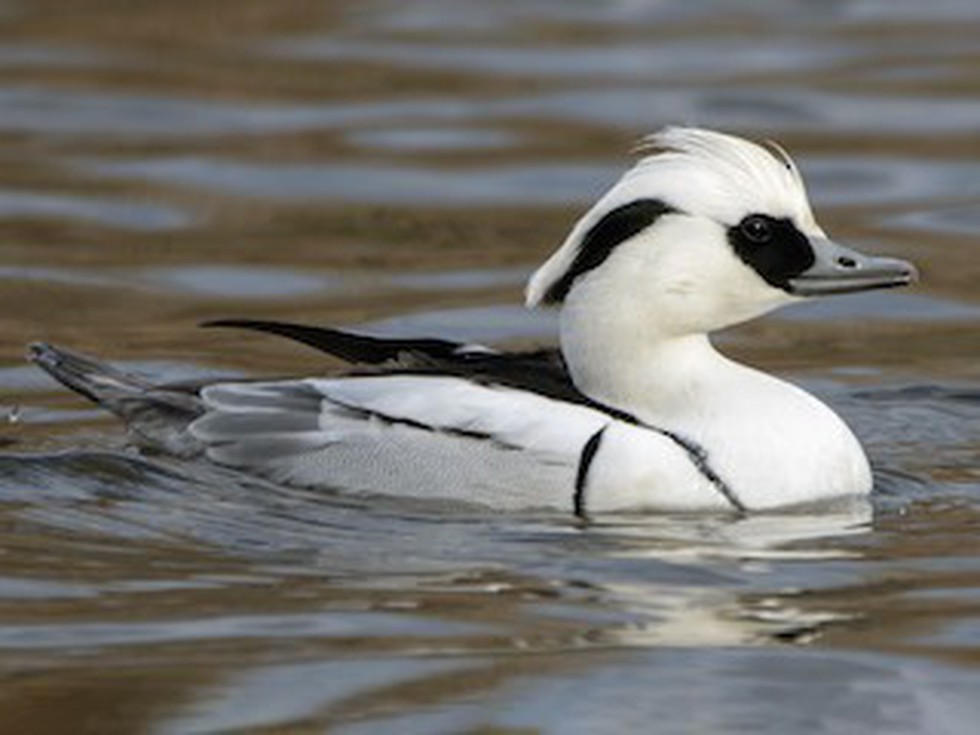
About Smew:
- It is a small diving duck.
- Scientific Name: Mergellus albellus
- Habitat and Distribution:
- Smews breed in the northern taiga of Europe and the Palearctic.
- They need trees for breeding and prefer to live on fish-rich lakes and slow rivers.
- Smews spend winters on sheltered coasts or inland lakes of the Baltic Sea, the Black Sea, northern Germany, and the Low Countries, with a small number reaching Great Britain.
- Conservation Status:
- IUCN Red List: Least Concern
Prelims Pointers
Feb. 26, 2026
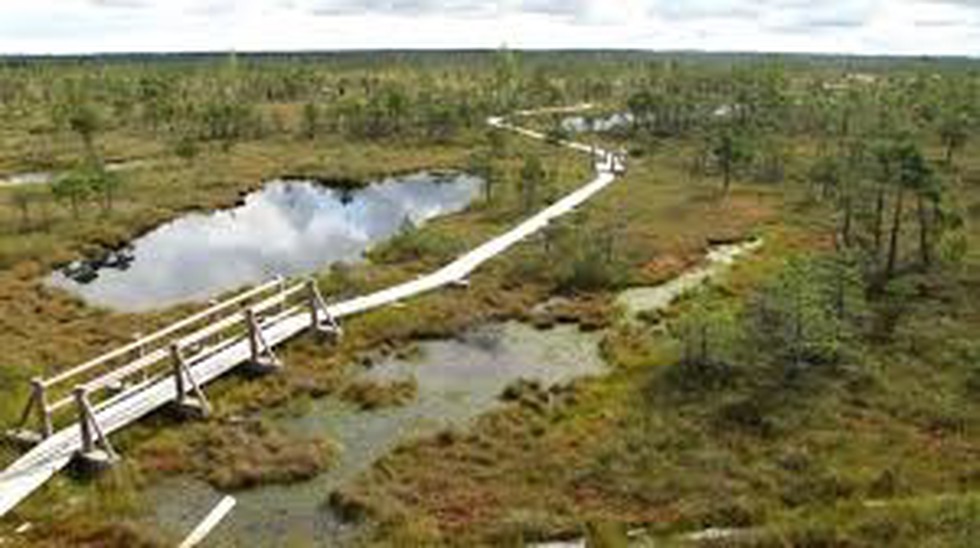
About Peatlands:
- Peatlands are terrestrial wetland ecosystems in which waterlogged conditions prevent plant material from fully decomposing.
- Consequently, the production of organic matter exceeds its decomposition, which results in a net accumulation of peat.
- Peat, formed from the accumulation of dead plant material, does not decompose in a water-logged state but when it dries, the organisms that break down plant material revive and the carbon seeps back into the atmosphere.
- In cool climates, peatland vegetation is mostly made up of Sphagnum mosses, sedges and shrubs and are the primary builder of peat,
- In warmer climates graminoids and woody vegetation provide most of the organic matter.
- The swamps and peatlands of the Congo Basin cover only 0.3% of the earth’s land surface, yet hold one-third of the carbon stored in its tropical peatlands.
- Distribution: The majority of the world’s peatlands occur in boreal and temperate parts of the Northern Hemisphere.
- Types:
- Northern and temperate peatlands: Found especially, Europe, North America and Russia where they have formed under high precipitation-low temperature climatic regimes.
- Tropical peatlands: Found in Southeast Asia, mainland East Asia, the Caribbean, Central America, South America, Africa, parts of Australasia and a few Pacific Islands.
Prelims Pointers
Feb. 26, 2026
About RAMP Programme:
- The Raising & Accelerating MSME Performance (RAMP) programme was launched in 2022.
- It aims at improving access to market and credit, strengthening institutions and governance at the Centre and State, improving Centre-State linkages and partnerships, addressing issues of delayed payments and greening of MSMEs.
- It is assisted by the World Bank.
- Objectives of RAMP Programme:
- Improving access to market and credit for MSMEs
- Strengthening institutions and governance at the central and state levels
- Improving center-state linkages and partnerships
- Addressing issues of delayed payments
- Greening of MSMEs
- The National MSME Council has been set up by the Ministry to work as an administrative and functional body of the RAMP Programme.
- It is implemented by the Ministry of Micro, Small and Medium Enterprises (MoMSME) over the five year period 2022-23 to 2026-27.
- It provides grants to States for preparation of Strategic Investment Plan (SIP).
- Sub schemes under RAMP:
- MSME GIFT Scheme: MSME Green Investment and Financing for Transformation Scheme intends to help MSMEs adopt green technology with interest subvention and credit guarantee support.
- MSE SPICE Scheme:The MSE Scheme for Promotion and Investment in Circular Economy aims to support circular economy projects which will be done through credit subsidy and will lead to realising the dream of MSME sector towards zero emissions by 2070.
- MSE ODR Scheme: The MSE Scheme on Online Dispute Resolution for Delayed Payments is a first of its kind scheme to synergise legal support with modern IT tools and Artificial Intelligence to address the incidences of delayed payments for Micro and Small Enterprises.
Prelims Pointers
Feb. 26, 2026
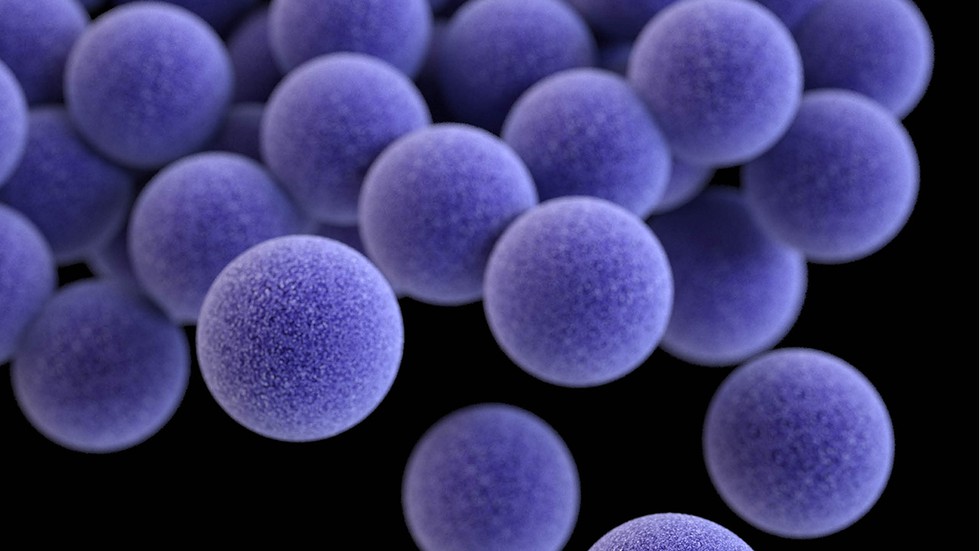
About Staphylococcus aureus:
- It is a type of bacteria belongs to the family Staphylococcaceae.
- Characteristics:
- It stains Gram positive and is non-moving small round shaped or non-motile cocci.
- It is found in grape-like (staphylo-) clusters.
- It may occur commonly in the environment.
- It affects all known mammalian species, including humans.
- Further due to its ability to affect a wide range of species, S. aureus can be readily transmitted from one species to another.
- Transmission:
- aureus is transmitted through air droplets or aerosol. When an infected person coughs or sneezes.
- It can also transmit through direct contact with objects that are contaminated by the bacteria or by bites from infected persons or animals.
- It causes
- Minor skin infections, such as pimples, impetigo etc.
- It may cause boils (furuncles), cellulitis folliculitis, carbuncles
- It is the cause of scalded skin syndrome and abscesses
- It may lead to lung infections or pneumonia
- Treatment: Healthcare providers can treat most staph infections with antibiotics.
Prelims Pointers
Feb. 26, 2026
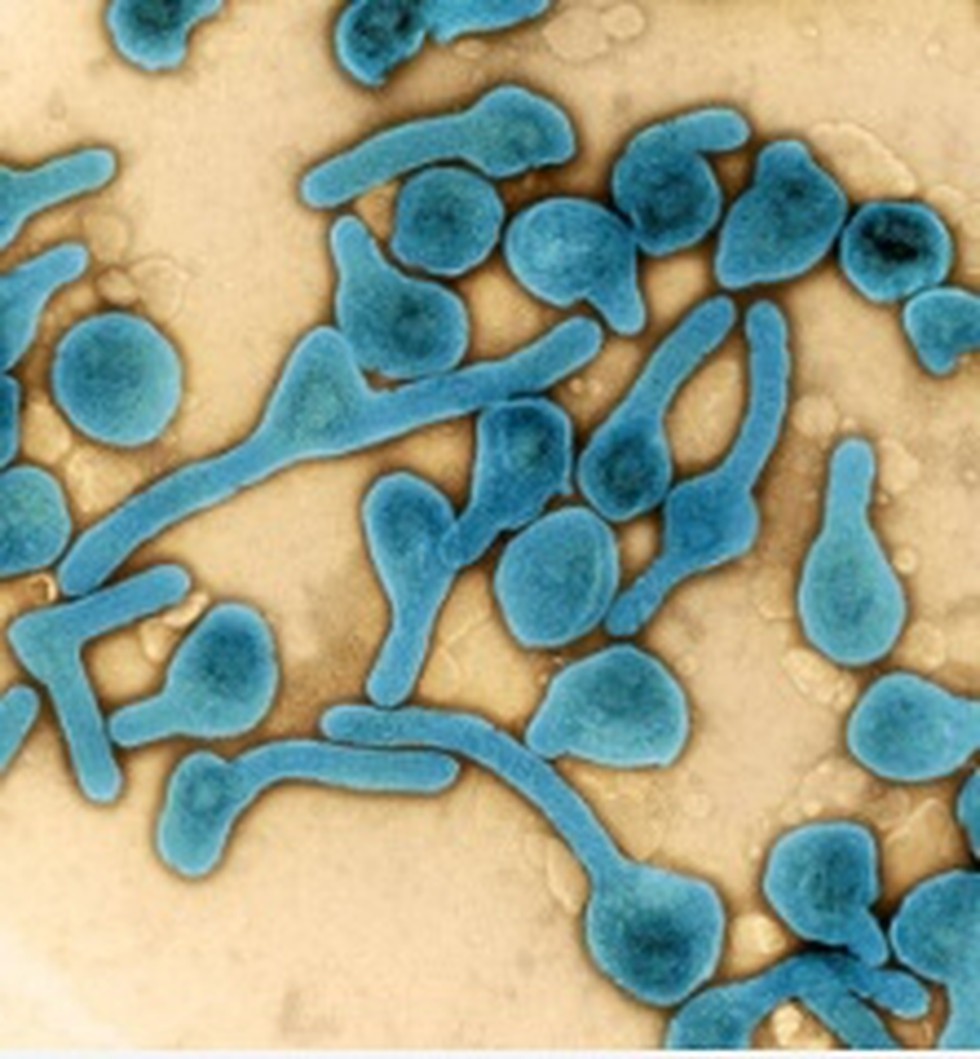
About Epstein - Barr virus:
- It is a common and highly contagious infection.
- Transmission: It spreads through bodily fluids, especially saliva.
- EBV is a type of herpesvirus called herpesvirus 4.
- It has been found to be widely present in the human population.
- Most cases of Epstein-Barr virus affect children, teenagers and young adults, but anyone can get the virus.
- It usually does not cause any harm, but the virus gets reactivated inside the body in some unusual conditions like immunological stress or immunocompetence.
- This may further lead to various complications like a type of blood cancer called Burkitt’s lymphoma, stomach cancer, multiple sclerosis.
- Symptoms: Sore throat and throat inflammation, Fatigue or feeling extremely tired, Fever, Swollen lymph nodes, Rashes on your skin, Enlarged spleen and liver.
- Treatment: There is no specific treatment for EBV. However, some things like drinking fluids to stay hydrated, getting plenty of rest can be done to help relieve symptoms.
Prelims Pointers
Feb. 26, 2026

About Employees’ State Insurance Corporation:
- It is a statutory body formed under the ESI Act 1948.
- It is functioning under the aegis of Ministry of Labour and Employment, Government of India.
- It manages the ESI scheme, which provides medical, maternity, and financial benefits to employees.
- Functions: ESIC provides various social security benefits like Medical Benefit, Monetary benefits to the workmen and their family working in the private and public sector.
- Composition of ESIC:
- The Union Minister of Labour heads the ESIC as its Chairman.
- The Central Government appoints a Director General as the Chief Executive Officerof ESIC.
- The ESIC comprises members representing crucial interest groups, including employers, employees, the Central and State Governments, representatives of the Parliament and the medical profession.
Feb. 25, 2026
Prelims Pointers
Feb. 25, 2026
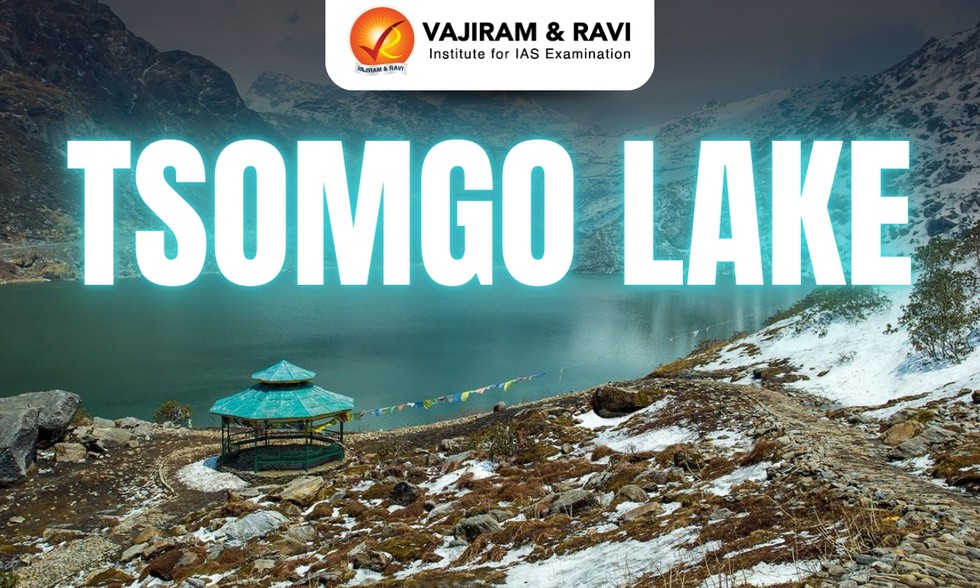
About Tsomgo Lake:
- Tsomgo Lake, also known as Tsongmo Lake or Changu Lake, is a glacial lake located in East Sikkim.
- The lake derives its water from the melting snow of the mountains surrounding the lake.
- After the winter season ends in the middle of May, the periphery of the lake has scenic blooms of flower species of rhododendrons (the state tree of Sikkim), primulas, blue and yellow poppies, irises, and so forth.
- Also seen in the precincts of the lake are several species of birds, including Brahminy ducks.
- Wildlife seen includes the red panda.
- The lake surface reflects different colours with the change of seasons and is held in great reverence by the local Sikkimese
- Buddhist monks prognosticated after studying the changing colours of the lake.
Prelims Pointers
Feb. 25, 2026

About CM-302 Missile:
- It is a supersonic anti-ship cruise missile developed by China.
- It is an export version of the YJ-12 missile used by the Chinese Navy.
- It is intended to strike large naval vessels and other maritime targets.
- Features:
- It is equipped with a liquid direct-flow air-breathing jet engine and four air intakes.
- The missile travels at sustained supersonic speeds, reportedly around Mach 2.5–3 or higher, making it very hard and challenging to intercept once launched.
- It has a range of about 290 km.
- It is equipped with a conventional high-explosive warhead.
- It can be launched from both ships and ground-based launchers.
- The CM-302 approaches its target at extremely low altitudes.
- The guidance system of the missile combines inertial navigation with China’s BeiDou satellite navigation for mid-course guidance, along with an active radar seeker for terminal homing.
- It has a high hit probability, nearly 90 percent, owing to its sea-skimming flight profile and advanced guidance suite.
Prelims Pointers
Feb. 25, 2026
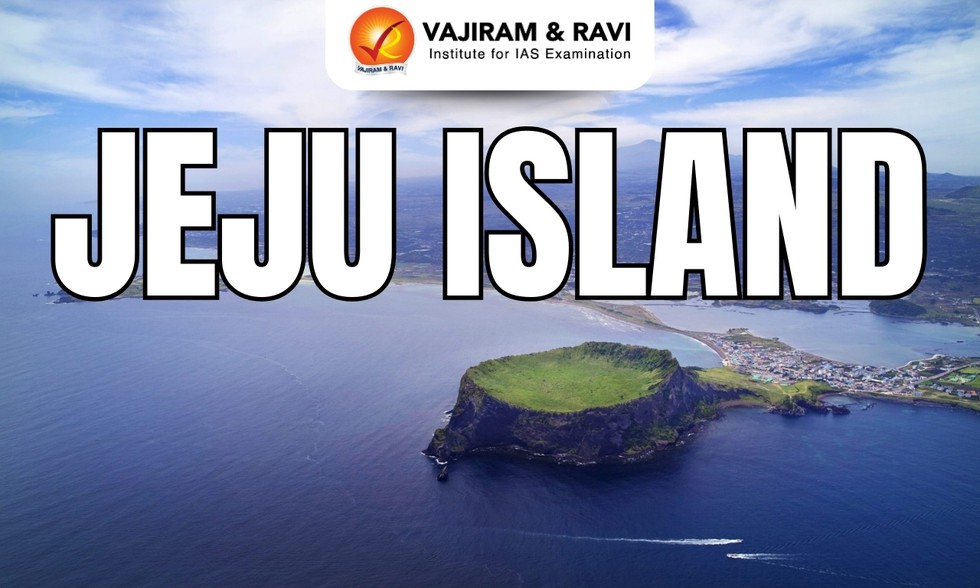
About Jeju Island:
- It is a volcanic island off the coast of South Korea.
- It is a special autonomous province of South Korea.
- Oval in shape, it is Korea’s largest and southernmost island.
- The provincial capital is the city of Jeju.
- It is composed of a core of volcanic material that rises symmetrically to the crest of Mount Hallasan, which has a lake in its crater.
- Mount Hallasan is the tallest mountain in South Korea and a dormant volcano.
- The island’s lava tubes and certain other volcanic formations (including Mount Hallasan) were collectively designated a UNESCO World Heritage site in 2007.
- Jeju is bathed in warm currents, and its oceanic climate supports some subtropical plants.
Prelims Pointers
Feb. 25, 2026
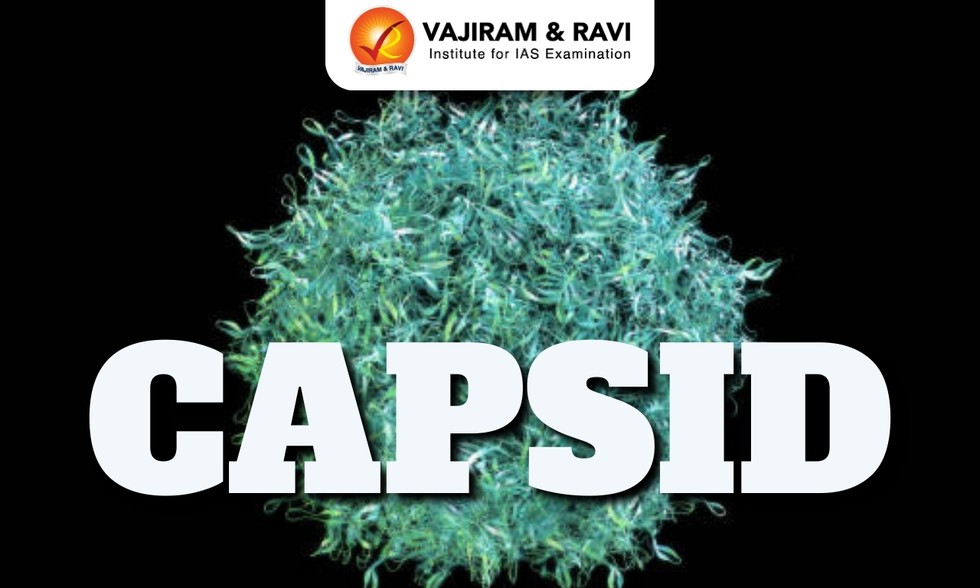
About Capsid:
- A capsid is a three-dimensional proteinaceous capsular shell around a virus that encloses the viral genetic material.
- It is located just below the viral envelope.
- The capsid is made of several repeating finite numbers of protein subunits known as capsomeres or protomers.
- The capsomeres of the protein coat can be associated with or may be closely related to the viral genetic material or nucleic acid.
- The complexity of the capsid is dictated by the virus’s own genetic material. The more complex the genome, the more intricate the protein shell must be.
- Some complex viruses have capsids with non-protein components like lipids, or in certain viruses, the capsid is further enclosed in a glycoprotein layer; such capsids are known as enveloped capsids.
- The viral capsid is in the nanometer (nm) size range and possesses complex and unique mechanical properties.
- It serves multiple functions, namely, encapsulating and protecting viral genetic material and transferring of genetic material to the required place in the new host.
- For serving all these functions, the capsid needs highly specific mechanistic and functional flexibility as well as strength.
Prelims Pointers
Feb. 25, 2026
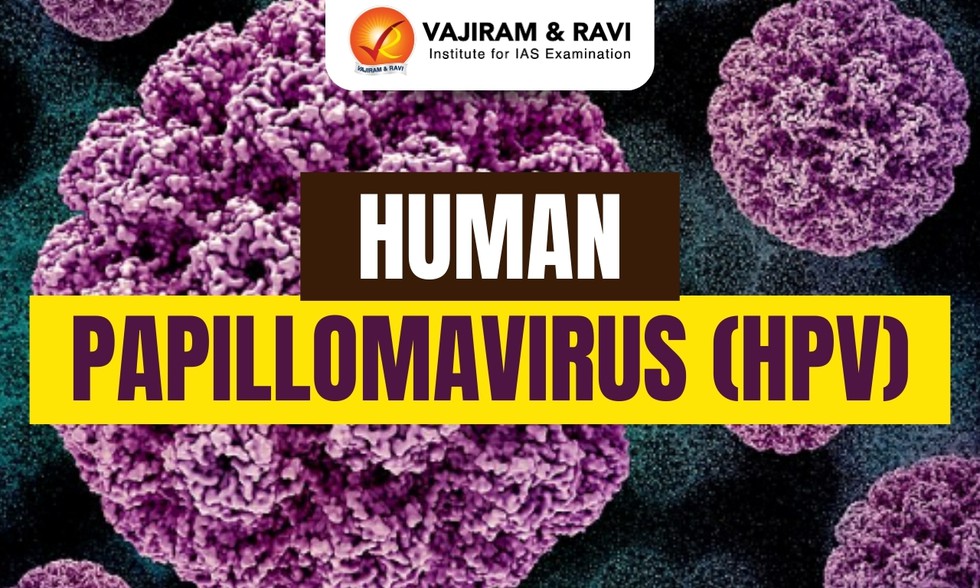
About Human Papillomavirus (HPV):
- HPV is the most common sexually transmitted infection (STI).
- More than 95% of cervical cancer is caused by the HPV virus.
- Transmission:
- The virus that causes HPV infection is transmitted through skin-to-skin contact.
- Most people get a genital HPV infection through direct sexual contact, including vaginal, anal, and oral sex.
- Treatment:
- There’s no cure for HPV.
- HPV vaccination is the most effective way to prevent HPV-related cancers.
HPV Vaccination:
- The HPV vaccine is a series of shots that can protect from an HPV infection.
- The HPV vaccination is more efficacious if given between the age group of 9-26 years.
Prelims Pointers
Feb. 25, 2026
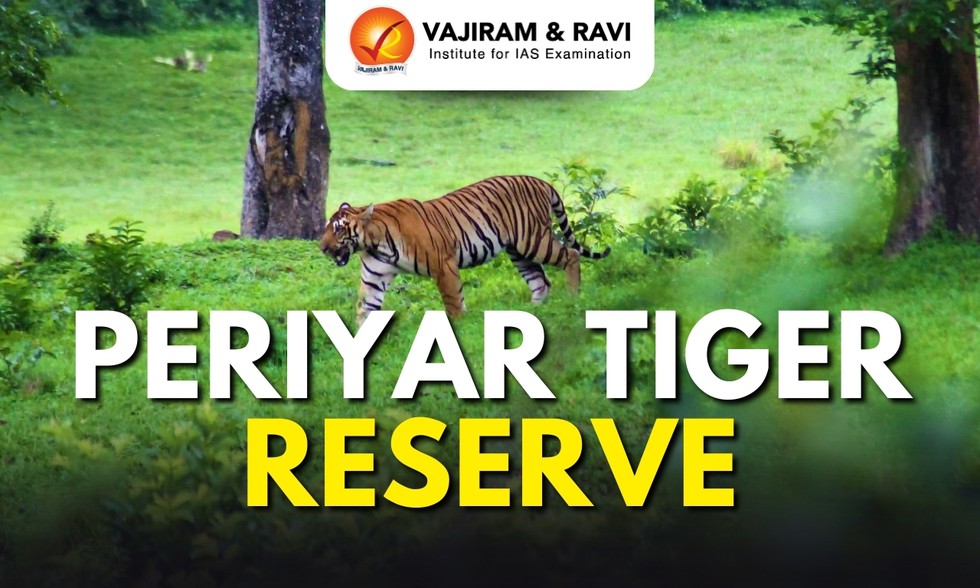
About Periyar Tiger Reserve:
- Location: It is located in the Idukki district of Kerala.
- It is named after the Periyar River.
- It is set high at Cardamom Hills and Pandalam Hills of the Western Ghats, adjacent to the border with Tamil Nadu.
- It surrounds the Periyar Lake.
- Terrain: The terrain is hilly and undulating and the highest peak is Kottamala (2016 m).
- Rivers: Two major rivers namely Periyar and Pamba drain the area.
- Dams: Mullaperiyar Dam is located within the PTR.
- Tribes: It is home to many tribal communities, including the Mannans and the Palians.
- Vegetation: It mainly comprises tropical evergreen forests, semi- evergreen forests, moist deciduous forests, transitional fringe evergreen forests, grasslands, and eucalyptus plantations.
- Flora: Teak, mangoes, rosewood, jamun, jacarandas, terminalias, tamarind, royal ponciana, bamboo, etc.
- Fauna: Elephants, Wild Pigs, Mouse Deer, Barking Deer, and Tiger.
- The major four species of primates are also found at Periyar – the rare lion-tailed macaque, the Nilgiri Langur, Gee’s Golden Langur, Common Langur, and Bonnet Macaque.
- It is also being considered as the habitat of the elusive Nilgiri Tahr.
Prelims Pointers
Feb. 25, 2026
About SUJVIKA Portal:
- It is an AI driven Biotech Product Data Portal.
- It is developed in collaboration with Industry partners ABLE.
- SUJVIKA is a Trade Statistics Digital Intelligence Platform that presents authenticated biotechnology product import data in a structured and accessible format.
- Features of SUJVIKA Portal:
- The portal provides sector-wise insights into biochemical products, industrial enzymes, and other biotechnology imports.
- It enables researchers, startups, and industry to identify high-value and high-volume imports, assess import dependency and prioritise indigenisation and R&D efforts.
- The portal also supports evidence-based planning and promotes public–private partnerships for strengthening domestic biomanufacturing.
Key Facts about Department of Biotechnology
- It was set up in 1986.
- It acts as a nodal agency supporting research and its applications in the Life Sciences and promotes & accelerates the pace of development and large-scale use of biotechnology in the country.
- DBT also supports Research and Development innovations and manufacturing in advanced Biofuels as well as ‘Waste to Energy’ technologies.
Prelims Pointers
Feb. 25, 2026
About Kenya:
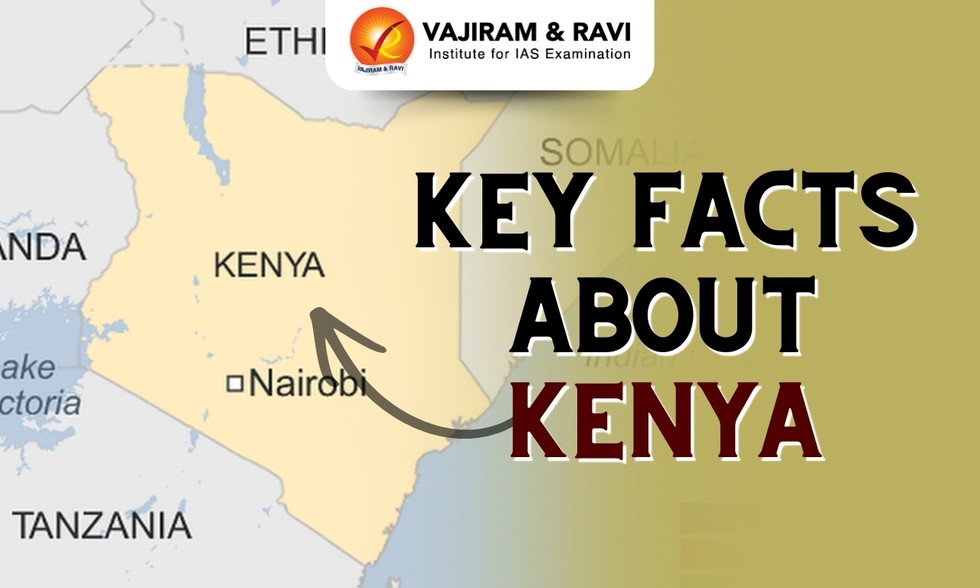
- Location: It is located in Eastern Africa.
- Bordering Countries: It is bordered with Somalia (North East), Ethiopia (North), South Sudan (North West), Uganda (West), Tanzania (South).
- Maritime Border: It has a coastline on the Indian Ocean to the southeast.
- Capital City: Nairobi
- Nairobi hosts UNEP (United Nations Environment Programme) and UN-HABITAT headquarters.
- Geographical Features of Kenya
- It is almost bisected by the Equator.
- Major lakes: Lake Victoria (shared with Uganda & Tanzania), Lake Turkana.
- Rivers: Athi/Galana, Tana (Longest river of Kenya), Mara.
- Mountain Ranges: Aberdare, Mau Escarpment.
- Highest Peak: Mount Kenya (second highest in Africa after Kilimanjaro).
- Island: Lamu Island, part of the Lamu Archipelago in the Indian Ocean, is noteworthy.
- Natural Resources: Lead, zircon, iron, titanium, mica, chaum, oil, coal, diatomite, gypsum.
- Famous Tribes: San Bushmen, Samburu, Maasai.
- Masai Mara National Reserve: It is located in south west Kenya and is a vast scenic expanse of gently rolling African savannah plains.
Prelims Pointers
Feb. 25, 2026
About Chicory:
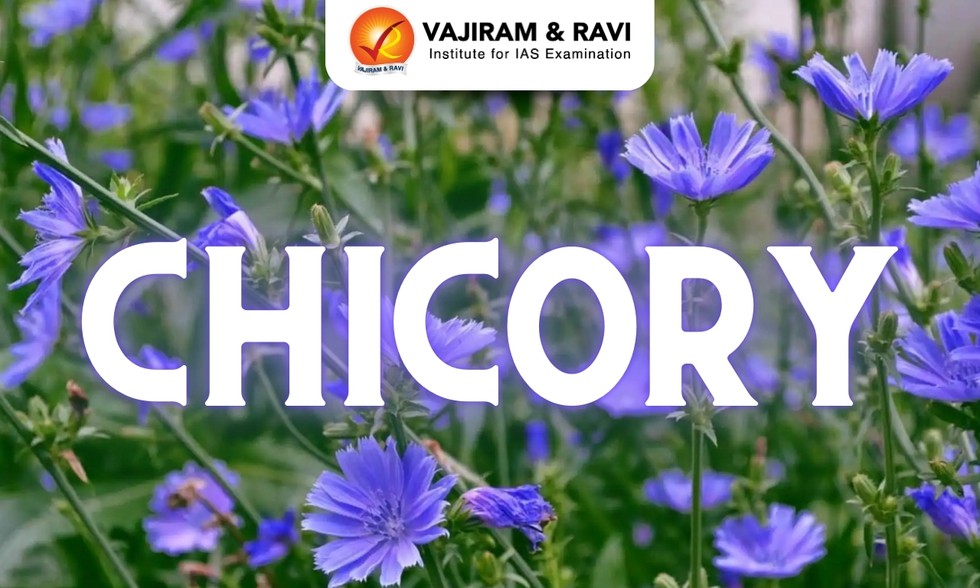
- Chicory (Cichorium intybus) is a plant belonging to the Asteraceae family.
- It is a perennial plant mainly cultivated in temperate regions worldwide.
- There are several varieties of the chicory plant, known differently globally due to its numerous medicinal, culinary, and nutritional qualities.
- It is a local wild edible, and the leaves, flowers and root can all be used in culinary creations.
- Additive in Coffee: Chicory is a popular additive that provides a darker colour and an earthy taste to the beverage.
- It is naturally caffeine-free and significantly less expensive than high-quality coffee.
- Nutritional Value: Most parts of the plant contain nutrients ranging within carbohydrates, proteins, vitamins, minerals, soluble fiber, trace elements, and bioactive phenolic compounds.
- Uses: It is used as forage for livestock, as folklore remedies, or as a vegetable addition in human diets.
Prelims Pointers
Feb. 25, 2026

About Exercise Dharma Guardian:
- It is the annual joint military exercise between the Indian Army and Japan.
- Aim: The aim of Exercise 'DHARMA GUARDIAN' is to strengthen military collaboration and enhance combined capabilities to undertake joint operations in a semi-urban environment.
- The exercise is held alternately in India and Japan and remains a key pillar of defence cooperation between the two nations.
- It is the 7th edition of the annual Joint Military Exercise
- Key tactical activities during the exercise include:
- Establishing a Temporary Operating Base
- Developing an Intelligence, Surveillance and Reconnaissance (ISR) grid
- Setting up Mobile Vehicle Check Posts
- Conducting Cordon and Search Operations in hostile environment
- Executing Heliborne Operations
- Undertaking House Intervention Drills
What are Other Exercises between India and Japan?
- Malabar: India and Japan with the United States and Australia participate in the naval war gaming exercise named Malabar.
- JIMEX (Naval)
- SHINYUU Maitri (Air Force).