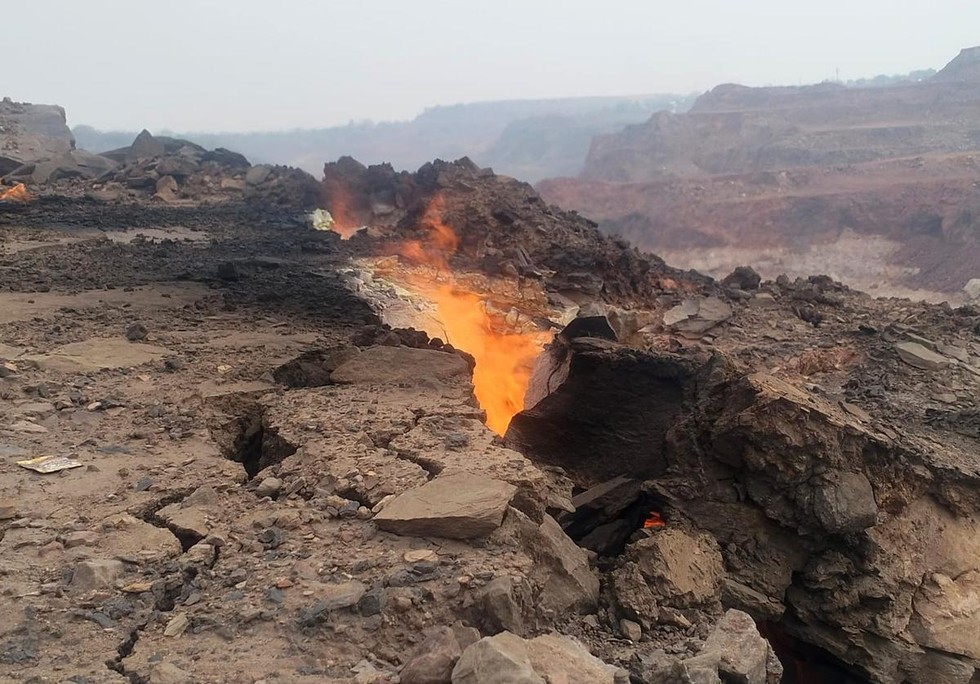
A new study has found that the long-burning underground fires in the Jharia Coalfield may be burning hotter and emitting more greenhouse gases than previously estimated.
About Jharia Coalfield:
It is located in the Dhanbad district of Jharkhand.
It lies in the Damodar River valley and covers about 280 sq.km.
It is known for its vast deposits of high-quality coking coal and holds the largest coal reserves in the country, having estimated reserves of 19.4 billion tonnes.
Coal mining began in Jharia in 1894, and there are now more than 20 underground mines and several large open-cast coal mines
Underground fires were first noted in Jharia in 1916, and they have continued to spread, destroying properties and killing miners.
What is Coking Coal?
Coking coal (or metallurgical coal) is a naturally occurring sedimentary rock found within the earth’s crust.
It typically contains more carbon, less ash, and less moisture than thermal coal, which is used for electricity generation.
It is a bituminous coal with a suitable quality that allows the production of metallurgical coke, or simply named
Coke is the main product of the high-temperature carbonisation of coking coal.
It is an essential input material in steelmaking, as it is used to produce pig iron in blast furnaces, acting as the reducing agent of iron ore and as the support of the furnace charge.
Major Producers:
The largest producers of coking coal were China, Australia, Russia, USA, and Canada.
India has an estimated 37.37 billion tonnes of coking coal resources, largely located in Jharkhand, with additional reserves in Madhya Pradesh, West Bengal, and Chhattisgarh.
Dear Student,
You have still not entered your mailing address. Please enter the address where all the study materials will be sent to you. (If applicable).